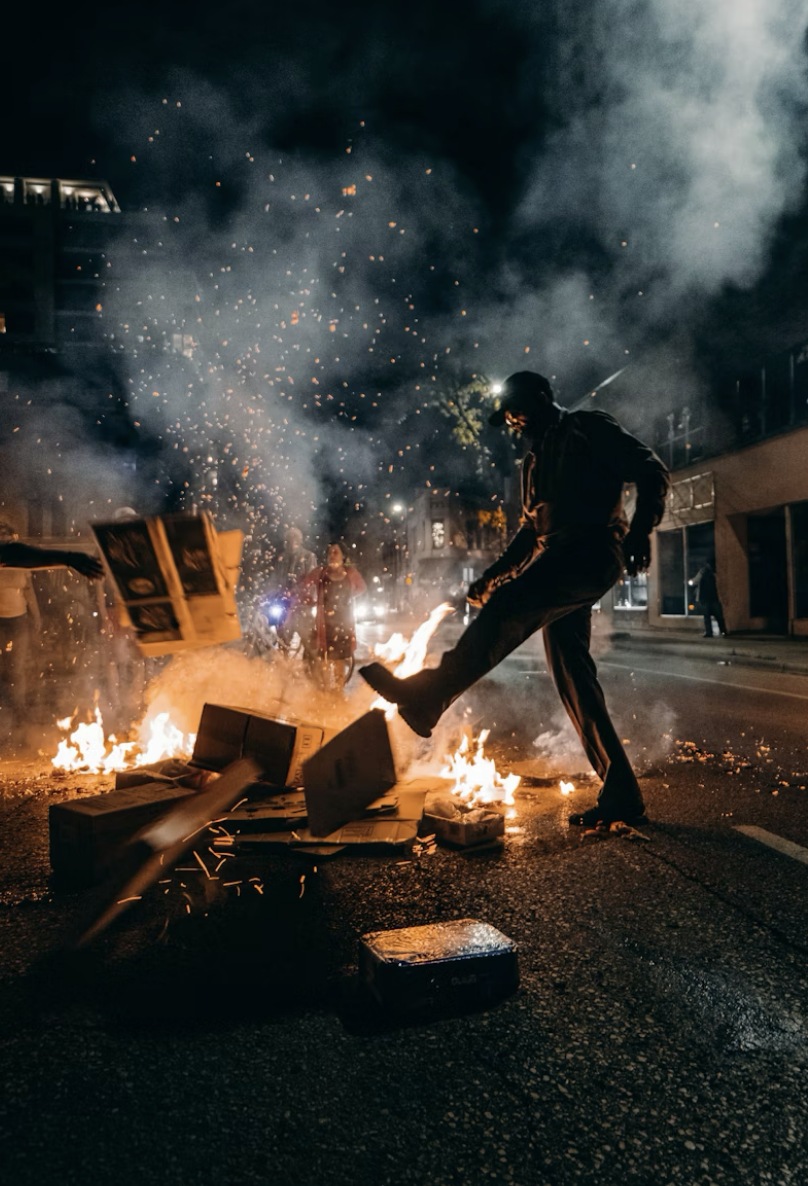
The streets of Tehran are burning. Shouts of Iran’s last shah, Reza Pahlavi, are fueling the fire. A 47-year old Islamic regime may be crumbling down—a glorious moment for Great Britain, the United States, and most especially, the people of Iran. The problem is? The protestors are surprisingly pro-Trump and pro-Israel.
To the Left, it’s a spectacle that breaks the script.
On January 2, the sixth day of protests, Trump wrote on Truth Social that if any peaceful protesters were killed in Iran, the United States would “come to their rescue.” The statement provoked sharp responses from Iranian officials, including the Foreign Ministry spokesperson, the former speaker of parliament, and an adviser to the Supreme Leader, where some of which openly threatened American bases in the region. Yet in issuing the warning, Trump did what no previous American president had dared to do: openly and explicitly side with Iranian demonstrators.
Fueled, as Ayatollah Ali Khamenei would later claim, by the backing of the U.S. president, the protests continued to swell, so much so that by Thursday, Jan. 9, the Iranian government had shut down internet access nationwide. While such tactics are hardly new for the Islamic Republic, which has repeatedly relied on blackouts during periods of unrest, something else was different this time.
Maziar Bahari, editor of IranWire and a former political prisoner during the 2009 protests, argued that Trump’s words “have inspired many protesters to come out, because they know that the leader of the world’s main superpower is supporting their cause.” Video footage circulating before the blackout even shows a man symbolically replacing a street sign with one bearing the name “President Trump.” Was the U.S. president becoming the catalyst for the overthrow of another illegitimate regime?
Moreover, while the protests initially emerged as a reaction to Iran’s deteriorating economic conditions, a deeper message soon resonated through the crowds: “Neither Gaza nor Lebanon—my life is only for Iran.” The chant reflected growing public resentment toward the regime’s foreign entanglements. Iran’s longstanding financial and military support for proxy groups such as Hamas and Hezbollah, along with other militant organizations, has led many Iranians to believe that resources desperately needed at home are instead being diverted abroad.
While chants condemning these groups do not necessarily signal a pro-Israeli agenda so much as a pro-Iranian one, Reza Pahlavi, the figure many protesters now back, has been outspoken in his support for Israel. In 2023, Pahlavi met with Israeli Prime Minister Benjamin Netanyahu, and he has previously argued that Iran should welcome Israeli water experts to help address the country’s severe water crisis. Most provocatively, Pahlavi has asserted that the “only two countries on this planet that can claim to have a biblical relationship” are “Iran and Israel.”
Stories of international revolutions often break into global media coverage, even if they do not dominate headlines. Yet in this case, the voices of the Iranian people appear muted, and Trump’s role has been largely sidelined. While his actions in Venezuela, Nigeria, and previously toward Iran’s nuclear facilities sparked worldwide scrutiny and condemnation, the prospect of Trump as a catalyst in a progressive, historical uprising has been met with conspicuous media silence.
In response to Trump’s threats, Ayatollah Khamenei reacted with outrage, invoking the downfall of past leaders who once stood at the height of power. “He too will fall,” Khamenei warned.
Yet it may be Khamenei—and the Western left-leaning media—that have more reason for concern. For if the Islamic regime ultimately crumbles, it will become far more difficult to obscure Trump’s role in the events that helped bring it down.