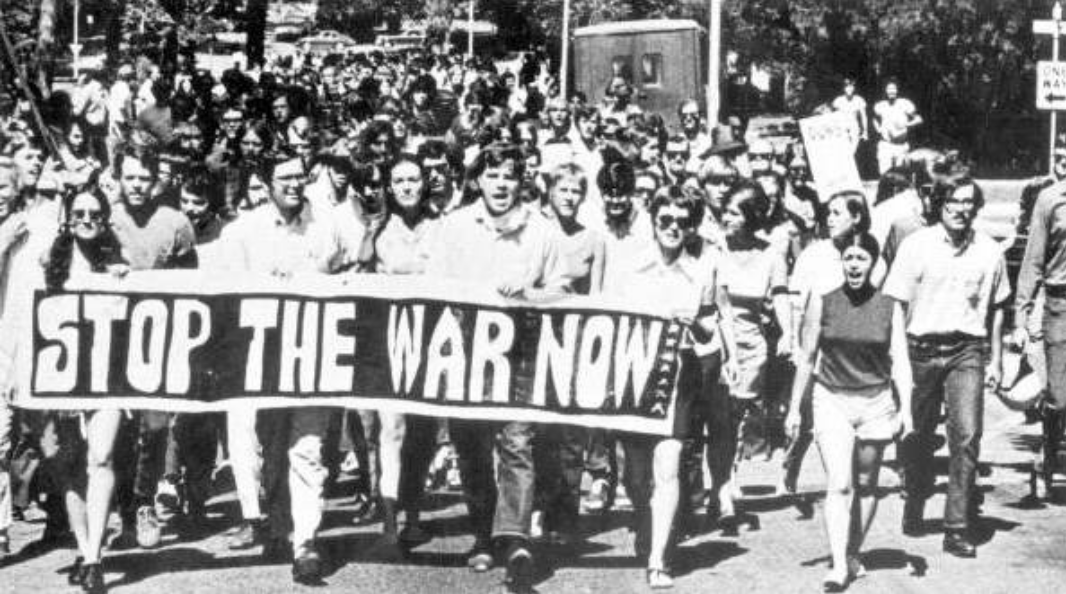
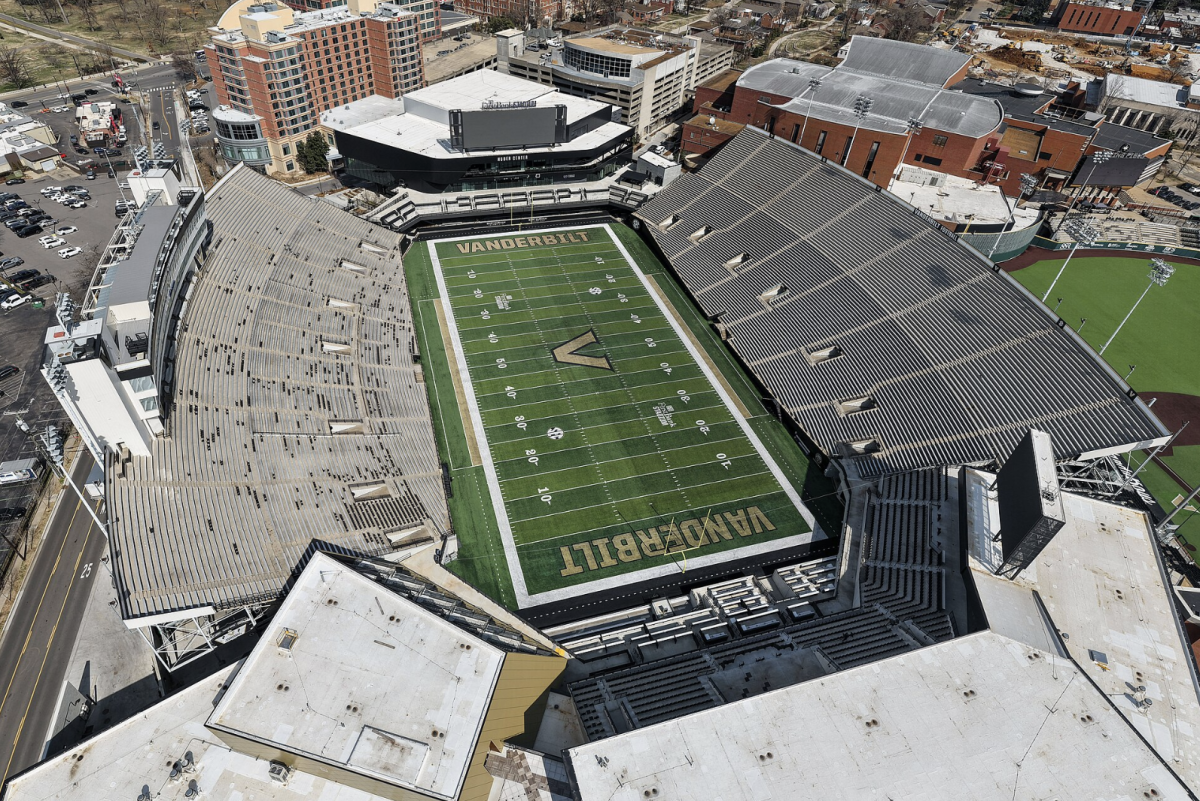
It was a calm October afternoon, yet an exhilarating energy pervaded Wyatt Lawn. Hundreds of footsteps echoed in unison as students and faculty marched through Vanderbilt’s campus. Outside Kirkland Hall, chants of ‘No Kings’ roared across Alumni Lawn as a crowd gathered together to oppose what they saw as a serious looming threat: the Trump administration’s Compact for Higher Education.
This compact was offered to nine universities earlier last month, and proposes preferential federal funding for universities that comply with new government-imposed standards. While seven of the nine universities refused this agreement with haste, Vanderbilt continues to discuss with the federal government. Among its key clauses are requirements for ideological balance in faculty and curricula, hard limits on international student enrollment, and the removal of gender identity protections from institutional policies. For universities like Vanderbilt, students and faculty fear that accepting the compact would not only jeopardize core commitments to academic freedom and diversity but also establish a dangerous precedent for direct political control over higher education governance.
On Oct. 8, a coalition of campus organizations–including Indivisible Vanderbilt and Vanderbilt Graduate Workers United–assembled against this compact, emphasizing the agreement’s various threats to our campus and urging the administration to reject Trump’s offer altogether. Several members of the Vanderbilt community spoke throughout the protest, each representing a different part of campus.
One of these representatives, Dr. Lynne Berry, a Vanderbilt research assistant professor in the Department of Biostatistics, spoke from a faculty perspective. She admits she finds the compact “not serious” and full of “absurdities.” She notes there are rather large contradictions, highlighting how the proposal demands “viewpoint diversity” but forbids diversity based on “anti-American views.” Moreover, it requires “institutional neutrality” while privileging conservative ideas and even suggesting department restructuring to amplify them.
Due to these glaring contradictions, she dismisses the compact as “propaganda designed to imply poor behavior by universities.” However, she heeds that the compact is something that cannot be blown off idly as we wait for an official statement from the university, and that there are severe repercussions at stake. Berry argues that the agreement violates due process and oversteps presidential authority by creating private deals with public funds. This compliance would legitimize the executive branch making law without Congress–something that should concern every American citizen.

Dr. Jessie Hock, an associate professor in the English Department and member of AAUP, has also been vocal in her opposition to the president overstepping his authority. Hock warns that the compact is “an existential threat to American higher education.” She worries the agreement would put universities under the control of the federal government, making universities “subject to the political whims of every administration.” Further, she endorses Vanderbilt AAUP’s open letter to Chancellor Diermeier, agreeing that the compact is not a good-faith policy proposal but rather a “coercive document” intended to punish institutions who fail to align with the Trump administration.
Jade Miller, a 5th-year Ph.D. Candidate in Pharmacology and a participant in the Oct. 8 rally, shares similar concerns to Dr. Hock. She strongly condemns the pact as an attack on freedom of speech and academic independence, contending that it “reeks of political corruption and manipulation.” Additionally, she finds the proposed perks–like free tuition for STEM students–deeply disingenuous, revealing that as “someone pursuing a doctorate in such a field,” she finds it “incredibly distasteful coming from the administration that has run an anti-intellectual campaign from [the] beginning.” Miller believes the system proposed by the compact is the opposite of the merit-based system Trump purports to support. “It [appears that] Trump believes he can buy our loyalty,” she said, “and to put it simply, our integrity should not be for sale.”
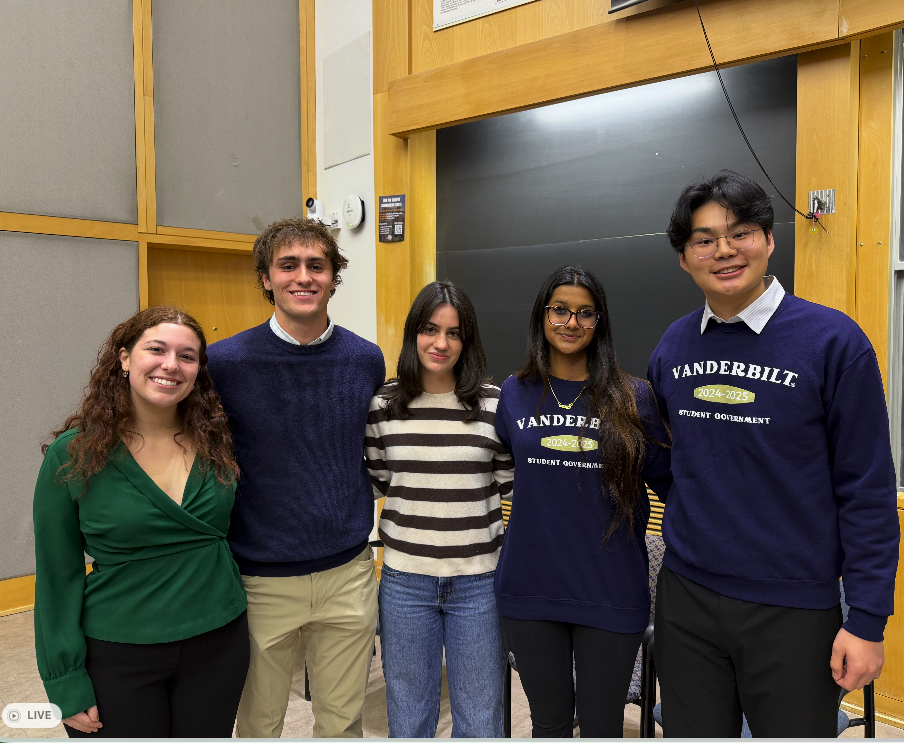
These voices, plus hundreds more, boldly reverberated through campus this past month. However, this was not an isolated incident from a vocal minority. Both the Vanderbilt Faculty Senate and Vanderbilt Student Government Senate passed resolutions advocating for the rejection of the proposal, with resounding support from students and faculty alike. Vanderbilt Student Government polled the student body, and out of over a thousand responses, 84% of students responded “No” to the question of whether Vanderbilt should sign the compact as is. During the Oct. 8 rally, Indivisible Vanderbilt delivered an anti-compact petition with over 1,100 signatures gathered in under a week. These examples are but a small taste of the fervent commitment the Vanderbilt community has towards upholding academic integrity in higher education.
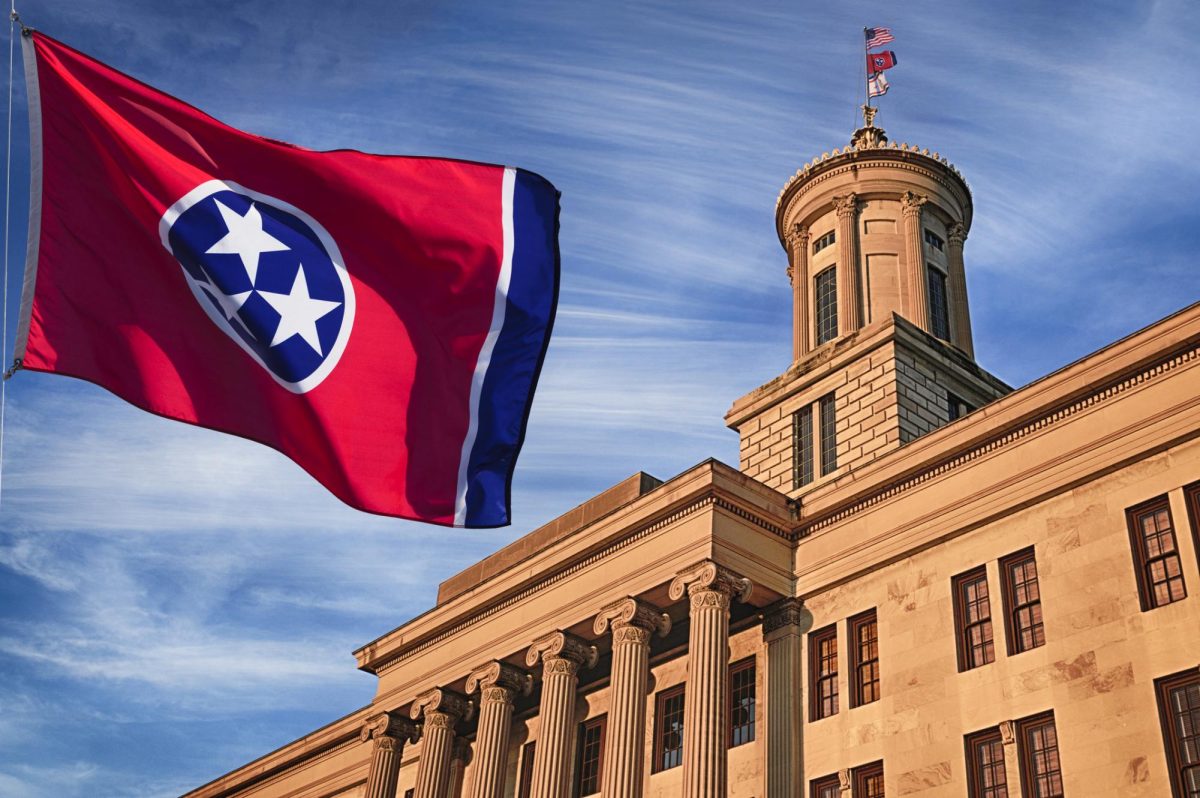
This fight has expanded past the borders of our campus and into the greater Nashville community. On Oct. 18, a large-scale “No Kings” protest occurred on the north side of the Tennessee State Capitol, where over 7,000 people gathered and protested as part of a national day of demonstrations against Trump’s administration. Countless organizations gathered, including those affiliated with Indivisible Vanderbilt, Students Rise Up, and Higher Education Labor United, and have continued to be involved in nationwide organizing efforts.
While there are numerous anti-compact efforts found throughout our city, state, and country, events are planned to continue and develop on our campus. Indivisible Vanderbilt is organizing a follow-up rally at Kirkland Hall this Wednesday, Nov. 5, at 11 a.m., where the community is encouraged to peacefully vocalize their opinions. This Friday, Nov. 7, Vanderbilt’s AAUP chapter is also organizing an anti-compact action as part of a national day of action. Groups like these will continue to stress the beliefs of our campus body as we wait to hear a clear statement from Chancellor Diermeier.
While it is unclear whether the university will succumb to external pressures from Trump or fight for democratic values in education, the consensus is clear: Students and faculty see the compact as more than a policy proposal–it is a direct threat to university autonomy, free inquiry, and constitutional checks and balances.
Regardless, students should not be discouraged by the lack of a clear comment from our institution’s leaders. Vanderbilt’s values are not defined by its administration’s statements, but by the actions of its people. Both the Oct. 8 rally and Oct. 18 “No Kings” protest were excellent demonstrations of visible and peaceful demonstrations of people power.
Dr. Berry agrees with this sentiment, seeing the protests as smashing successes and holding a realistic yet optimistic view for the future. She feels “what is happening in our nation and on our campus is very scary indeed, and it is important for the community to see how many people are willing to vote with their feet–to spend a beautiful Saturday morning in exercise of some of our most basic and essential freedoms–speech, assemble, petition for redress of grievances.” She concludes with an important reminder: “Hope begets hope. Courage begets courage. We need a lot of both in our time.”
In rejecting the compact, Vanderbilt’s students and faculty reaffirmed that higher education’s purpose is not to serve power, but to question it. As campus prepares to rally again this week, this agreement looms as more than a policy–it is a test of the values that define American higher education.