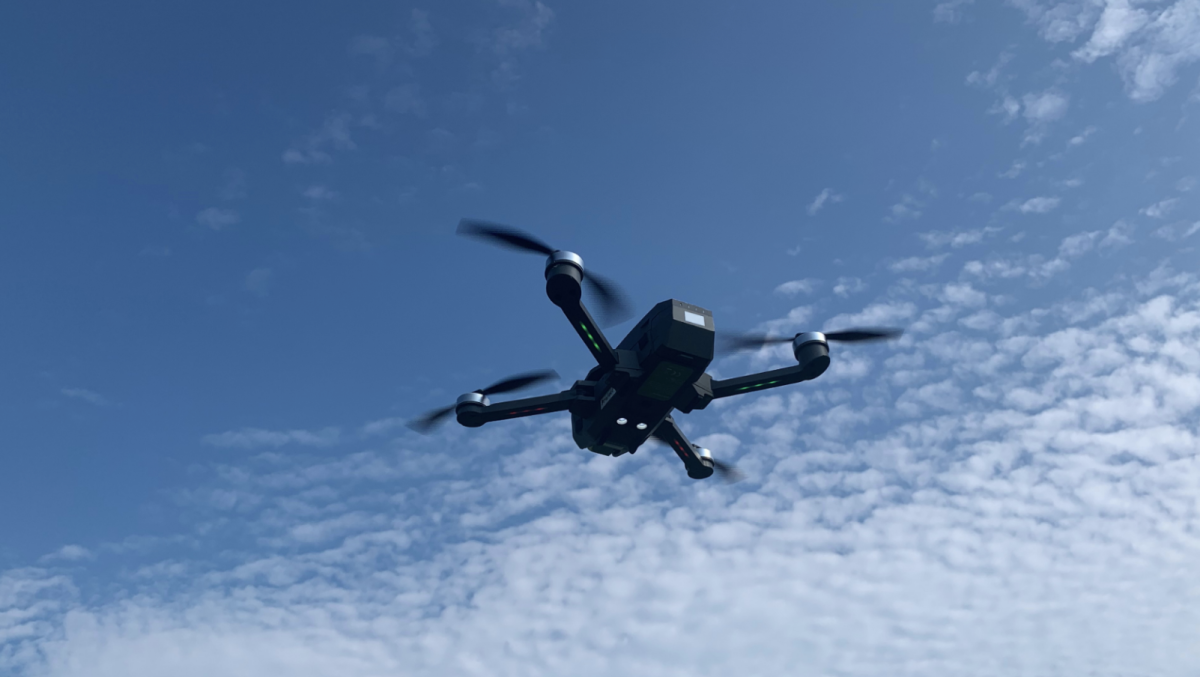
The explosion of drone popularity ten years ago was unprecedented. New technology fads are not anything new–we’ve had the hoverboard, virtual reality, Meta glasses, and even NFTs (non-fungible tokens). Eight-year-old me spent hours outside flying his toy drone. Now, ten years later, the popularity of the drone still hasn’t left society, but it may be for the worse.
The rapid development of drones is certainly fascinating, and it shows promise for futuristic realities such as efficient drone delivery systems. If this technology falls into the wrong hands, however, it can go awry. Civilians now have extra concerns in their daily lives, as drones can violate their privacy. Meanwhile, in a broader scope, wars are being fought with drones. The war in Ukraine provided an early depiction of why we should fear drone warfare; not because of the war itself, but of how civilians are impacted–and the new war in Iran seems to be the next target. Drone technology is advancing rapidly, to the point where legislation can’t keep up with it. Ultimately, governments must keep up with these developments in both privacy and warfare laws to promote ethical guidelines.
If citizens don’t feel safe in their everyday lives, the federal government should take this as a cue to reform their policies. First, hacking is a major issue because GPS broadcasts are easily accessible. The unencrypted availability maintains the risk of hijackers taking over drones to redirect or crash them. Next, the future of a very public environment seems inevitable–the reality of drones with cameras and microphones flying over our heads everywhere. However, with so many civilian operators around now, that trust is hard to keep due to a lack of proper regulations. Because public integration of drones was so quick, regulations from the Federal Aviation Administration (FAA) remain slow to adapt. Anyone’s consent can be easily disregarded, whether there is intent from the operator or not. From closing our window curtains at night to avoiding being tracked throughout a large city, the scope of drone detection impacts how civilians attempt to preserve their rights to privacy. To advance from basic safety rules, the FAA must enforce clearer laws on surveillance and state clear acknowledgment terms before purchasing a drone.
Suspicious drone usage in our own neighborhoods is frightening enough, but warfare utilization raises even more questions. Drone warfare was praised as safer and more precise, being falsely labeled as ethical. In actuality, the violence is still just as jarring as traditional warfare–it’s just being carried out differently. The tactic of remotely hitting targets from a distance gives less meaning to violence and warfare can be normalized in video-game style operations. A false sense of moral superiority befalls operators when, really, a kill-chain is in place. The kill-chain system is a formula that identifies and then strikes following a command chain from analysts to drones to leaders, but it’s proven to have drastic consequences. A 2010 Afghanistan strike killed 23 innocent civilians because of the failures of the kill-chain system. Here, the comfort in warfare is the bigger problem than the drone technology itself. Since 1949, the world was supposed to follow the standards of the Geneva Conventions that answered what constitutes ethical warfare and protected the innocent, however, citizens are getting hurt. Their safety should be the main priority over any form of technological development.
There is now absolutely a deadly potential of how warfare can be maximized. In the war between Russia and Ukraine, 80% of casualties on both sides are reported to be directly caused by drones. Drone swarms–groups of drones landing strikes in “kill zones”–are a real possibility in Ukraine. This reality becomes even worse when considering the role of AI. Having the human role completely cut out is certainly a bone-chilling idea. Can we leave life and death to automation? Drone warfare is certainly efficient, but where should we draw the line for ethical boundaries? If the objective is primarily to win the war, then it becomes difficult to fight the strategies. We need more international frameworks surrounding how we work with drone warfare, similar to our global treaties on nuclear warfare.
Drones are shaping our society from how we live on a day-to-day basis to how our governments engage in war. Despite this reality, we must fight for policy change. First, outdated privacy and safety laws must be up-to-date and enforced by the FAA who is responsible for keeping our skies safe. Globally, we need international agreements for a new AI-driven existence. Just as we limited gas warfare, genocides of prisoners of war, and nuclear weaponry, we must tackle the warfare concerns that rapidly develop alongside the rise of artificial intelligence. Locally, Vanderbilt University is successful in this–drone operations require approval from the Office of Risk and Insurance. An “Unmanned Aircraft System Activity Request Form” has to be signed by all production companies, allowing for a safe campus experience. We, as individuals, have a role to keep each other safe. The usage of drones is not inherently immoral, but it depends on the operator. As we push our governments for better regulations, keep your moral responsibility–respect our people’s boundaries and use drones with caution.