On Jan. 20, 2026, Canadian Prime Minister Mark Carney proclaimed the rules-based world order, one led by the United States, dead. It’s a familiar trope for the former central banker, one that he has frequently mentioned, most recently in the Chinese capital of Beijing, where he stated that Chinese-Canadian cooperation boded well for a “new world order.” What shape this new world order will take, or if it will even come to pass, is a matter of debate. Yet, what is undeniable is the waning of American influence on the world stage, and the more dangerous world that this brings to all of us.
American influence on the world stage is intangibly tied to the rules-based world order. Scared from the immense sufferings of World War II, the United States and its allies created this order to ensure that international politics had a structure it could operate by, and more importantly, that nations had an idea of what can and cannot be done when dealing with each other. For much of the last century, the US benefited from its position as both chief architect and enforcer of this world order, which was the basic mechanism through which the US asserted leadership in the world. Being the chief architect, the US had the opportunity to write many of the rules this world was governed by to its advantage, such as having the US dollar as the world’s reserve currency. As chief enforcer, the US could simultaneously order other nations to behave in accordance with the rules, like during the Suez Crisis, and at the same time, exempt itself from the constraints of the rules. As a result, this world order was not perfect by any means, but what it ensured was that other powers, being unwilling or unable to counter US diplomatic, military, and economic power, largely played along by the rules. This unipolarity of American power ensured a period of relative peace in the world, giving birth to the idea of the Pax Americana.
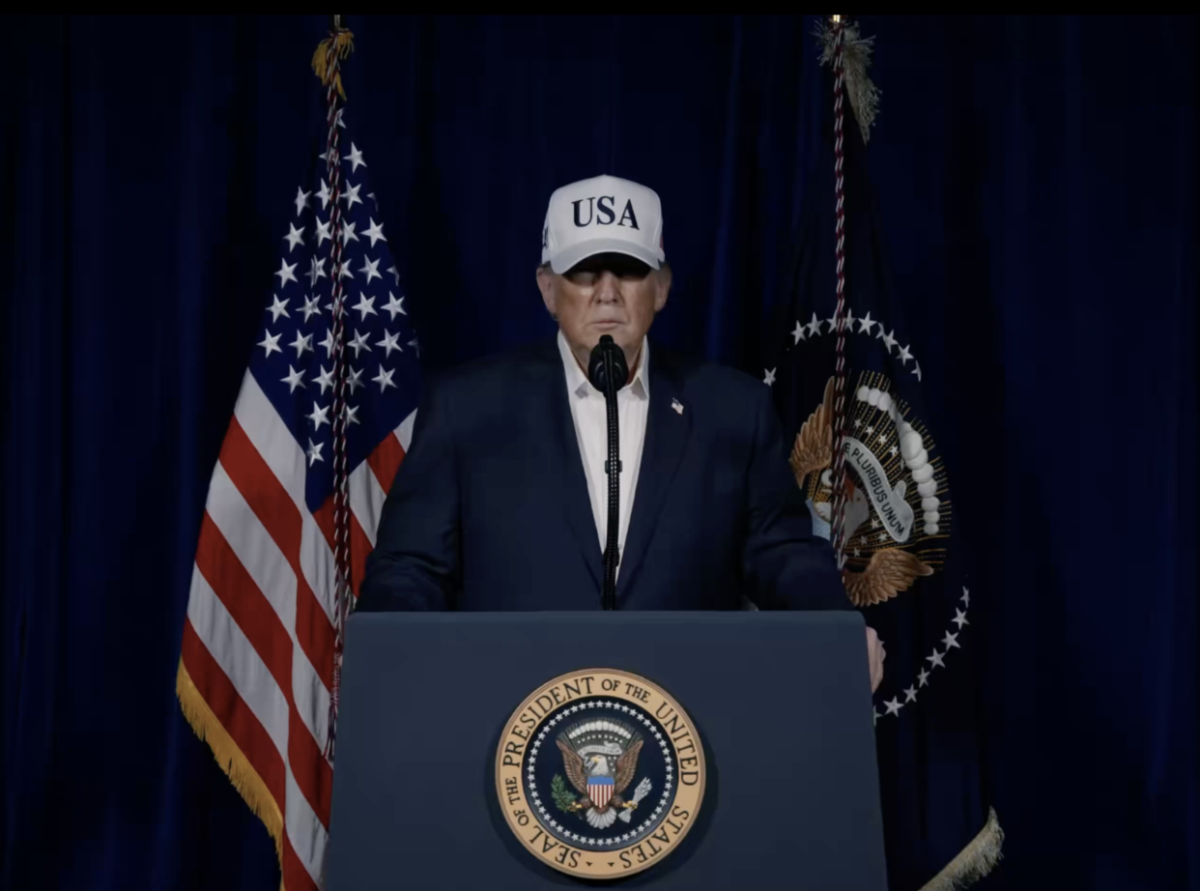
While American leadership was derived from the rules-based world order, the rules-based world order was also dependent on American enforcement and cooperation. With the decline of American willingness to exert leadership starting from the first Trump administration, many global actors found that international rules could be bent, or even broken, without major consequences. This phenomenon was only exacerbated in the Biden administration, when conflicts from Russia-Ukraine to Israel-Palestine made it increasingly evident that US influence was no longer strong enough to enforce fundamental international rules, such as the territorial integrity of nations. Ironically, this seems to have resulted in an increased desire of the second Trump administration to violate international rules itself, from the disruption of the global rules of free trade to musings on violations of territorial integrity. These actions have further diminished the power of American leadership on the world stage, made much worse by the fact that the US is now openly flaunting the rules it once purported to uphold. Recent events, particularly in Iran, have demonstrated that even with this new desire to use the stick rather than the carrot in diplomacy, US diplomacy has been unable to accomplish its stated foreign policy objectives, despite being reinforced by formidable American military strength.
As the power of US leadership diminishes, many other global actors are rising up to fill the vacuum left behind. Ironically, it is now China, having developed its economy under the US established rules of free trade and cooperation, that has become one of the most vocal defenders of that rules-based system. The danger that the move to a more multipolar system presents is that these other actors, like China, are more likely to be regional powers. They lack the ability to project power globally the same way that the US does, whether that projection be through economics or military, and their regional influence creates multiple global power centres. In this multipolar world, when great powers come into conflict with each other, there is no longer a single entity capable of using the threat of force to enforce the rules that have kept the world largely peaceful since World War II. Countries may become more likely to resort to violence to resolve disputes between each other, and that is a more dangerous world for all of us to live in.
Ultimately, American leadership is the devil we know. It remains one of the standard bearers the world needs for the maintenance of peace and prosperity. A world that is more “stable, predictable,” to quote French President Emmanuel Macron, is a better world for all of humanity to live in, where fundamentally, people will be able to go about their daily lives without fear of the ripple effects of armed conflict, regardless of whether those conflicts are in their cities and streets or continents away. To achieve this, American diplomacy must recognise that the global institutions and rules it now shuns are precisely what gives it power on the world stage, and reengage with a renewed focus on multilateralism rather than transactionalism. Diplomats and policymakers will also have to develop clear, long term diplomatic and grand strategy goals for America’s role in the world. These have been long absent since the end of the Cold War, and have in part contributed to the inconsistent foreign policy under both Democratic and Republican administrations. This work will take time. Much trust and goodwill towards American diplomacy has been burnt up in recent months, and reconstructing those requires both energy and commitment, but as the proverb says, “there is no time to start like the present.”