“Now go, attack Amalek” (a town rivalling the Israelites) “and proscribe all that belongs to him. Spare no one, but kill alike men and women, infants and sucklings, oxen and sheep, camels and asses!”
1 Samuel 15:3
“Blot out the memory of Amalek from under heaven. Do not forget!”
An alarming July 2025 poll showed that roughly 75% of Israeli Jews (compared to a negligible amount of Israeli Muslims) agree that “there are no innocents in Gaza.” The lessons of Amalek, mentioned repeatedly by Israeli prime minister Benjamin Netanyahu in his addresses to IDF soldiers in the aftermath of Oct. 7, reign large. This statistic is not merely a gauge of belligerent wartime sentiment, it is a diagnosis of a racist, perilously genocidal tendency in Israeli society intersecting deep ethnic and religious divides. It is an echo through history of a regressive, colonial past, complicating modern narratives of victim and victimizer, native and colonizer – a past which may be coming back with force.
Apartheid is a universal phenomenon with a distinctly South African coinage. Legally established in 1948 – interestingly, the year of Israel’s foundation – with the victory of the National Party, apartheid (Afrikaans — ‘apartness’) is the legal framework of extreme segregation in the context of colonial racial replacement. In the 20th century, colonial societies, built upon the permissive ideology of racial superiority in order to maximize resource extraction via the economic and military hegemony of a racial group, had to adapt to the sensibilities and structures of modern democracy, or risk collapse. Like Jim Crow America, in a world where the acceptance of slavery and ideas of inherent superiority had fallen to the wayside, the language of ‘separate spaces,’ ‘different cultures,’ and ‘commonsense morality’ became the new window-dressing for oppression.
A key pillar of its agenda, the 1959 Promotion of Bantu Self-Government act corralled many black South Africans into four newly created semi-independent internal territories, dubbed ‘Bantustans,’ stripping them of the basic rights and privileges of South African citizenship (freedom of movement, participation in the legal process) and relegating them to the poorest areas of the country. Such methods of population control — citizenship status manipulation and the granting of restrictive internal ‘sovereignty’ — are a critical feature of apartheid societies. They create societal entrenchment and give legal form to previously unspoken relationships of power. Though South African apartheid swelled, deflated, and eventually ended due to internal and external pressure in the Mandela-Le Klerk coalition of 1994, these entrenchments continue to this day, with a stunning 37.6% unemployment rate for black South Africans. Like a sprinter without running shoes, black South Africans, even after the end of apartheid oppression, never had a shot to catch up.
Far from the abstracted and historically distant decrees of princes and governors-general, the petit bourgeois ‘boer’ (farmer) — became the longtime bogeyman of racist economic and territorial disenfranchisement. Likewise, early Zionist movements championed the idea of Israel as a Jeffersonian, colonial farming society for Jews, creating waves of settlement and expulsion in Palestine which continue into the modern day. Then in 1948, following the existential crisis of the Holocaust and mass loss of trust in the safety of Judaism as a diaspora society, Israel (along with an independent Palestinian territory) was carved out of the British Levant, roughly approximating what had once been the Jewish homeland. This resulted in near-instantaneous Arab invasion, bloodshed, and the forced relocation of over 750,000 Palestinian Arabs, making adequate room for the victorious Israel.
In a flash, one Palestine became three. Its demographics inverted – through a series of Israeli provocations and disastrous Arab incursions, the fledgling country slowly grew, along with its military capabilities – landing us in today, where its ruling party (founded by terrorist-emeritus Menachem Begin in 1973) seems to be again reaching a crescendo in its existential battle against pan-Arabism.
The post-1948 state of affairs in Israel has been described as apartheid by multiple human rights and expert organizations, such as Amnesty International, B’Tselem (an Israeli human rights center), and the UN. In the wake of the Gaza War, these same groups have escalated their accusation to one of outright genocide.
The 1976 UN Apartheid Convention, held in the context of South African apartheid, defines the crime against humanity as “inhuman acts committed for the purpose of establishing and maintaining domination by one racial group of persons over any other racial group of persons and systematically oppressing them.”
There are two complicating factors when applying such a definition to Israel.
First, apartheid has typically been understood as a crime perpetrated by one racial group over another, where prejudicial systems of power and racist societies self-perpetuate. In South Africa, thirty years after the end of legal apartheid, only 17% of whites express ‘trust’ in other ethnic groups, compared to a (considering the circumstances, more reasonably minded) 32% of black and 44% of mixed individuals. Still-existing fractures in South Africa run along distinctly racial lines.
In Israel, more contentious religious divides map only partially to racial divides. Jews constitute roughly 80% of Israelis, divided between those of European ancestry (Ashkenazi) and of Middle Eastern / Spanish ancestry (Mizrahi / Sephardi). This division is exacerbated by historically divergent relationships to the Holocaust and the Zionist project. On the other hand, Arabs and non-Jews, mostly Muslim with Christian and Druze populations, express a heightened religiosity compared to Jews.
Take the Jewish ultra-Orthodox (Haredis) — who, in a highly controversial 2024 court ruling, lost religious exemption from the national draft, to significant uproar. The group’s deep religiosity makes it exemplary of the mechanics and diversity of belief among Israeli Jews. Led by those who dedicate their lives to study of the Torah, Haredis represent some of Israel’s staunchest Zionists and proudest anti-Zionists, those profoundly influenced by belief in a Jewish state and those who see it as ‘born in sin.’ They personify the role of Biblical thought and its modern interpretation in debates over Israeli sovereignty and military engagement. Beyond the great Jewish / Arab divide in Israeli society exists a profound diversity of opinion which must be considered when making blanket statements about its society.
Still, a 2025 poll showed a concerning 72% of Israeli Jews do not trust their Arab countrymen, compared with only 43% in the opposite direction. Even worse, 60% of Israeli Jews prefer segregation between Jews and Arabs, which, as the lessons of history show, can only produce inequality and oppression.
Second, apartheid has also usually meant a crime occurring within a national border and under a national directive – this is tricky, when the territory of Palestine maintains three distinct governing bodies: Israel, Hamas, and the Palestinian Authority.
Yet this distinction veils a few simple realities of Palestinian political life.
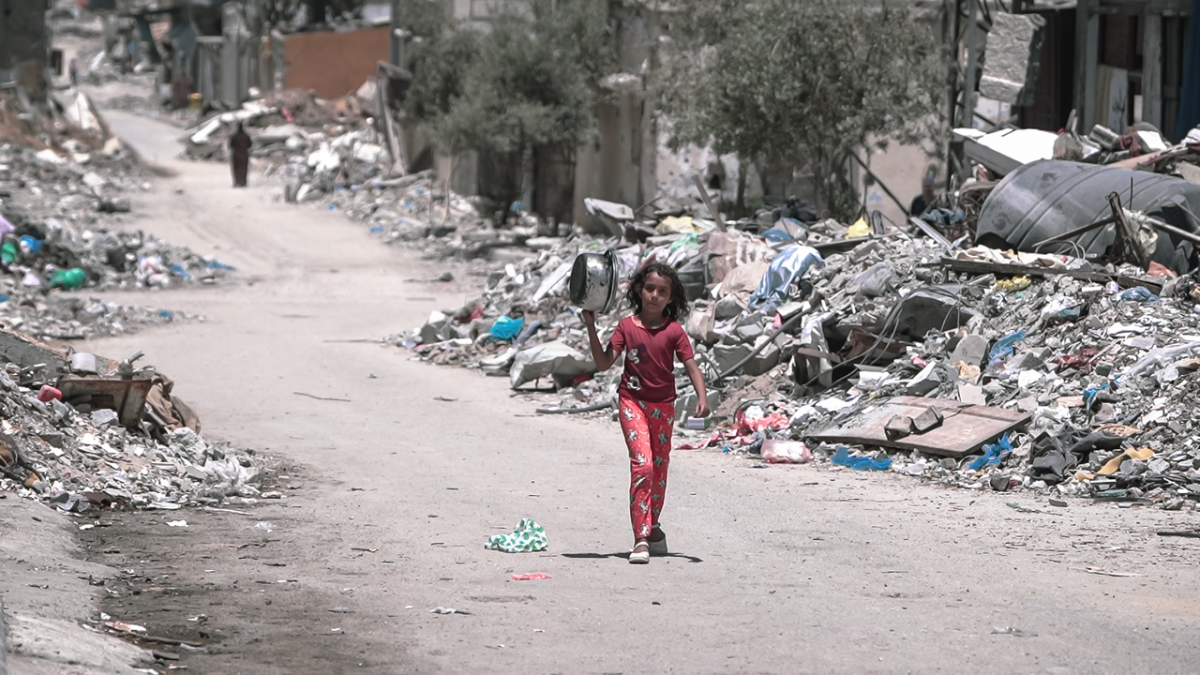
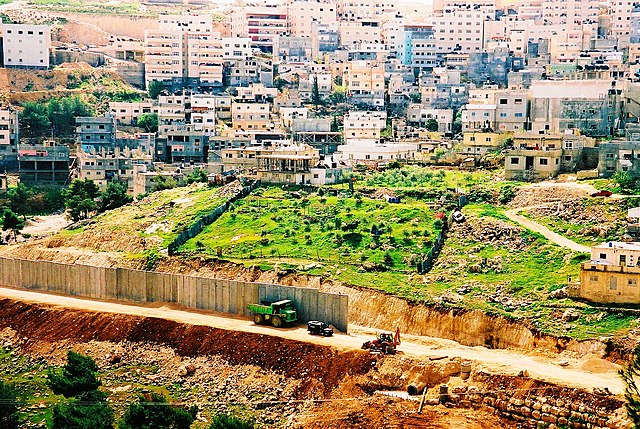
Israel is the only authority listed with international recognition, an advanced military, and long-term self-determination. It holds complete control over population registers and the import and export of goods, information, water, and electricity, and people. It actively sponsors military occupation and efforts to settle areas governed by the other two authorities, and enforces that control through networks of checkpoints, outposts, and camps. When we fully consider these realities, it becomes farcical to suggest that anyone living between the Mediterranean and the Jordan does not live and die an Israeli subject. Our Bantustan-ized ‘Schrödinger’s Arab,’ both self-determining foreign enemy and groveling dependent who inhabits the occupied or marginally sovereign territories of Palestine, must collapse into the sober reality that an Arab noncitizen of Israel may very well still ‘belong’ to Israel – that the difference between the bleeding ‘non-innocents’ of Gaza and the Arab citizens of Israel is a fortunately-placed wall and some paperwork.
Israeli apartheid is simply a new kind of apartheid – more brutal, but less clearly defined. Under the heat and pressure of 21st century geopolitics, its oppression has curdled into outright genocide.
Resembling the tumultuous decade before the end of South African apartheid, in a flurry of social media posts, grim statistical and anecdotal reports, dodged arrest warrants, documentaries, UN resolutions, protests, and even memes following the October 7 massacre — somewhere along the way, like a light switch flipping – global public opinion exhausted its patience for Israel. A poll conducted in Feb. 2026 found that, for the first time in recorded history, more Americans sympathized with Palestinians than Israelis.
But unlike South Africa, Israel, for the time being, seems to be keeping the world’s most powerful military not only passively but proactively on its side (see: the assassination of Ayatollah Khamenei). With the Democratic and Republican parties hastily diverging on Israel, and elections on the horizon, it is hardly an exaggeration to say that the fate of the 5 million Palestinians in Palestine (and 9 million in diaspora) hinges, now more than ever, on how well one is able to persuade a few thousand Pennsylvanians, Michiganders, and Georgians to drive to their local polling place.
The Israeli apartheid has demonstrated its incompatibility with a two-state, or even three-territory solution – its solution, as demonstrated unequivocally in the Gaza War, has trended final. Though polling ahead of the July parliamentary election shows a stable majority for the opposition, Benjamin Netanyahu still has 2 years left in power. With support for a two-state solution at 27% in Israel and 33% in the West Bank, and hopes for long-term peace at 20% in both regions, large-scale political transformation seems impossible in the near future, despite deep fissures in Israeli society and significant opposition support. Without a Mandela and Le Klerk, the ‘Holy Land’ may require a miracle.