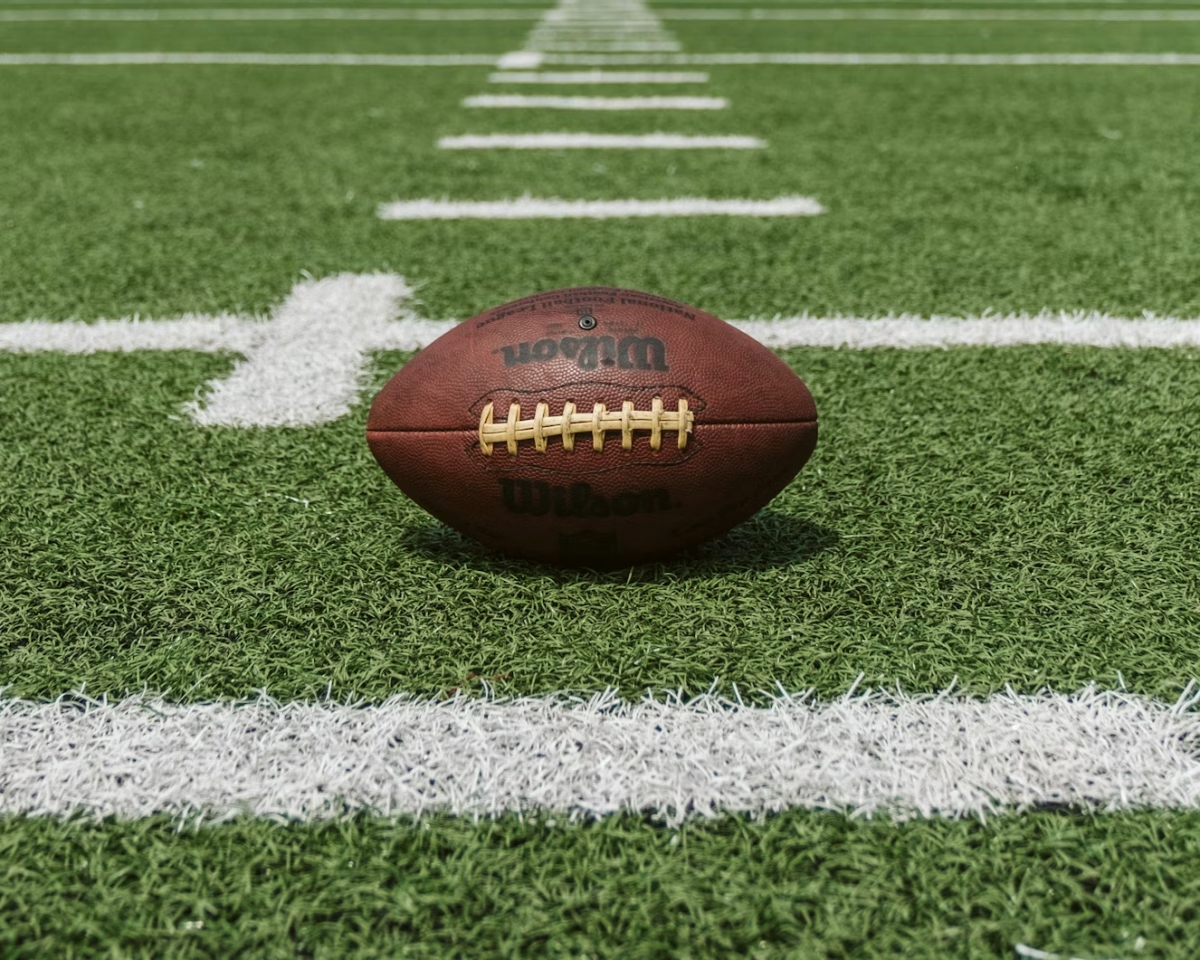
The Super Bowl is watched by over 100 million people, making it one of the most influential stages in America. This event has long been marked as a rare moment of national unity, a single night out of the year where the country sets aside its differences to watch football, criticize ads, and prepare for a spectacle of a halftime show. However, in recent years, the facade that the Super Bowl exists as a nonpartisan, unifying entity has begun to crumble. Performances from the last two halftime show artists, Kendrick Lamar and Bad Bunny, have sparked major backlash and conversation from critics who claim that the NFL is becoming too political.
The idea that sports are absent from politics is a myth. NFL games have more times than not included patriotic rituals including national anthem ceremonies, military flyovers, and tributes to American troops. These displays are widely accepted due to their lack of controversy and the status quo of the “game day experience.” However, these actions are deeply political expressions of national identity. When issues arise about politics in sports, there is rarely an objection to these types of displays. Instead, criticism comes when political messages challenge the norm instead of reinforcing it.
The NFL’s past treatment of player activism makes this dynamic more than clear. In 2016, former San Francisco 49ers quarterback Colin Kaepernick began kneeling during the national anthem, a peaceful yet powerful way to protest police brutality and racial injustice. The reaction nationwide was immediate and intense. Fans, politicians, and anyone in-between accused Kaepernick of disrespecting the country, and this controversy soon took over the media. Despite having taken the 49ers to the Super Bowl in previous years and having extended his contract to end in 2020 back in 2014, Kaepernick never played in the NFL again after the 2016 season and became a free agent. The message from the league was crystal clear: political expression – particularly that of racial injustice – was unwelcome on the football field.
This history makes the current moments particularly significant. When artists like Kendrick Lamar and Bad Bunny use this stage to highlight issues related to race, culture, or identity, they are helping shift the NFL politically. The halftime show is not simply a music performance; it is the biggest, most visible culture platform in the world. For artists that represent marginalized communities, being able to appear on that stage and share their music allows them to bring their perspective and stories to an audience that might otherwise never encounter them.
This is not met with welcoming arms by everyone, though. This Super Bowl has brought more critics, as tensions are high with the Trump administration regarding how they have abused ICE over the last six months, as well as Americans having very polarized views on how immigration enforcement should be carried out in America. Organizations like Turning Point USA argued that this performance was inappropriate for the NFL, and even gave viewers an alternate halftime show to “boycott” what they perceived as blatant disrespect of the nation. While the argument has been made that politics should not be intertwined and that the NFL should strictly stay entertainment-driven, it completely ignores the embedded political symbolism that lives in professional sports. What these critics are arguing is not the absence of politics, but the absence of politics that challenge the current administration and force uncomfortable conversations about racism and ICE specifically in the United States today. Turning Point USA and many other conservative organizations want to stop the elevation of voices from communities that have historically been marginalized.
The Super Bowl has always reflected the cultural and political climate of the moment in which the game takes place. As the biggest stage for sports in the United States, it is impossible for the Super Bowl to avoid becoming a reflection of the cultural conversations of the moment. Instead of pretending that there is no connection between politics and sports, the fact that the NFL is willing to feature artists who speak to the realities of racism, identity, and inequality in the United States reflects the honesty of the NFL.
Rather than wondering if there should be any connection between politics and sports, the fact of the matter is that there has always been a connection. The question is whose politics have been reflected in the past, and whose have not. As the Super Bowl continues to evolve to allow artists to speak to the realities of the moment in which they perform, this is not a problem. It is a long-overdue recognition of the fact that there has never been a disconnect between politics, culture, and entertainment.