For years, the central legal question in college sports was simple: should college athletes be allowed to make money? That question is no longer theoretical. Athletes can sign name, image, and likeness deals, and the House settlement now allows schools to share revenue directly with student-athletes.
The more interesting question now is quieter, more technical, and far more important: who gets to decide when athlete pay goes too far?
That question sits at the center of a new legal fight involving the NCAA, the House v. NCAA settlement, the newly created College Sports Commission, Tennessee’s NIL law, and schools like Vanderbilt that are trying to compete in the SEC while staying compliant. It is niche, but it reveals the future of college sports. The post-amateurism era is not a free market. It is a regulated market, and everyone is fighting over who gets to write the rules.
On June 6, 2025, the U.S. District Court for the Northern District of California approved the House v. NCAA settlement. Vanderbilt described the ruling as the beginning of a new era for college athletics, and it said SEC, ACC, Big 12, and Big Ten institutions may share up to 22 percent of defined athletics revenue with student-athletes, estimated at up to $20.5 million per school.
At first glance, that sounds like a clean victory for athletes. For the first time, schools can directly compensate the players who help generate massive revenue. But the settlement did not simply unleash a free market. It also created a compliance structure. Vanderbilt identified the newly formed College Sports Commission, along with Deloitte and LBi Software, as responsible for helping institutions through the transition and managing the NIL Go process for third-party NIL agreements.
That is where the legal tension begins. NIL Go is supposed to make sure third-party NIL deals are real endorsement contracts, not disguised pay-for-play transactions. In theory, that guardrail makes sense. If schools are limited by a revenue-sharing cap, boosters and collectives could otherwise use fake endorsement deals to quietly pay athletes beyond that cap. But guardrails can become gates. And whoever controls the gate controls the market.
The College Sports Commission has already become more than a passive paperwork office. In January, the Associated Press reported that the CSC had not cleared 524 NIL deals worth $14.94 million while clearing 17,321 deals worth $127.21 million, with the data current as of Jan. 1, 2026.
The reasons for rejection matter. The AP reported that deals were not cleared when they lacked a valid business purpose, failed to directly activate an athlete’s NIL rights, or paid athletes at levels that were not commensurate with similarly situated individuals. Those standards sound technical, but they decide whether an athlete gets paid.
That should matter to Vanderbilt students and fans. The future of Vanderbilt athletics may not only depend on recruiting, coaching, facilities, or fan support. It may also depend on how quickly and fairly a private enforcement body reviews NIL contracts. An athlete’s ability to earn money from a Nashville business, a local sponsor, or a national brand could be shaped by a clearinghouse most fans have never heard of.
Vanderbilt has clearly recognized how important NIL infrastructure has become. In February 2026, Vanderbilt Athletics launched Anchor Advantage, an internal organization designed to assume direct control of the university’s NIL efforts and absorb the foundation built by Anchor Impact, Vanderbilt’s former third-party collective.
The school described Anchor Advantage as a way to connect student-athletes with the Nashville and Vanderbilt communities through brand partnerships, social media collaborations, speaking engagements, content creation, networking events, and mentorships. That is a major strategic shift. NIL is no longer something happening outside the university. It is becoming part of the athletic department’s operating model.
In a recent Vanderbilt Hustler interview, Athletic Director Candice Storey Lee said Anchor Advantage helps manage Vanderbilt’s NIL infrastructure and that student-athletes who build strong brands can command a market. She also emphasized the need for nationally enforced guardrails around NIL. That captures the contradiction schools now face: they want flexibility to compete, but they also want rules that keep competitors from turning NIL into an unlimited bidding war.
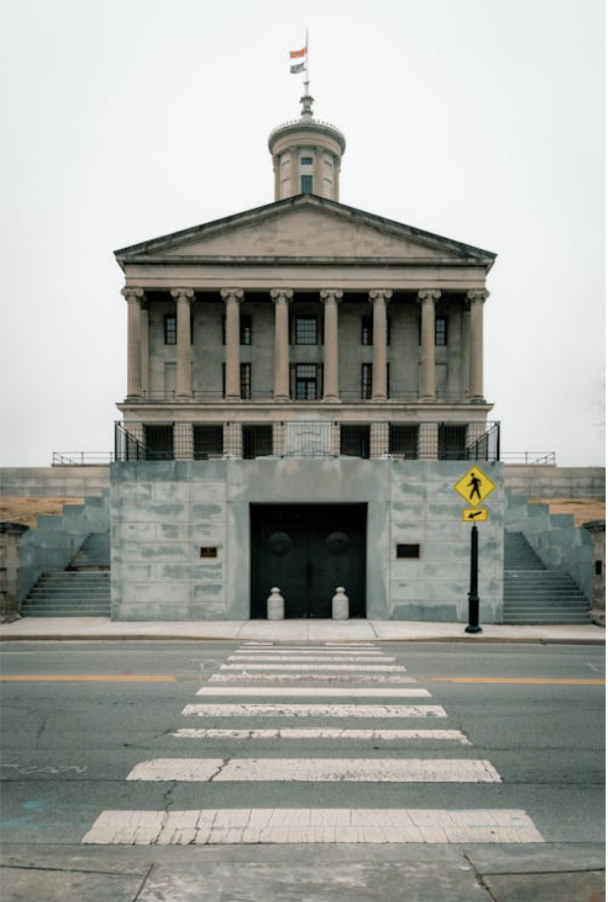
This is why Tennessee’s role matters. In 2025, Governor Bill Lee signed legislation expanding Tennessee’s student-athlete NIL law. The amended law allows Tennessee student-athletes to receive unlimited NIL compensation unless the limits are expressly prohibited by federal law, a valid court order, or an antitrust exemption.
The same analysis explained that Tennessee institutions do not have to follow NCAA rules that lessen full and free competition in trade or commerce affecting Tennessee. That is not just a technical tweak. It is a direct challenge to national college sports governance.
In plain English, Tennessee is saying this: if the NCAA or a similar body restricts athlete compensation without clear legal authority, Tennessee schools and athletes should not have to accept it. This is not only about the University of Tennessee. Vanderbilt, as an SEC school located in Nashville, operates inside the same state legal environment.
The result is a strange collision. The House settlement tries to create national order. Tennessee law tries to protect athlete compensation and limit outside restraints. The College Sports Commission tries to enforce the settlement. The NCAA wants federal stability. Athletes want money, mobility, and clarity. Schools want to compete without getting punished. Every actor claims to be protecting fairness, but they do not agree on what fairness means.
The Tennessee Attorney General’s Office has pushed this conflict even further. In December 2025, Attorney General Jonathan Skrmetti led a multistate effort opposing a proposed College Sports Commission University Participant Agreement. His office warned that the agreement could harm student-athletes, eliminate transparency, and punish schools if the CSC was held accountable for violating the law.
The Tennessee AG’s office also said the proposed agreement could strip schools of conference revenue or impose postseason bans if a state, student-athlete, or third party brought litigation related to CSC rules, investigations, or enforcement decisions. It further argued that the agreement would force institutions into arbitration, waive jury trial rights, and create broad gag orders that prevent schools from advocating for legal changes or consulting with state officials.
This is where the issue becomes bigger than sports. The College Sports Commission is not Congress. It is not a federal agency. It is not directly accountable to voters. Yet its decisions can affect athlete eligibility, university finances, conference competition, and the future of major college programs. That does not automatically make it illegitimate, but it does mean its power deserves scrutiny.
College sports has always had private governance. The NCAA itself is a private association. But the difference now is money. When amateurism was the formal model, the NCAA’s rules were framed as preserving education and competitive balance. That argument has been weakened by years of antitrust litigation, public pressure, state NIL laws, and the obvious commercial reality of college athletics.
Now that athletes can be paid, enforcement is no longer about preserving amateurism. It is about controlling a labor-adjacent endorsement market. That shift creates a legal puzzle. If college athletics is now openly commercial, should private sports regulators have broad authority to restrict compensation? If they do, what due process should athletes and schools receive? If they do not, how can college sports prevent wealthier programs from turning NIL into an unlimited bidding war?
The risk is that college sports ends up with the worst of both systems. Athletes may be told they are finally participating in a market, but only if their deals survive a private review process. Schools may be told they have stability, but only if they sign agreements limiting their ability to challenge the regulator. States may pass NIL laws, but national sports bodies may try to pressure schools into waiving those protections.
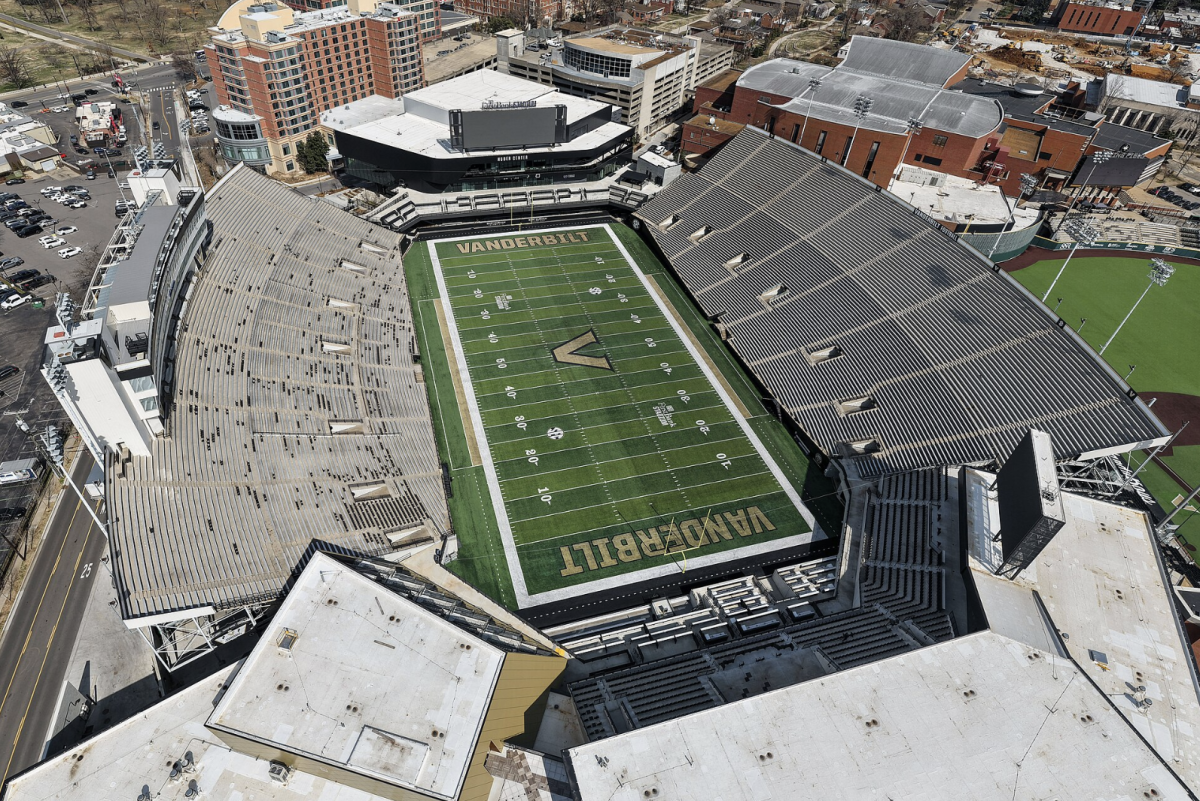
Vanderbilt is a useful case study because it does not fit the stereotype of a football factory. It is an elite private university in the SEC, located in one of the country’s strongest entertainment and business markets. Its athletes can benefit from Nashville’s music, healthcare, hospitality, and corporate networks. Vanderbilt’s pitch is not only ‘come play sports.’ It is ‘come build a brand in a city that matters.’
That makes NIL especially important. The Hustler interview highlighted Lee’s view that Vanderbilt can offer academic rigor, high-level competition, a strong community, and a major city at once. If NIL is partly about building a marketable identity, Nashville is not a side detail. It is part of the product.
But Vanderbilt’s advantage depends on the rules. If the CSC approves legitimate deals quickly and consistently, Vanderbilt’s Nashville pitch becomes stronger. If approval is unclear or uneven, schools with larger donor bases may still find ways to dominate. Compliance does not eliminate inequality. Sometimes it just changes where the inequality hides.
There is also an equity issue. The National Conference of State Legislatures noted that reports suggest up to 90 percent of compensation may go toward major revenue-generating sports such as football and men’s basketball. That does not mean those athletes do not deserve compensation. They do. But it does mean the legal structure of NIL and revenue sharing could shape which athletes receive meaningful opportunities.
Women’s sports, Olympic sports, and athletes with smaller media platforms may be affected by how schools allocate revenue and how the NIL market values visibility. If the new system claims to be fair, it cannot only be fair to the athletes who already have the most leverage.
The answer is not to return to amateurism. That model was never as pure as the NCAA claimed. College sports generated billions while athletes were limited in how they could profit from their own value. The better answer is a clearer legal framework.
Congress may eventually act; the National Conference of State Legislatures observed that federal legislation has been discussed to preempt state NIL laws and potentially grant antitrust protection to the NCAA. But a federal solution should not simply hand the NCAA or the College Sports Commission sweeping immunity. Any national law should include athlete protections, transparent NIL review standards, independent appeals, privacy rules, and limits on punishments that chill lawsuits or state investigations.
College sports has entered its administrative law era. The games are still played on fields and courts, but the real fight is increasingly happening in settlement agreements, state statutes, arbitration clauses, clearinghouses, and attorney general letters. That may not sound as exciting as a fourth-quarter touchdown or a walk-off home run, but it will shape who gets paid, who gets recruited, and who gets power.
For Vanderbilt, this is not a distant legal debate. It is directly tied to the school’s ability to compete in the SEC while maintaining its identity as an academic institution. Vanderbilt wants to lead in the new model of college sports. To do that, it will need more than donors and facilities. It will need legal clarity.
The NIL era answered the old question of whether college athletes deserve compensation. It opened a new one: when college sports finally becomes a market, who gets to be the referee?
Right now, Tennessee is not convinced the new referee can be trusted.