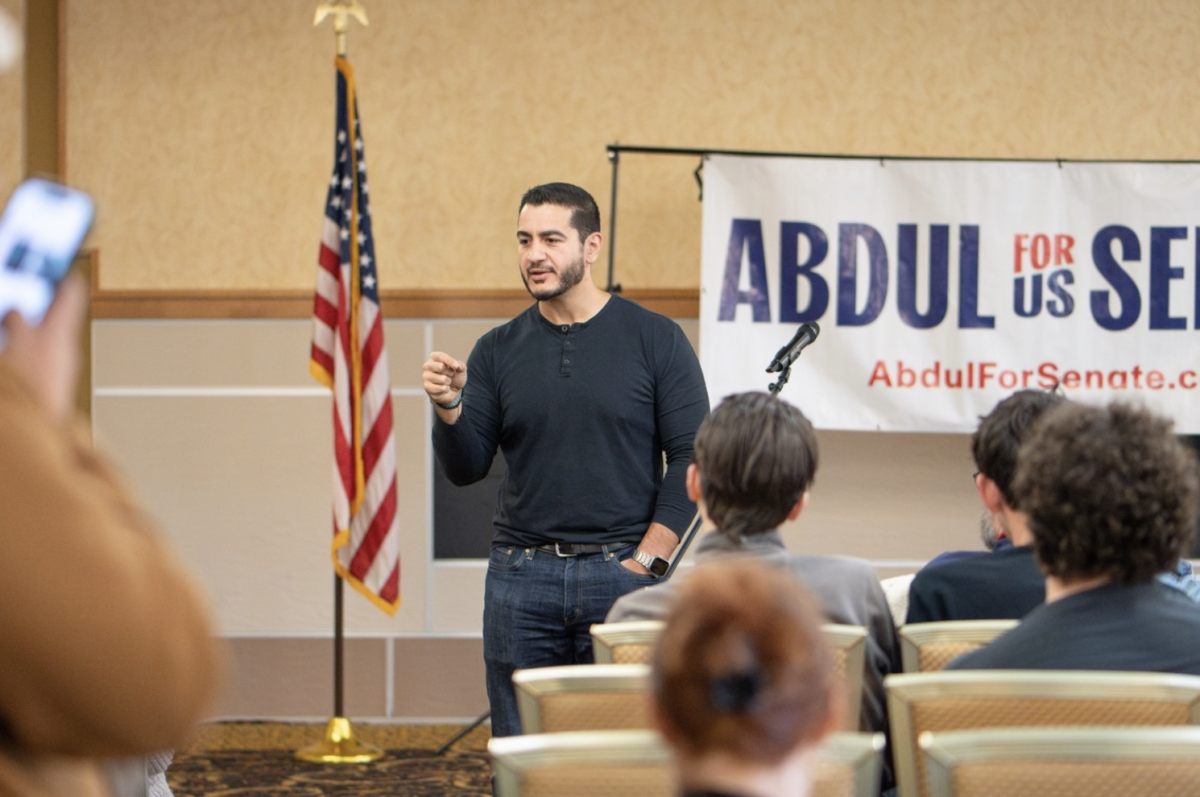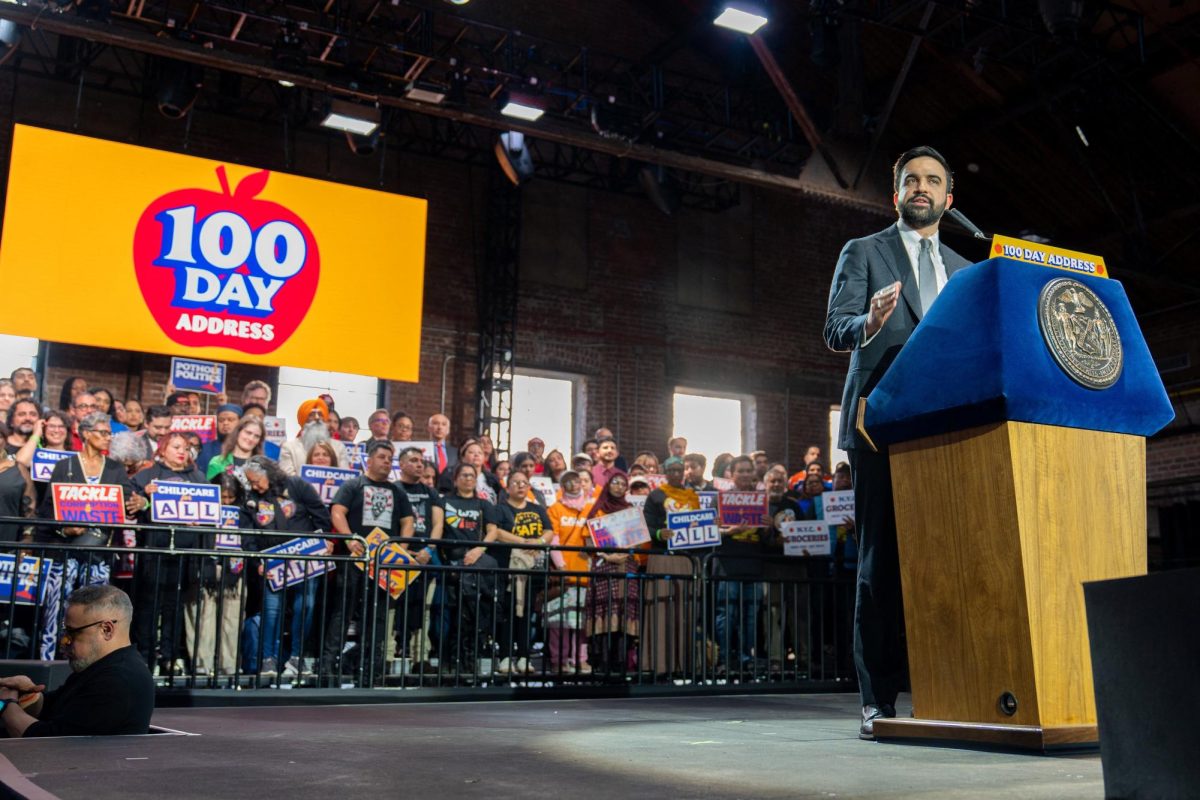
As New York City’s first South Asian and Muslim mayor, Zohran Mamdani has all eyes on him. Mamdani initially entered office under intense public examination, with critics questioning whether his radical, democratic socialist campaign promises were realistic. However, on April 12, Mamdani celebrated his 100 days in office and has shown great progress in implementing incremental, structural change. In his 100-day address, he proudly poses the question, “If you can’t solve the smallest task in someone’s life, why would they ever trust you to solve the biggest one?” This slower approach he’s taking suggests a platform that focuses on long-term reform instead of dramatic change, which may ultimately determine whether his ambitious campaign promises can succeed.
Historically, states like New York are among the richest according to its GDP per capita; however, there still remains a large gap between high-income individuals and low-income individuals regarding living standards. A main driver of Mamdani’s campaign is his goal to address the affordability crisis, specifically housing inequality in New York City. Over 55% of New York City residents claim to be rent-burdened, which means that they’re spending over 30% of their income on rent. Mamdani’s most recent initiative involves cutting landlords’ insurance costs by about 20% to 30%. This plan essentially aims to stabilize or lower the price of rent in New York by reducing the burden of increasing insurance premiums over the past few years. This rise in insurance premiums has tremendously impacted the price of maintaining rentable properties, which especially affects smaller landlords. While this may seem like a small feat, this combats an often-overlooked cost in terms of the rising price of rent. Realistically, no mayor can fix the housing crisis quickly, so approaching it in an incremental manner makes the most sense.
Another promise Mamdani has already started fulfilling is his goal for universal childcare expansion. In just the first week of the Mamdani Administration, Mamdani and Governor Kathy Hochul launched their program called “2-k,” which entails free childcare for 2-year-olds. Currently, there are only 2,000 seats available, which are backed by $73 million, but by next year, this budget will increase to $424 million, which will fund 10,000 more seats.
Mamdani’s most controversial initiative is his support for taxing the rich through the Pied-à-Terre Tax and Millionaire Tax. The Pied-à-Terre Tax places a tax on second homes valued over $5 million owned by out-of-state residents. On the other hand, the Millionaire Tax focuses on taxing individuals who earn more than $1 million per year in order to redistribute $9 billion in wealth to housing, public transportation, childcare, and other public services. However, these taxes do face an important structural limitation since New York City does not have the authority to implement these taxes itself. Since the state holds the majority of taxing powers, Mamdani must rely on Governor Kathy Hochul, along with the state legislature. This points out a considerable limitation with Mamdani’s ambitions, which is that he must rely on political alignment at the state level to carry out these initiatives.
In an attempt to help people who cannot easily afford groceries, Mamdani initiated the program for New York City’s first city-owned grocery store. This program is still in its early stages, with the La Marqueta location in East Harlem being the first among five. Essentially, these stores will provide groceries at a cheaper price by the city subsidizing certain food staples and buying items in bulk. This has received some backlash, though, since about $30 million must be spent on each store, which makes the program incredibly expensive to scale.
The biggest criticism people have regarding Mamdani is that he may push Marxist views into New York City. His commitment to democratic socialism, along with strong government involvement, incites the fear that the city will become too reliant on state control at the expense of private enterprise. However, Mamdani’s current approach shows that he is only trying to address smaller, structural issues instead of outright replacing the system.
All of these initiatives, though, are just the beginning. Mamdani has many intentions for the future of New York City and is actively working on fulfilling his campaign promises. For example, there are new city charter amendments that give Mamdani more power over zoning, along with the power to push through pro-housing development zoning changes without council vetoes. Additionally, his rent freeze initiative is still in progress, which prevents rent increases on rent-stabilized apartments. In addition to facing the housing crisis, he also has the goal of fast, fare-free buses.
Ultimately, this new kind of mayor is a breath of fresh air that has already made significant headway in empowering his city and tackling the unaddressed, fundamental issues. While he has not yet fulfilled all of his campaign promises, he has already changed the way we view progress in New York City and paved the path for a modern method of change.