As my seventh-grade teacher made her way through the aisles of desks, she handed us each a prompt for our upcoming essay. We had just finished reading The Giver, a dystopian novel about a sheltered community where extreme emotions of sadness and joy are deemed inappropriate, and people are assigned their jobs, spouses, and children. In short, their lives are curated and contained. Sitting there anxiously, I was excited to tackle whatever idea she would have us wrestle with, desperate to impress my favorite teacher. On the slip of paper, it read in bold letters: “Knowledge is power.”
It was my first introduction to this timeless, ever-present theme. I naively thought that education had the power to solve all the world’s problems. What I didn’t realize at that moment was that this seemingly cliché phrase is linked to the very foundation of American identity and culture. The US loves a good success story involving education because it exemplifies our much-mythologized love for freedom, meritocracy, and liberation. We romanticize it in literature and everyday life. Seeing people rise above all odds and work hard through the educational gauntlet is inspiring. Knowledge is power, after all.
What the phrase gets wrong lies in the simplicity of its syntax. Yes, knowledge is power; yet it is not that easy. Accessing knowledge in the first place is unfortunately only a privilege designated for some. While there are plenty of education success stories that represent the quintessential American Dream, there are also many stories in which education is denied.
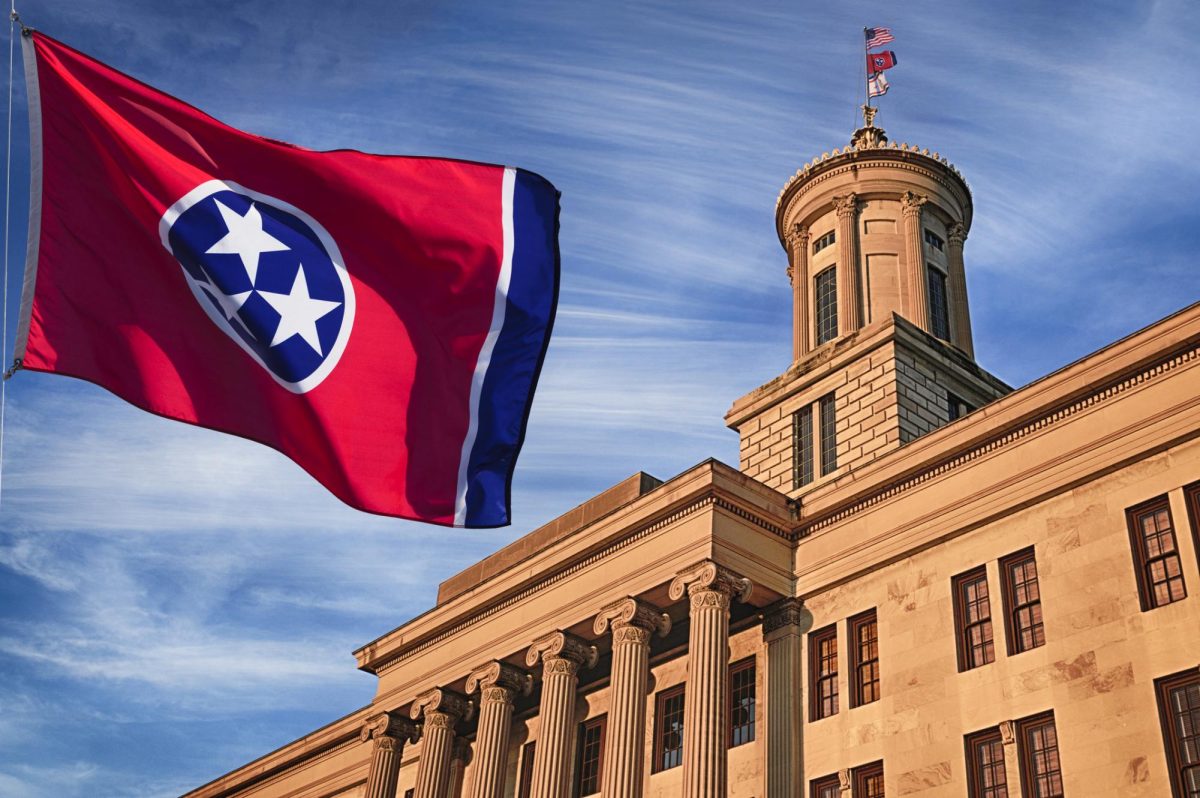
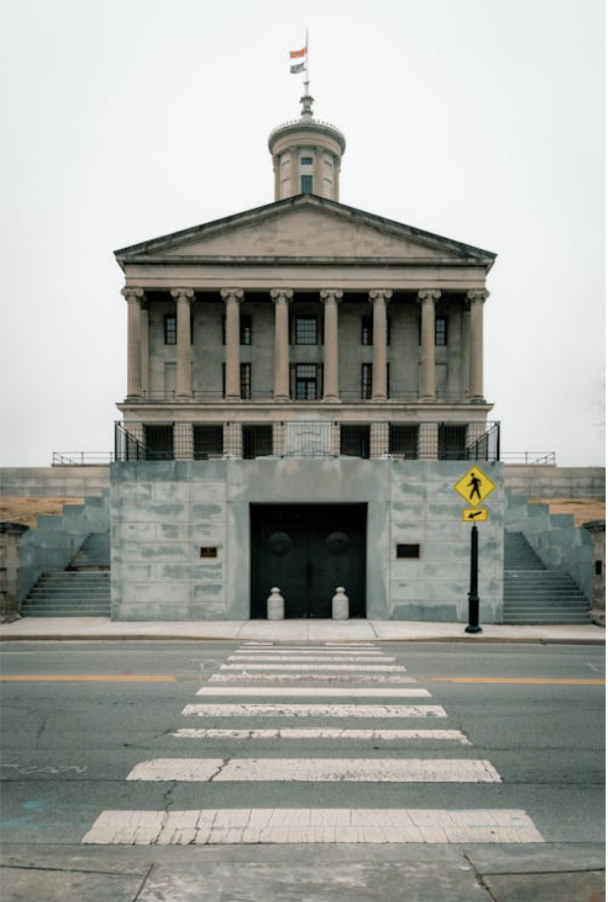
On March 16, 2026, Representative Lamberth’s (R-Portland) bill, HB0793, passed in Tennessee’s House of Representatives. It would require public schools to catalog students’ immigration statuses and send a report to the state. During the vote, three Republicans actually sided with Democrats in opposing the measure, including Jody Barrett (Dickson), Charlie Baum (Murfreesboro), and Michael Hale (Smithville). Those opposing the bill raise concerns about the cultivation of fear within classroom walls. Representative Gloria Johnson (D-Knoxville) warned, “We are targeting innocent children…and we are making them afraid to go to school because they’re afraid of what information that would go to the government and what that would do to their families.” In response, Lamberth justified the bill by premising it as simply a matter of collecting data. He states that “We should never be afraid of data, truth, facts, figures…I mean how many illegal immigrant children are in our schools? If the prior president had done his job and not had a border that was porous…we wouldn’t have this problem.” However, many are worried that what Lamberth characterizes as routine data collection will be weaponized by ICE as a way to continue deporting immigrants lacking documentation.
This version of the bill is a continuation of an ongoing battle dating back to last year. In 2025, the Senate, with a vote of 19-13, passed SB0836, a more extreme version of the House bill. SB0836 would allow for public schools to disenroll or charge children tuition if they cannot prove that they are legal residents. Presented by Bo Watson (R-Hixson), he argued that passing the measure would save the education system money. He specifically pointed to the “burden” that English Second Language programs have on the budget. However, the number of students in ESL programs does not translate to the quantity of undocumented students. Furthermore, since Tennessee does not have an income tax, everyone pays sales and property tax, therefore, the burden of such programs is distributed amongst everyone, not just legal citizens. This prior measure failed in the House due to concerns of losing $1.1 billion due to the Title VI violation of discrimination, so it was eventually amended to remove provisions related to disenrollment and tuition charges. Nonetheless, both versions of the bill are equally as monstrous and dehumanizing, undermining the idea of education being a human right, and thus stripping the humanity of the children. The Senate and the House are now deliberating as to which version of the bill to pursue.
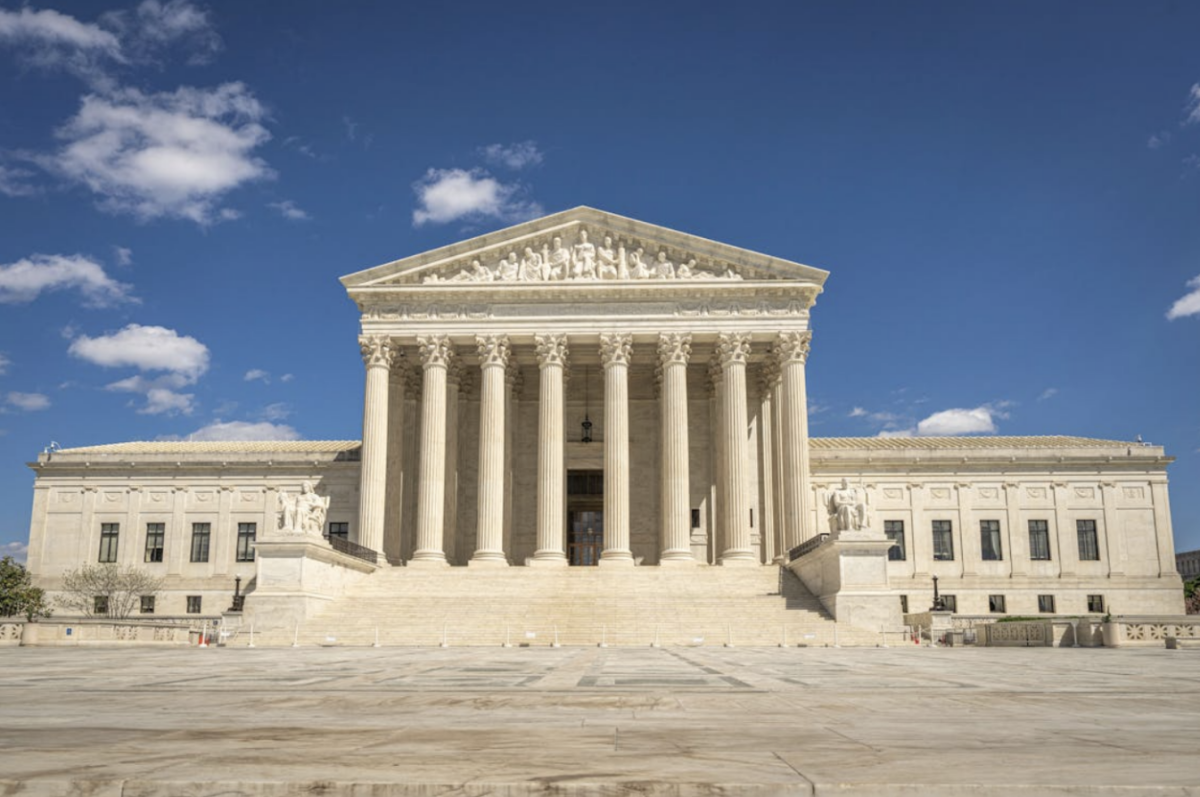
HB0793 has further implications than simply collecting data on status. It is the first step out of many in the anti-immigrant agenda here in Tennessee. Many oppositional forces are concerned that if the bill were to officially pass, it could be used as justification to overturn Plyler v. Doe, where, in 1982, the Supreme Court ruled in favor of free public education for immigrant children regardless of status. This decision stemmed from a controversy in 1975, when the Texas legislature approved a measure that would allow public schools to refuse enrollment for students that were not “legally admitted.” The Tyler Independent School District went even further, requiring tuition payment from students without official status. However, students from Mexico ultimately challenged the constitutionality of the framework, making it all the way up to the Supreme Court. In a 5-4 vote, the Court found that it violated the 14th Amendment’s Equal Protection Clause, bringing justice not just to those students but to every immigrant child without legal status. Requiring documentation proving status is just the first step towards the main objective of ultimately denying these children access to education. It also serves as another element in the hostile anti-immigrant environment currently brewing in Tennessee and also more broadly in the United States.
The right to a free education, protected under the United Nations’ Universal Declaration of Human Rights and affirmed by the US, is being sequestered as a privilege. Classrooms are becoming a battleground for identity politics, decentralizing the importance of education and ultimately degrading children by creating a culture of fear in what is supposed to be a place of refuge and community. The bill contradicts the very success stories that Americans not only praise, but even claim as their own. Political ideologies are saturating these spaces and transforming them into another social place marked by political division. By making “everything politics,” as Vanderbilt Professor Talisse illustrates in his book Overdoing Democracy, it poisons fundamental social spaces where people used to be able to come together, making it even more challenging to even fathom bipartisanship. More importantly though, it violates the humanity of these children, who have a right to learn and the right to live without fear.
This is not the first time Plyler v. Doe is being challenged. Back in 2011, Alabama passed HB56, which required public schools to gather immigration status on newly enrolled students. As a result, “after it went into effect, more than 2,200 of the state’s 34,000 Hispanic students were absent from school.” In total, around “13 percent of Latino students in the state withdrew from public schools between September 2011 and February 2012.” Not only did the measure lead to a rise of absenteeism, but it was also estimated to have massive economic consequences. According to a report by economist Stephen Addy at the University of Alabama, the bill was projected to “cost Alabama as much as $11 billion in economic output, as much as $264.5 million in tax revenue, and as many as 70,000 to 140,000 jobs.” Luckily, the bill was declared unconstitutional in October 2013. Nonetheless, gathering immigration status became a tool of fear, with its potential to reach immigration authorities looming over undocumented families.
If Tennessee’s bill were to reach a compromise by both the House and Senate, similar results to those seen in Alabama will follow: a rise in absenteeism and the complete revision of the classroom’s gravitas. Moreover, it could also have a huge economic impact, paralleling Alabama’s trajectory. According to Immigration Research Initiative, they estimate the new measure to cost $55 million within the first year alone, money that could be productively used to finance and increase school resources.
Unfortunately, this bill also parallels two other anti-immigrant proposals in the General Assembly. Lamberth introduced HB1704 which would criminalize immigrants “without permanent status to remain in the state more than 90 days after the federal government issued a deportation order.” It is currently awaiting approval from Governor Bill Lee. Lamberth explained the premise behind the bill stating, “I am sick and tired of people coming into this state, this great state of Tennessee illegally, murdering, raping, robbing our citizens and those legal immigrants who came the right way…That may not bother you, but it bothers me all the way down to my core. I will not stand for it anymore.”
Lamberth conveniently fails to address the report recently released by the Tennessee District Attorney’s General Conference detailing immigration crime in 2025. It recorded a total of 11,344 criminal cases committed by individuals who did not have legal status in Tennessee out of the 500,000 criminal cases that Tennessee typically reports per year. Around 80% of the cases were nonviolent, involving traffic violations and DUIs, undermining Lamberth’s rhetoric about violent crime. Furthermore, in the US, immigrants on average commit crimes at lower rates than the US born populations. Another bill, HB1705, brought by Tim Rudd (R-Murfreesboro) recently passed 73-21 and requires companies to affirm legal status before hiring people to work. Subverting the new measure would “jeopardize an agency or local government’s state funding.”
Compounded together, all three pieces of legislation aim to further curate an anti-immigrant environment in Tennessee. The impact of these measures does not stop at “the immediate,” due to the momentum it would generate. The proposals would not just stop at the collection of children’s immigration status, criminalization of those who stay 90 days past deportation date, or requirement of employers to check legal status. As exemplified by the original bill drafts, these are all steps towards a much larger movement to deny these students access to a free education, if one at all. The movement is actively growing in clear view for all the public to see.
Lamberth and supporters of the bill even blatantly mention their opposition to Plyler v. Doe in the amendment of HB 0793, where it states: “WHEREAS, the Tennessee General Assembly finds that both the volume of illegal immigration, and its commensurate drain on State resources, as well as federal immigration policy have materially changed since 1982, when Plyler was decided.” If this measure passes, it could further justify barring undocumented students from attending school at all.
This incremental step strategy has been weaponized to pursue harmful initiatives before, as seen in the anti-abortion movement, a massive overturn of what was once deemed to be a core, foundational decision of American society. Through this process of “side stepping,” in which progress is made in seemingly horizontal or unproductive steps, forward momentum is actually generated to reach the main goal. Even back in the 1980s, anti-abortion activists used the methodology of “sidestepping” to eventually bring overall change by “establishing ‘fetal personhood’ as the national norm,” which eventually “proved remarkably successful: 38 states now treat an unborn child as a person in non-abortion homicide cases.” Even though the measure relates to matters outside of the abortion context, promoting that mindset at the very least socializes individuals to eventually accept a more extreme version of the perspective, therefore acting as momentum for the eventual overturn of Roe. After all, societal support is key for policy change.
This time, however, since we have seen the pattern before, whether in the anti-abortion movement or in Alabama, we have more ammunition to push back with before polarizing politics poisons these spaces, demeaning children. Currently, the Tennessee Immigrant and Refugee Rights Coalition, is actively working to help cultivate opposition to the bill. They are urging people to email their representatives and voice their dissent. However, it is going to take not one group, but an entire coalition of individuals and organizations, rooted in different backgrounds and even political ideologies, to stop the bill from passing. By prioritizing common-sense and middle-ground education policies, people can converge on broader values, despite their varying, more specific reasons for opposing the bill. Having more conservative groups express their concern, even just regarding the fiscal consequences, could act as motivation for other TN General Assembly members to oppose the bill. Increasing the number of voices amplifies the urgency and necessity of taking action now to battle HB0793.
By passing this bill, it would further divide our social lives along party lines. Threatening to politically poison these communal, safe spaces calls into question human rights, ultimately dehumanizing individuals. Making it a requirement to collect information of legal status generates an atmosphere suffocated by fear in a space that is supposed to be nurturing and supportive. These students will no longer be children in the eyes of the state government or schools. Instead, they are reduced to a mere number on a spreadsheet, neglecting the reality that these kids are members of your community, your children’s teammate, and maybe even their friend. When politics become the defining feature of any space, it ultimately strips the humanity of everyone involved because, while everything may be political, not everything is politics.