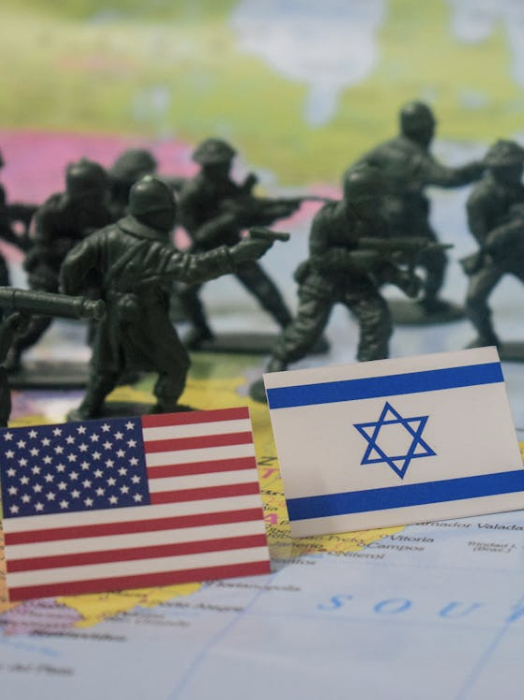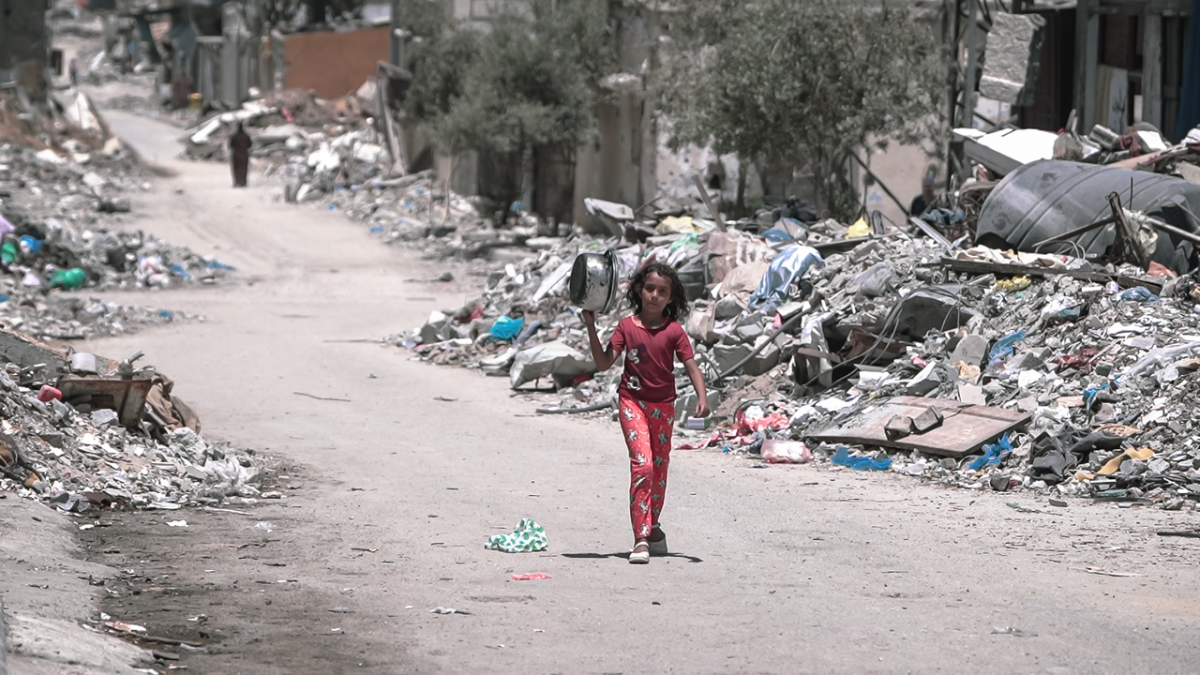
On Jan. 14, U.S. Special Envoy Steve Witkoff announced the launch of Phase Two of President Trump’s 20-Point Plan for Gaza, a transition he described as moving “from ceasefire to demilitarization, technocratic governance, and reconstruction.” The 20-point plan envisions a postwar Gaza rebuilt under international oversight. Yet the framework presumes a level of consensus that simply does not exist. Hamas has rejected the plan’s central demand —disarmament. Israel has called the transition to Phase Two symbolic and blocked the National Committee for the Administration of Gaza from entering the territory it was created to govern. And major reconstruction donors, including Saudi Arabia and the UAE, have signaled they will not invest until Hamas surrenders its military infrastructure. The plan requires synchronized concessions in a conflict still driven by unilateral calculations.
Phase One, which began with a ceasefire on Oct. 10, 2025, produced tangible results: UN Security Council Resolution 2803 enshrined the peace plan, all living Israeli hostages came home, and humanitarian aid surged into the territory. But those gains remain precarious. According to Chatham House, Israeli forces have killed more than 450 Palestinians since the ceasefire took effect, Israel still controls over half of the enclave, and Hamas remains armed. Phase Two proposes a corrective framework. Delivering on that framework starts with its hardest demand: the disarmament of Hamas.
The core demand of Phase Two is the full demilitarization of Gaza, beginning with the disarmament of Hamas. The group has made its position unambiguous. On Feb. 8, senior Hamas leader Khaled Meshaal rejected calls to surrender weapons at the Al Jazeera Forum in Doha, arguing that disarming an occupied people would leave them vulnerable to further military action. He proposed instead what he called a “guarantees approach”: a long-term cessation of hostilities lasting five to ten years, during which Hamas would pledge not to use or publicly display its weapons, with Egypt, Qatar, and Turkey serving as guarantors. Mediators, Meshaal indicated, were already pitching the framework to the Trump administration — though it falls well short of the full disarmament Washington and Israel have demanded.
Just days later, senior Hamas official Osama Hamdan told Al Jazeera that the group has not received any draft or formal proposal from mediators on disarmament, despite it being the central demand of Phase Two. Hamdan added that Hamas has not even adopted an official position on freezing its arsenal — the group’s own proposed alternative to full surrender — and maintained that armed resistance remains a right as long as the occupation continues. His comments came one day after the New York Times reported that mediators were drafting a phased disarmament framework that would allow Hamas to retain some small arms while requiring it to surrender long-range weapons, though the document had not yet been shared with the group.
Israeli officials estimate that Hamas maintains around 20,000 fighters and approximately 60,000 rifles. Speaking at the World Economic Forum in Davos on Jan. 21, U.S President Donald Trump warned that Hamas would be “blown away very quickly” if it does not surrender its weapons and gave the group roughly three weeks to comply. On the same day Witkoff declared Phase Two operational, Israeli Prime Minister Benjamin Netanyahu dismissed the announcement as a “declarative move” in a call with the family of the last unreturned hostage, and later told the Knesset that the next phase “is disarming Hamas and demilitarizing the Gaza Strip — the next phase is not reconstruction.”
The divergence between U.S. expectations, Hamas’s rejection, and Israel’s doubt reveals a critical strain in the negotiation framework.
Alongside disarmament, Phase Two established the National Committee for the Administration of Gaza, a 15-member body of Palestinian technocrats chaired by Ali Shaath, a former deputy minister in the Palestinian Authority. The NCAG convened its inaugural meeting in Cairo on Jan. 15, and Shaath pledged to restore core services and rebuild the Strip “not just in infrastructure but also in spirit.”
The committee has won broad initial support. Every major Palestinian faction, including Hamas, welcomed its formation. But it operates under severe constraints. Following a Jan. 26 meeting between Shaath and Board of Peace member Tony Blair, officials clarified that the NCAG will have no role whatsoever in the disarmament of armed groups — and no political authority to represent Gaza internationally. Israel initially blocked committee members from entering the territory, and the NCAG has yet to begin operating from inside Gaza. As Brookings noted, the committee consists of unelected technocrats who lack broad popular legitimacy but will manage daily affairs while reporting to Trump’s Board of Peace. Critics worry this structure deliberately depoliticizes the Palestinian struggle, sidelining questions of sovereignty and statehood in favor of service delivery under external oversight.
The overarching framework sits under the Board of Peace, which Trump unveiled at the World Economic Forum in Davos on Jan. 23, with representatives from nearly two dozen countries signing on. Bulgarian diplomat Nickolay Mladenov will serve as the on-the-ground High Representative for Gaza, and a Gaza Executive Board — which includes U.S. envoys Steve Witkoff and Jared Kushner as well as former British Prime Minister Tony Blair — will advise the NCAG. Trump plans to announce a multi-billion-dollar reconstruction fund and details on an UN-authorized International Stabilization Force at the Board’s first formal meeting in Washington on Feb. 19.
Yet the framework remains top-heavy and vague. The Washington Institute warned in a December brief — co-authored by Ambassador Dennis Ross and Ghaith al-Omari, among others — that the administration must abandon its preference for broad principles and instead engage directly with contentious details. They argued that Saudi Arabia and the UAE will withhold major reconstruction investment as long as Hamas retains military infrastructure, and that a phased approach to demilitarization may offer the only viable path forward.
Ambassador Ross, alongside Mr. al-Omari, shared that concern directly with Vanderbilt students on Feb. 11. Speaking at a conversation hosted by the Alexander Hamilton Society and Hillel, Ross expressed his fear that many college students do not understand how complex Middle Eastern politics are. “This conflict has been reduced to slogans,” he told the audience. “Now a days, many people want to prove how passionate they are or score some political points.”
He and Mr. al-Omari — who have been friends and colleagues for decades despite approaching the conflict from different vantage points — demonstrated that deliberative engagement across divides is possible, modeling precisely the form of structured dialogue Phase Two presupposes but rarely secures. Mr. al-Omari, who advised the Palestinian negotiating team during the Camp David summit and Taba talks, urged the room to resist oversimplification: “We need to show a public that this conflict that lives on a bumper sticker is more complex than that.” Ross echoed that sentiment, noting that the two of them “demonstrate that we can talk about this subject in a way that creates more light than heat.”
That framing captures something essential about Phase Two itself. The questions at the heart of this process — how a militant group disarms under occupation, how unelected technocrats govern a shattered territory they cannot yet enter, how an international board oversees reconstruction while sidestepping sovereignty — do not fit on a bumper sticker. They require the kind of sustained, good-faith engagement that Ross and al-Omari have long practiced. Phase Two will test the international community’s ability to align expansive diplomatic frameworks with practical, incremental gains. The alternative, as Julie M. Norman, a Middle East fellow at Chatham House, argued in recent analysis, is a stalemate that serves both Israel and Hamas while the people of Gaza continue to suffer.
The weeks ahead will begin to answer whether Phase Two can deliver. Mediators have yet to present Hamas with a formal disarmament proposal. The NCAG still operates from Cairo, unable to enter the territory it was created to govern. And on Feb. 19, Trump will chair the Board of Peace’s first formal meeting in Washington, where he plans to announce a reconstruction fund and details on the International Stabilization Force — a session that will reveal whether this framework has genuine international buy-in or merely diplomatic assent. If any one of those milestones’ falters, the ceasefire risks becoming exactly what Netanyahu called it: symbolic. Ross and al-Omari gave the Vanderbilt community the context to follow events as they unfold. The story itself is only beginning, and it warrants the kind of sustained, serious attention they modeled Thursday night.