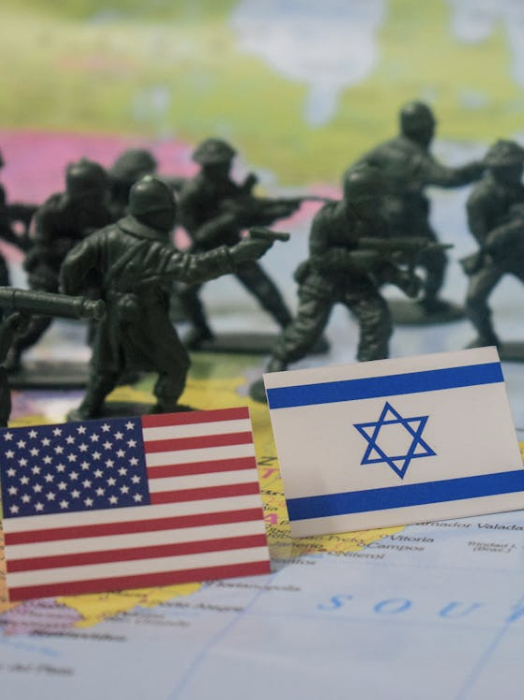
American military strategy has long been defined by an uncomfortable paradox: the United States can defeat adversaries with extraordinary speed yet struggle to shape what follows. In the current conflict with Iran, that paradox is no longer theoretical, it is unfolding in real time. Washington has already begun to degrade Iranian command structures and disrupt critical military infrastructure with a level of precision that recalls the opening phase of the Iraq War. But early battlefield success, as 2003 demonstrated, is not the same as strategic victory.
The comparison to Iraq is not merely rhetorical. In March 2003, American forces within weeks toppled Saddam Hussein’s regime, dismantled centralized command authority, and established overwhelming military dominance across the country. Yet what followed was not stability, but instead fragmentation, an insurgency, institutional collapse, and a prolonged struggle to construct a political order from the ruins of the old one. The lesson was not that American force was insufficient, but that it was misaligned with achievable political ends.
That same misalignment now threatens to reemerge. The current campaign against Iran appears designed to weaken regime capacity without full-scale invasion, relying on airpower, targeted strikes, and economic pressure rather than occupation. This approach reflects an evolution from Iraq, where the costs of nation-building became politically and strategically untenable. But it also introduces a new ambiguity: if the objective is not outright regime change, what precisely constitutes success?
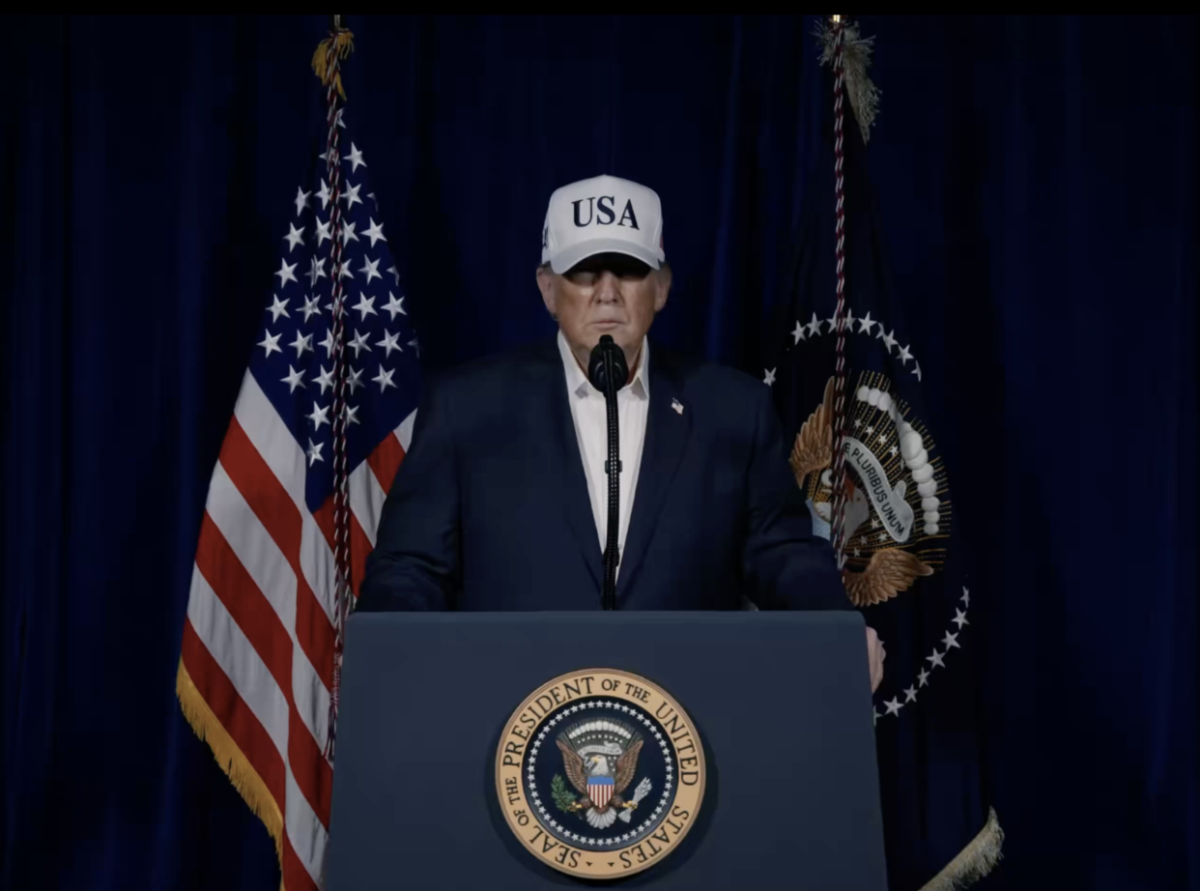
The Trump administration has signaled goals that range from deterrence to coercion to potential internal destabilization. Yet these aims sit uneasily together. A strategy that seeks simultaneously to avoid occupation while reshaping internal political outcomes risks achieving neither. Regimes under external pressure often consolidate rather than collapse, particularly when military action can be framed as foreign aggression. In Iraq, the removal of Saddam Hussein created a vacuum. In Iran, partial pressure may instead entrench the system it seeks to weaken.
There is also a broader structural problem. Military force can destroy, deter, and disrupt, but it cannot, on its own, construct legitimacy. In Iraq, the United States ultimately found itself attempting to rebuild political institutions from the ground up without the local consensus necessary to sustain them. In Iran, Washington appears determined to avoid that burden. But avoiding reconstruction does not eliminate the need for a political end state; it merely defers the question of who, or what, fills the space left behind.
Critics of this view will argue that the comparison overstates the risk. Iran is not Iraq: it possesses stronger institutions, a more cohesive national identity, and a different regional position. All true. But these differences cut both ways. A more resilient state is also more capable of absorbing external shocks without yielding politically. The assumption that military pressure alone can produce favorable internal change is not just optimistic, it is historically unproven.
The central issue, then, is not whether the United States can win the war it is currently fighting. By conventional measures, it already is. The deeper question is whether those victories translate into a durable strategic outcome. If Iraq revealed the limits of occupation, Iran may reveal the limits of its opposite: coercion without commitment.
American power remains unmatched in its ability to remove obstacles. Its challenge, as ever, lies in defining what comes next. Until that question is answered with clarity, the risk that the United States will once again win the war but fail to secure the peace persists, a lesson previously learned at great cost, and one that may yet be repeated.