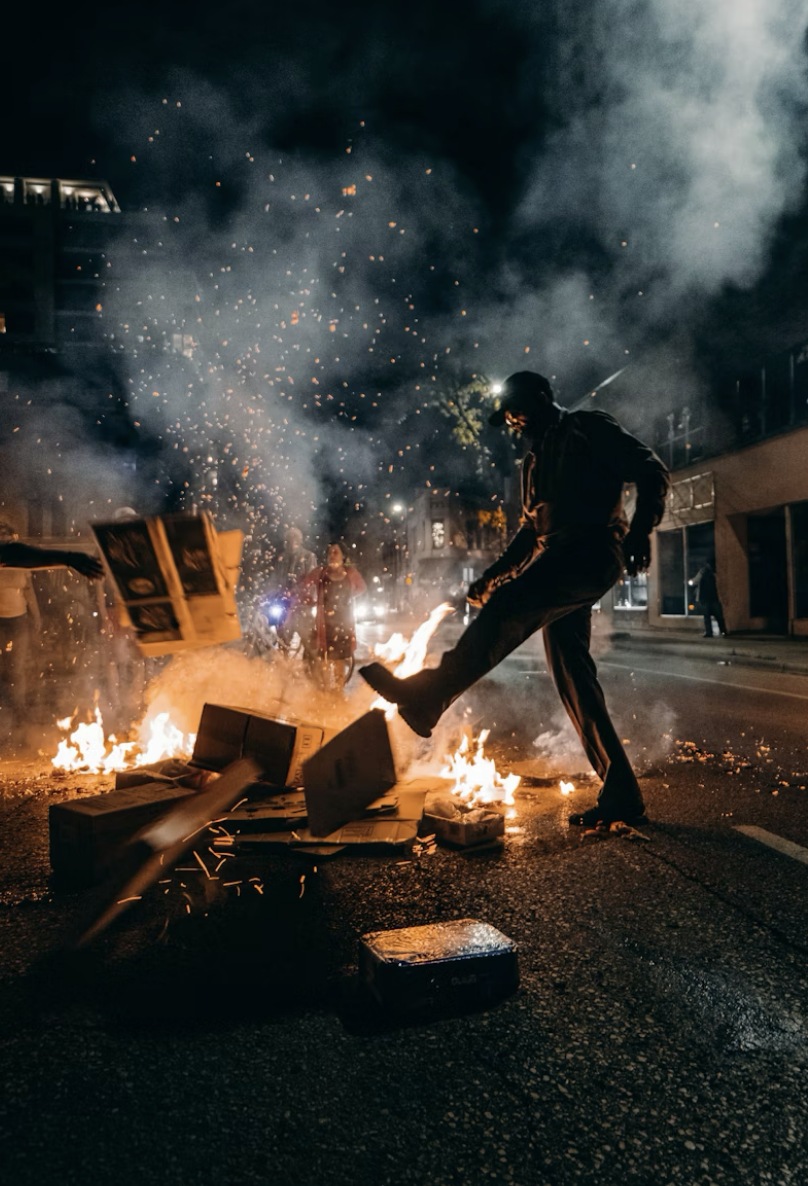
On Feb. 28, the United States and its ally Israel launched an airstrike on Iran, killing Iran’s supreme leader, Ayatollah Ali Khamenei. This initial strike sparked a regional war resulting in the death of more than 1,800 people.
This strike has dangerous implications, not just in terms of a potential war but also in terms of presidential authority. In the initial attack on Iran, Donald Trump raised constitutional concerns by ordering military strikes without the approval of Congress. The Framers constructed the Constitution so that only Congress has the power to declare war, but presidents have shifted their authority over time to include ordering major military actions. This has resulted in the infringement on the Framers’ vision of the separation of powers, with the executive now holding more power than originally intended.
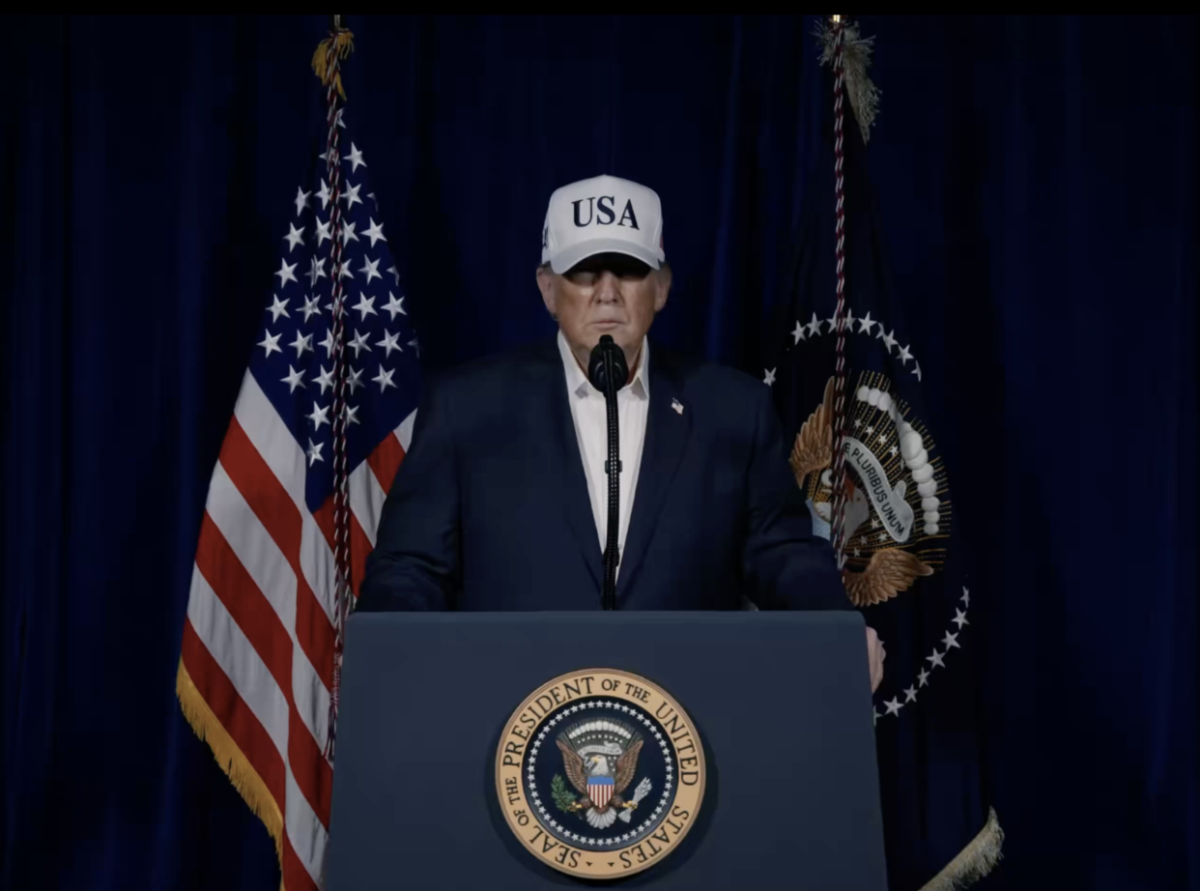
First, to understand this issue, it is helpful to establish why the United States launched the initial attack on Iran. Since the Islamic Revolution in 1979, there has been growing tension between Iran and the United States, along with its ally Israel. This has resulted in Iran regarding the United States as its long-standing enemy. The tension between these forces has repeatedly increased with the continuous threat of Iran’s nuclear program, the success of which is seen as unacceptable by the national security apparatuses of the United States and Israel. Therefore, the strikes aimed to weaken Iran’s newly rebuilt military power. To further destabilize Iran’s military capabilities, the United States and Israel also sought to force regime change in Iran. In a speech regarding his rationale for the strike, Trump urged the people of Iran to shelter from the strikes and declared, “When we are finished, take over your government. It will be yours to take.”
The issue of this initial strike lies in the constitutionality of whether the president has the power to take military action without running it by Congress. Article I, Section 8 of the Constitution clearly states that Congress is the only entity that has the authority to declare war, raise and support armies, and regulate the militia. The framers set forth this belief in the Constitution to ensure we operate as a system of checks and balances, which prevents any one person from having too much unrestrained authority.
Still, the president is intimately involved with wartime action. Article II, Section 2 grants the president the power to be Commander-in-Chief once a war has been authorized. Additionally, there are exceptions to when the president can use military force without congressional approval, such as in times of self-defense or when facing an imminent threat. This leads to the question of whether such an impending, sudden threat actually existed in the case of Iran. The Trump administration has not provided enough evidence that Iran posed a threat to justify the attacks. The claim that the attacks were made to prevent a potential future attack rather than to protect against a current attack goes against constitutional language, suggesting that this issue should have instead been addressed by Congress.
What makes this issue even more concerning is that it happened nearly two months after Trump ordered an operation to capture Venezuelan leader Nicolás Maduro without congressional approval. This preceding example, along with the current unconstitutional strike on Iran, reveals the broader pattern of presidents stretching their unchecked authority, especially regarding wartime action.
Even before Trump, presidents of the past have also taken wartime actions without congressional approval. Most notably, President Harry Truman took action in the Korean War, John F. Kennedy deployed military advisors in Vietnam, and President George H.W. Bush commanded the collapse of Manuel Noriega. The continuation of this trend has serious implications for how seriously the war-making safeguards provided in the Constitution are taken.
Proponents of the president having expanded powers usually argue that delaying military action by waiting for the time-consuming process of legislative deliberation endangers the lives of Americans and slows the response to attacks. While it is true that presidents need to be able to act decisively in changing circumstances, there is a clear line that distinguishes when they are responding to an urgent threat from when they are responding to a potential threat.
The issue with Iran brings attention to a much larger debate on the constitutionality of expanded executive war-making powers. This calls for Congress to reassert its power over war-making and hold the president more accountable when they act unconstitutionally. If Congress continues not to strongly enforce the safeguards presented by the Constitution, America risks losing one of its greatest checks on power.