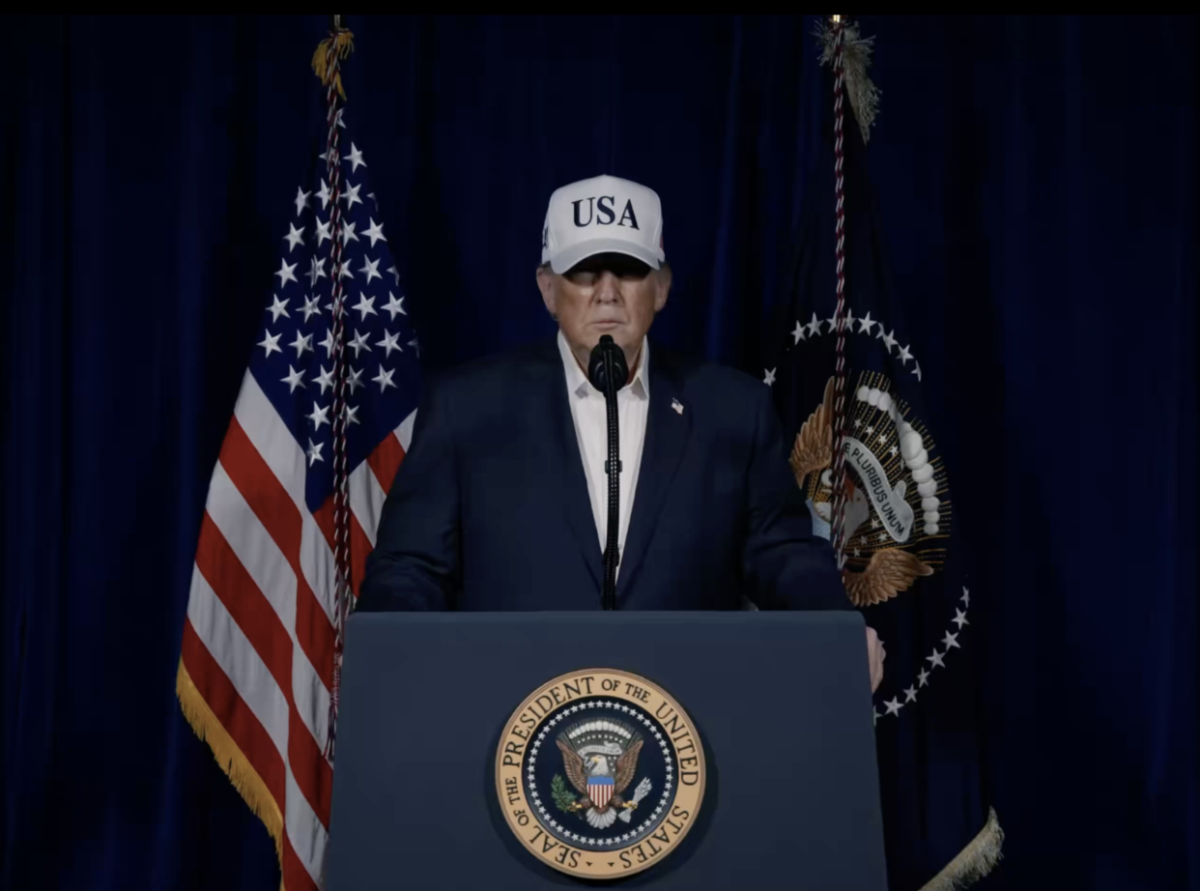
“Obviously, the war in Iraq was a big fat mistake,” then-candidate Donald Trump boldly said on a South Carolina primary debate stage in 2016 to an initially silent Republican audience. “We spent two trillion dollars, thousands of lives … We should have never been in Iraq. We have destabilized the Middle East.” As Trump continued railing against the Iraq War, the audience eventually began to boo and jeer.
Just nine years later, such a scene of Trump being unpopular with Republicans for criticizing U.S. involvement in a foreign war is unthinkable. When speaking at campaign rallies to Republicans in his 2024 campaign, Trump made it a habit to underscore how serious he was about not bringing the U.S. into new wars abroad, this time with enthusiastic cheers filling the stadiums he spoke at.
“No new wars. We don’t need the wars [in] foreign lands you’ve never heard of, countries that don’t even want us there,” Trump said to the excitement of one 2024 rally.
Indeed, one of the biggest accomplishments Trump cited when running for reelection was that there were no new wars during his first term, providing some credence to his anti-war rhetoric. Further, for much of the first year of his second term in office, Trump all but pleaded to be awarded the Nobel Peace Prize, even claiming to have stopped eight wars within the first ten months of this term.
One of the central tenets of what it meant to be “America First” was committing to avoid involvement in foreign wars. The populist logic that appealed to many Americans was straightforward: why spend so much money and sacrifice the lives of American soldiers abroad, especially when there are so many domestic issues that should be prioritized? Not to mention, the track record of American involvement abroad was weak, with the United States’s presence in countries including Afghanistan, Iraq, and Libya all having a limited effect in creating enduring change.
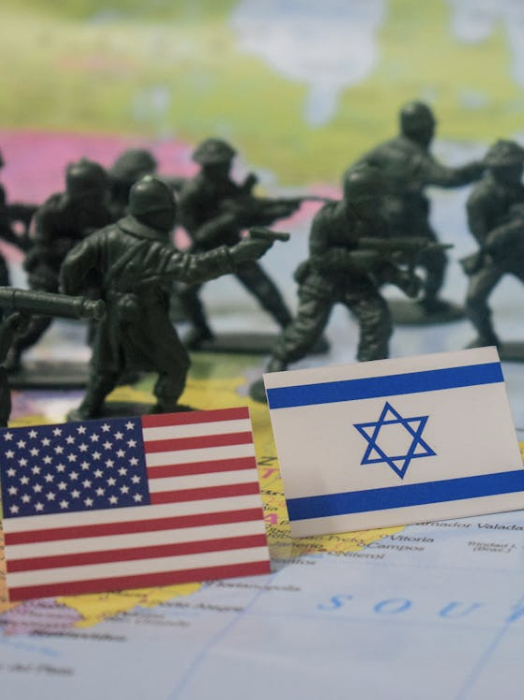
Trump’s decision to initiate a war against Iran in February has struck down this core foundation of the MAGA movement. Though his stated rationale for the invasion included his desire to prevent Iran’s acquisition of nuclear weapons and foster regime change, neither of these goals appear to have materialized. After weeks of the war being prolonged to no end, Trump escalated recently with a statement that “A whole civilization will die tonight, never to be brought back again” if a deal with Iran were not quickly reached. Though this has briefly culminated in a ceasefire with Iran and the reopening of the Strait of Hormuz, the sudden about-face in Trump’s rhetoric over the past few months puts the MAGA movement in a precarious position.
In mid-March, the Director of the National Counterterrorism Center Joe Kent stepped down from his role in protest of the war in Iran, arguing that Trump had strayed far from his once-steadfast commitments to prevent the U.S. from getting involved in another endless war. Kent’s resignation letter asserted that Iran posed “no imminent threat” to the U.S., thus making the entire war unnecessary from its inception.
Notable influencers and firebrands within the MAGA movement have also begun rebelling, with once-loyal figures like Tucker Carlson now demanding that Trump’s military aides draw a line at any potential attempts by Trump to harm Iranian civilians. Perhaps even more strikingly, former Congresswoman Marjorie Taylor Greene and radio host Alex Jones – both people once considered to be unquestionably loyal to the president – have now called for Trump’s cabinet to invoke the 25th Amendment to forcefully remove him from office in light of his threat to eliminate Iranian civilization.
Meanwhile, Vice President J.D. Vance has had to walk a fine line, privately serving as the chief voice of restraint against the U.S. getting involved in Iran, while also avoiding making a public statement that would directly oppose Trump. Vance finds himself in a particularly uncomfortable situation since he not only has built a political identity connected to his distaste for foreign wars but also must avoid making any statement that could risk him losing Trump’s endorsement during a prospective 2028 run. In this light, Vance is now stuck in a position where his professed values are being tested; he now must decide if his primary loyalty is to Trump or to those values.
While it could be argued Trump’s sudden switch-up on Iran may simply be the result of him being a lame-duck president, it is more likely that his seeming betrayal is the culmination of his arrogance and hubris blinding him from understanding his movement’s success. By his own admission in January when asked if his base would waver in its support for him upon involving the U.S. in a separate military conflict in Venezuela, “MAGA is me. MAGA loves everything I do, and I love everything I do, too.”
A movement built on this alleged premise can only remain stable so long as Trump’s actions are consistent with his professed values that galvanize his supporters. And for a while, this may have appeared true, with Trump’s “king making” endorsement being enough to determine whether Republican candidates either win their primary or lose their seat. When Trump’s professed values happened to align with the cult of personality around him, the MAGA movement was able to remain cohesive. But now, as Trump rapidly pulls the rug out from under MAGA’s feet, he risks permanently fracturing the very movement that ironically helped him rise to power in the first place.
Trump’s war in Iran indicates that the MAGA movement, at least to him, may not have been as much about a fully ideologically coherent policy rationale, but rather about a collective willingness to follow him anywhere. While this reality may not collapse the movement immediately, it nevertheless raises the question of how sustainable this movement can truly be. A political identity that is so vulnerable to the whims of one individual will inevitably be unstable, and over time, is destined to collapse under the weight of its own contradictions.