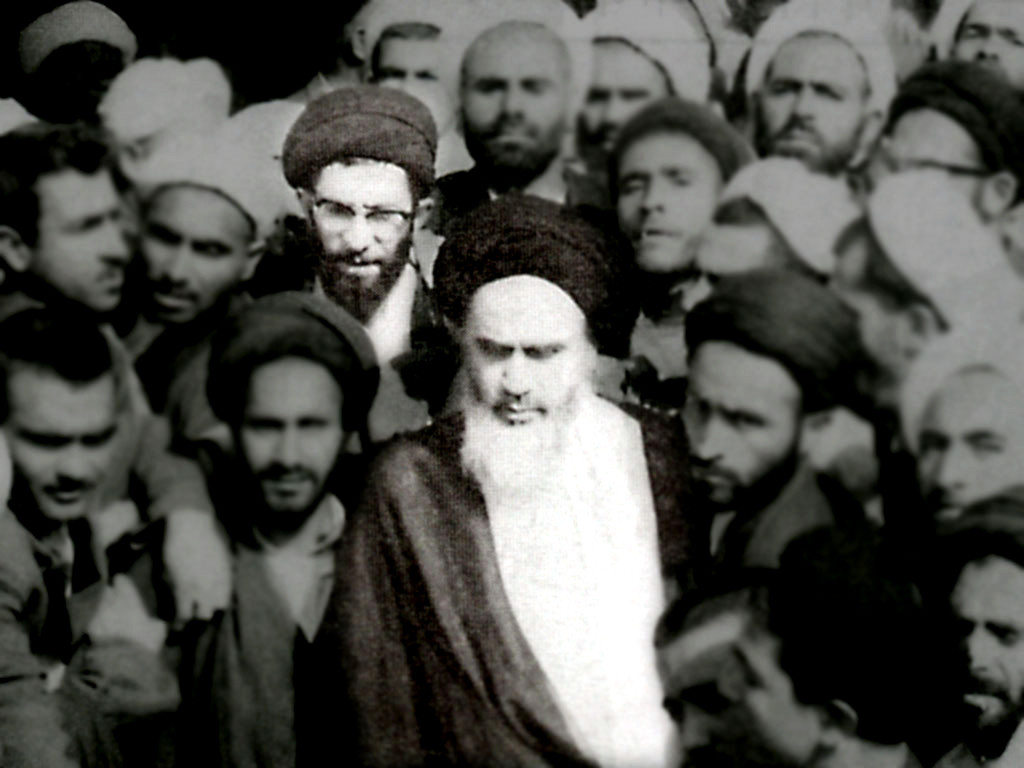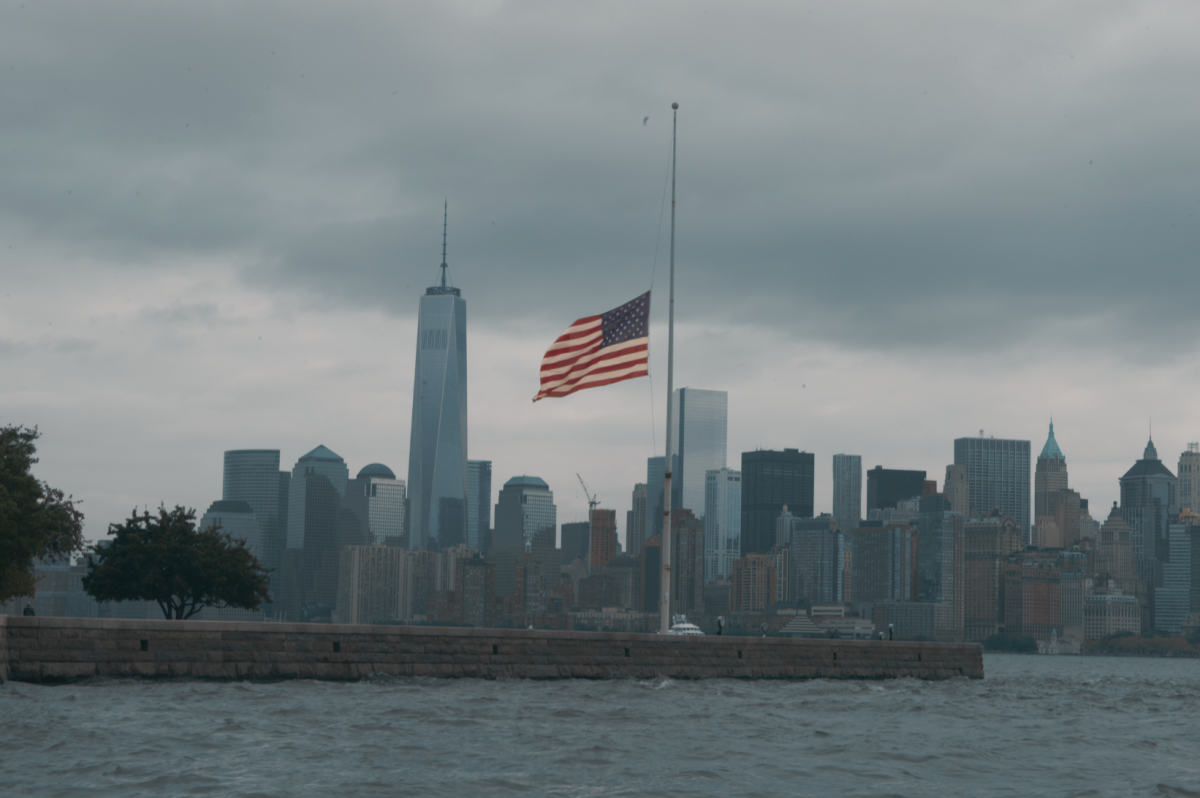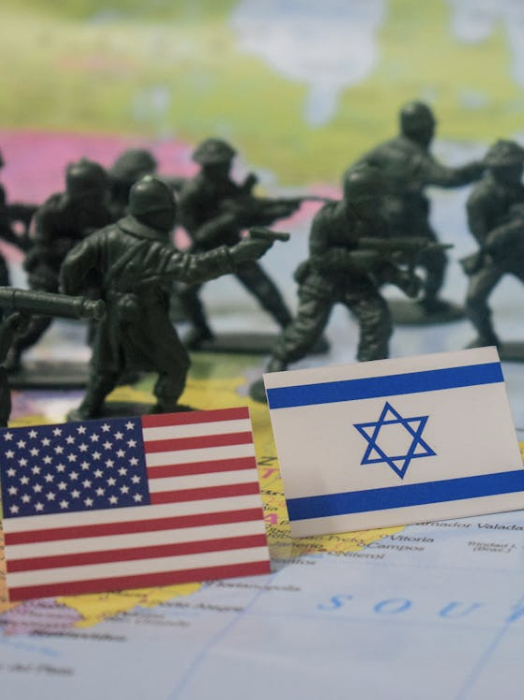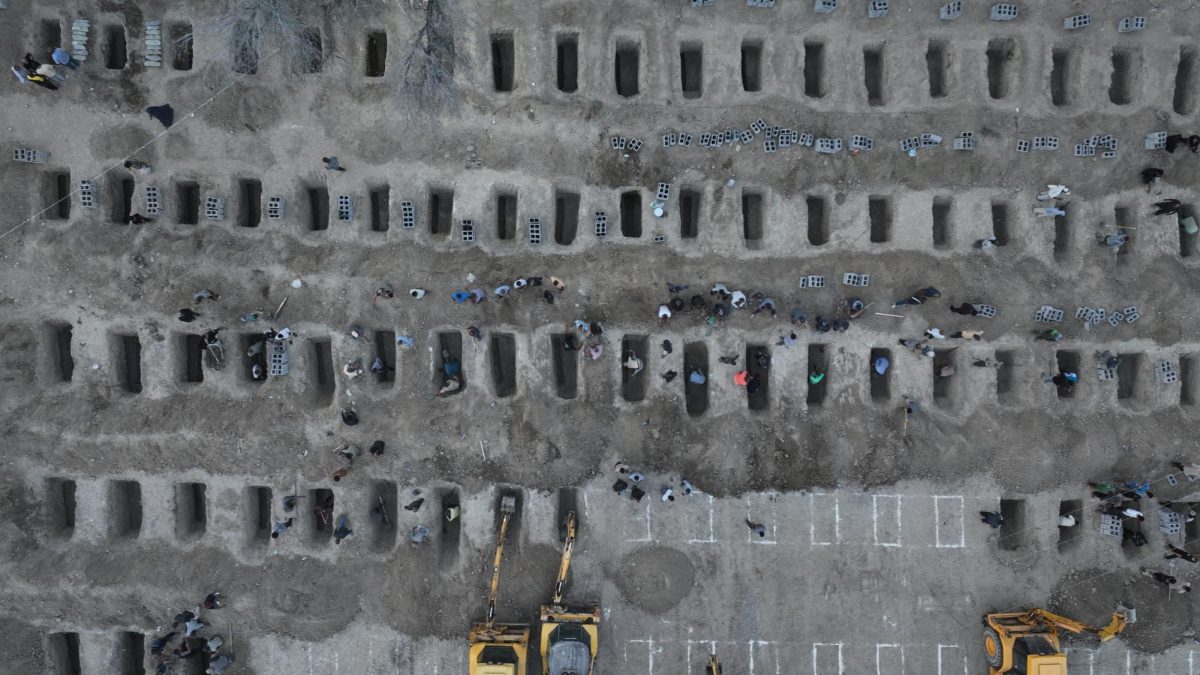
On Feb. 28, the United States and Israel launched Operation Epic Fury — coordinated strikes across Iran that killed Supreme Leader Ali Khamenei, destroyed nuclear and missile sites, and opened the most consequential American military engagement in the Middle East since the 2003 invasion of Iraq. One week in, the war is costing the United States $1 billion a day. More than 1,200 people in Iran have been killed. Six American service members are dead. The Strait of Hormuz is functionally closed. A U.S. submarine sank an Iranian frigate off Sri Lanka — the first submarine kill since the Falklands War. Israel has carried out 2,500 strikes with over 6,000 weapons. Hezbollah has declared open war and Israel has launched a ground incursion into Lebanon. Congress has rejected war powers resolutions in both chambers.
The natural reaction is to oppose this war outright. But the Islamic Republic of Iran presented a genuine and escalating threat — to its own people, to the region, and to the nonproliferation order. The problem is not that the United States chose to confront that threat. The problem is that — one week in — the administration has not communicated a consistent, well-defined strategy for what comes next.
What the Iranian Regime Has Done
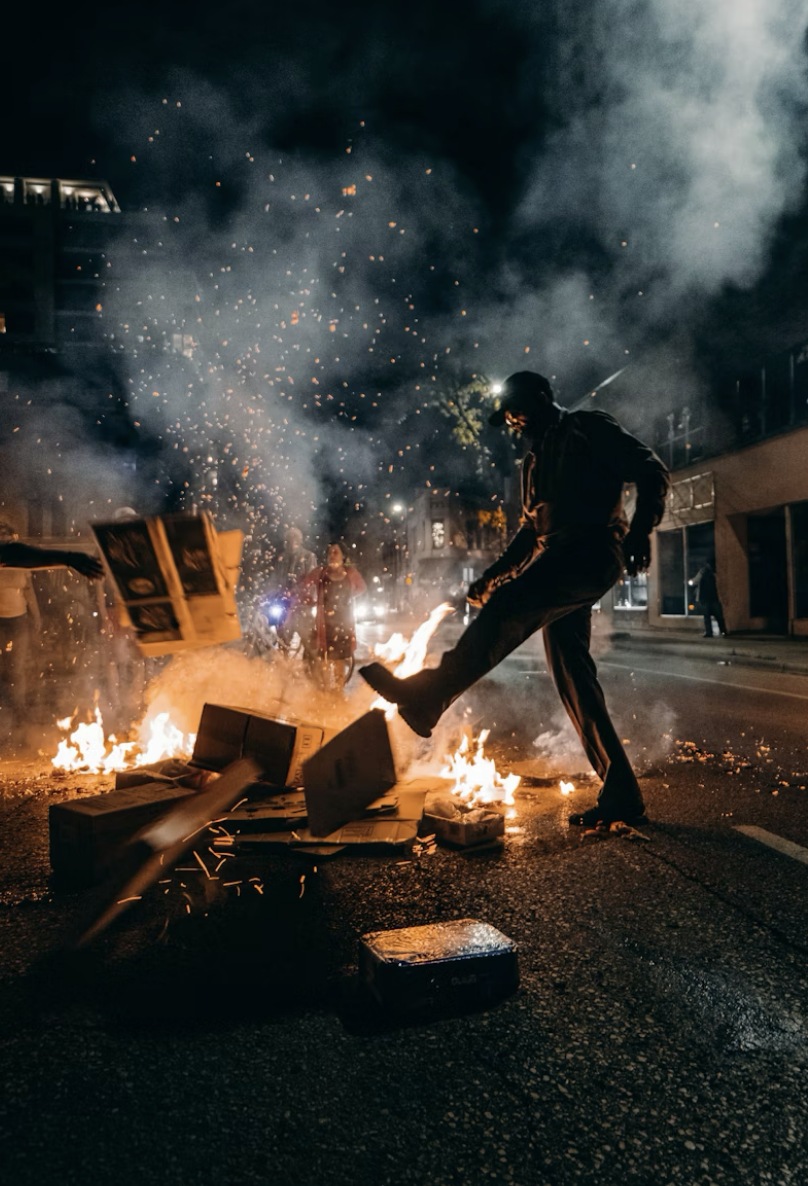
The case for confronting Iran begins with the regime’s own actions. Beginning on Dec. 28, 2025, mass protests erupted across all 31 Iranian provinces — the largest since the 1979 revolution. On Jan. 8 and Jan. 9, security forces carried out massacres of unarmed protesters under a near-total internet blackout, firing on crowds with rifles and targeting heads and torsos. Amnesty International called January 2026 the deadliest period of repression in decades of its research on Iran. Death toll estimates range from the government’s own reported figure of 3,117 to independent estimates exceeding 7,000. The Islamic Republic also executed over 1,500 people in 2025, crushed the 2022 Woman, Life, Freedom protests, and maintained a network of proxy militias that have destabilized the region for decades.
On the nuclear front, after the U.S. withdrew from the JCPOA in 2018, Iran progressively exceeded the deal’s limits, enriching uranium to near-weapons-grade levels and restricting IAEA inspector access. By late 2024, breakout time had collapsed to one week or less — down from over a year under the deal. In Feb. 2026, the IAEA discovered hidden highly enriched uranium in an undisclosed underground facility.
This was a regime massacring its own people, sprinting toward nuclear capability, and sponsoring armed groups across the Middle East. The case for confronting it was real.
The Problem: No One Can Explain the Plan
But confronting a threat and communicating a coherent strategy for doing so are two very different things. The problem with Operation Epic Fury is not necessarily that there is no strategy — it is that the administration has been unable to articulate one coherently, and that the rationales offered by the president, the secretary of state, and the secretary of defense have repeatedly contradicted each other.
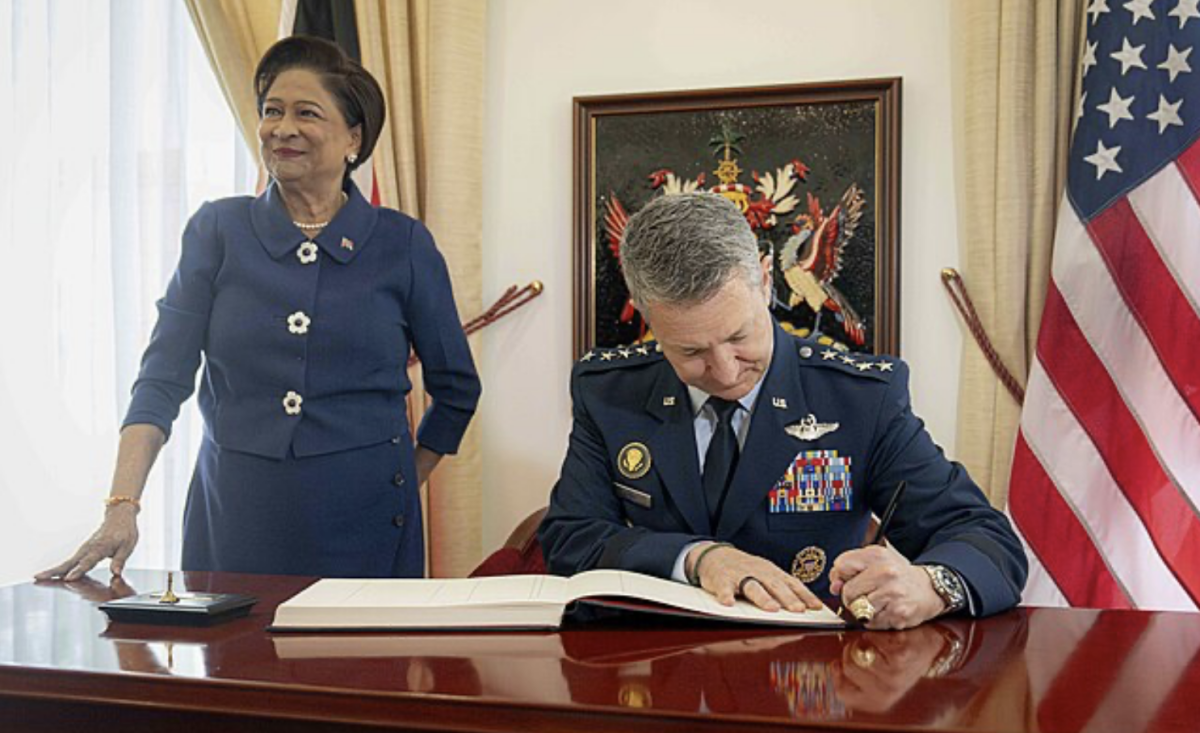
On Feb. 28, Trump declared the objective was to prevent Iran from obtaining a nuclear weapon — then called on Iranians to “take over” their government. On Monday, he listed four objectives: destroying Iran’s missiles, navy, nuclear program, and terror funding. Defense Secretary Hegseth said explicitly it was “not a so-called regime change war” — then added: “But the regime sure did change.” Secretary of State Rubio offered a different rationale entirely, telling reporters the U.S. struck because Israel was planning an attack and Washington feared Iran would retaliate against American forces. On Tuesday, Trump contradicted Rubio directly — with Rubio sitting two seats away in the Oval Office. Asked if Israel had forced his hand, Trump replied: “No, I might’ve forced their hand.” Rubio then denied he had ever said what he said the day before. Meanwhile, Rubio told Rep. Mike Turner the U.S. “did not target Khamenei.” Trump told ABC News: “I got him before he got me.” Trump has variously projected the war lasting four weeks, or perhaps a few days, or possibly four months. He has not ruled out ground troops.
Susan Glasser of The New Yorker counted at least seven contradictory rationales in the operation’s first three days. Sen. Mark Warner said after a briefing with Rubio: “We have seen the goals for this operation change now, I believe, four or five times. I’m not sure which of those goals, if met, means that we’re at an endgame.” If the administration has a strategy, the people executing it cannot describe it consistently — and that has led analysts to conclude it may not exist. Dan Drezner argued that “there is no real strategy or end goal.” Mark Cancian at CSIS observed: “Just destruction is not the strategy.” A CNN/SSRS poll found that 59% of Americans disapprove of the strikes, 60% believe Trump does not have a clear plan, and 56% expect a long-term conflict.
The Stakes of Getting this Wrong
There is a pattern here. Since George W. Bush named Iran, Iraq, and North Korea the “Axis of Evil” in 2002, the United States has tended to treat identifying a regime as a threat as equivalent to having a strategy for dealing with it. In 2003, the U.S. disbanded the Iraqi army, creating a power vacuum filled by militias and ISIS. Afghanistan became twenty years of mission creep. Libya remains a failed state after NATO toppled Gadhafi without a transition plan. The combined cost of Iraq and Afghanistan alone exceeded $5 trillion. On Fox News, Jesse Watters asked Vice President Vance: “After Iraq and Afghanistan, some people say, ‘Here we go again.'” The record of the past week suggests they may be right.
Iran is a larger, more complex, and more nationally cohesive country than any of these cases. Its institutional apparatus — the Guardian Council, the Assembly of Experts, the IRGC — has survived for four decades. Iran’s strategy is to make the war too expensive to sustain. Kelly Grieco of the Stimson Center calculated that for every $1 Iran spends on drones, the UAE spends $20 to $28 shooting them down. All six Gulf states have been struck by Iranian retaliatory fire. Iran attacked U.S. embassies in Riyadh and Kuwait, hit civilian infrastructure across the UAE, and struck Saudi Aramco’s largest refinery. But the most telling strike may be the one on Azerbaijan. On Mar. 5, Iranian drones hit the airport and a school in Azerbaijan’s Nakhchivan exclave — making it the eighth country targeted and the first hosting no U.S. military bases and no direct involvement in the conflict. Azerbaijan does have longstanding ties to Washington and Jerusalem —through intelligence cooperation, energy partnerships, and arms deals — but there are no American forces stationed there. Iran’s ambition seems to be to increase the price of this war for everyone associated with it, whether they are fighting or not. Nakhchivan is also the site of a U.S.-brokered peace corridor that Iran has long opposed. U.S. spending on the conflict now exceeds $31 billion.
What Should Come Next
Both Trump and Netanyahu have made specific promises to the Iranian people. Trump told Iranians to “take over your government,” calling it “probably your only chance for generations.” Netanyahu urged Iranians not to miss a “once-in-a-generation opportunity” to build a free Iran. Those are serious commitments. Sixty percent of Iran’s population is under 30. Millions took to the streets in late 2025. Khamenei is dead. This may be the closest Iranians have come to a real opening since 1979.
But telling a population to overthrow its government without a clear plan for what comes next is not a strategy. The Atlantic Council noted that no clear opposition leadership has emerged in any of Iran’s uprisings. The IRGC remains deeply embedded and its coercive apparatus has not fractured. If the United States tells the Iranian people this is their only chance for generations and then fails to back that up, the damage will last just as long.
And even if the regime falls, the Iranian people inherit a catastrophe. Inflation has reached 65%, and an estimated 40 million Iranians live below the poverty line. Decades of sanctions have hollowed out the middle class — the social group that stabilizes transitions — and the vacuum is more likely to be filled by armed factions than by a democratic movement. The Brookings Institution, in an analysis of the war’s implications for Iran’s political future, noted that if the objective is genuine transformation, civilian tools should be paramount. Instead, the administration has relied almost entirely on bombs. Asef Bayat, a sociologist of Middle Eastern politics at the University of Illinois and a leading scholar of Iranian social movements, warned in the Boston Review that the opposition remains deeply divided and that Khamenei’s killing may rally parts of the population around the regime, not against it.
The Iranian people deserve better than a regime that shoots them in the streets. But they also deserve better than an intervention that has not articulated a clear plan for what follows — one that brings certainty to a population under bombardment, that involves the Iranian people in shaping their own future, and that makes the public aware of what the endgame actually is. Instead, on Thursday, Trump called on all members of the Revolutionary Guard, the military, and the police to “lay down their arms” and accept immunity — or “face absolutely guaranteed death.” He urged Iranian diplomats around the world to request asylum and “help us shape a new and better Iran.” He told Reuters, the United States must be “involved in the process of choosing” Iran’s next leader and called Khamenei’s son — the frontrunner to succeed his father — “a lightweight.” Asked earlier in the week who could take over, he said: “Most of the people we had in mind are dead.”
These are not the words of an administration that has communicated a coherent plan for what comes after the bombing stops. And that matters — because what is at stake is not an abstraction. It is the future of a country of 90 million people, the lives of American service members, the stability of an entire region, and the credibility of a superpower that has asked the world to trust its judgment. A war this consequential demands a strategy that can be articulated clearly — to the American public, to Congress, and above all to the Iranian people, who have been told this is their moment. One week in, that has not happened. And every day it doesn’t, the cost grows — in dollars, in lives, and in the trust of the people whose future depends on it.