Vanderbilt is currently investing in building satellite campuses across New York City, California, and Florida. This means sustained presence in three of the most strategically distinct national security environments in our country, and there needs to be more discussion around what that actually means.
Each location sits inside a different threat landscape, shaped by different industries, different infrastructure, and different vulnerabilities. Together, they represent something unique: embedded, interdisciplinary capacity across the Southeast, Northeast, and the West Coast.
OpenAI’s recent agreement with the Department of Defense and the Army’s shift toward private-sector joint ventures make one thing increasingly clear: government-industry partnerships are accelerating, optimized for speed and innovation. However, contracts are time-bound, and priorities shift with administrations. Within this landscape, universities certainly risk being sidelined, unless they articulate and occupy a role that cannot be replicated or simply traded off.
There is an established framework for university engagement in national security, whether it be through ROTC, DoD funding, or research pipelines. Vanderbilt is already building this foundation. The Institute of National Security runs an Immersion Cohort that brings together students across disciplines to study complex security challenges. As Co-Executive Director Dr. Douglas Adams puts it, “You’re going to get something different from a team that includes political scientists, computer scientists, and policy analysts than you would from only computer scientists or only strategists.”
Furthermore, the Institute’s Wicked Problems Lab recently exposed how a Chinese company, GoLaxy, uses AI agents to conduct propaganda campaigns at societal scale. In addition, Adams works with Vanderbilt’s School of Medicine on blast injury prevention due to repeated explosive exposures in combat environments.
This research infrastructure is critical, and it defines how the university already has a stake in national security. Looking forward, however, the university’s most underutilized national security asset isn’t simply institutional. It is spatial. There is a meaningful difference between studying a threat environment and being embedded inside one, with access to local institutions, local vulnerabilities, and local knowledge.
Universities have long contributed to national security through research and the pipeline of citizens into public service. What is emerging at Vanderbilt is a third model: strategic geographic positioning as a method of national security engagement. This should be deliberate, not incidental.
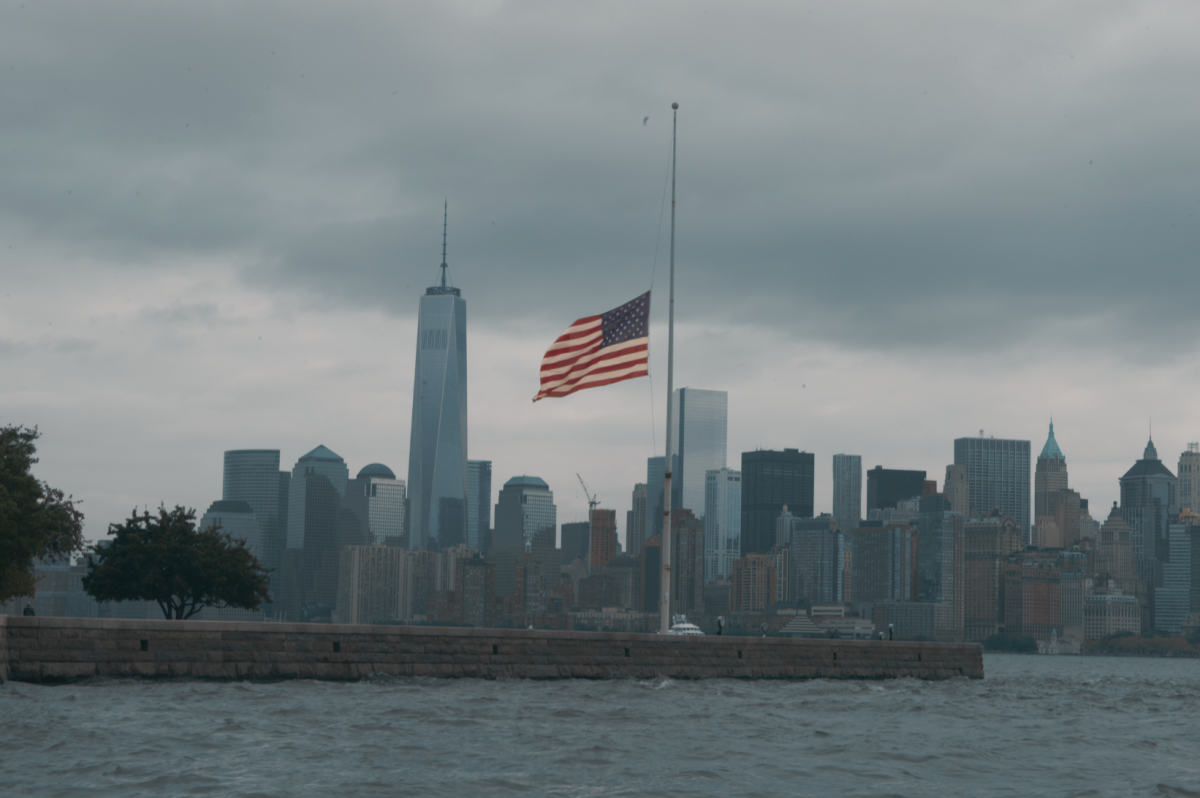
Consider the three environments being developed right now. New York City, the financial capital of the United States, faces daily intrusion attempts from foreign state actors and criminal networks, ransomware attacks, corporate data breaches, and is home to the largest municipal police force in the U.S. A sustained university presence there would allow students to build long-term relationships with local institutions and conduct interdisciplinary research on local issues that have a global impact.
California concentrates many of the technology companies whose infrastructure, supply chains, and data practices are themselves national security assets and vulnerabilities. The integrity of semiconductor supply chains and export controls, foreign investment in technology companies, and Big Tech manipulation, are all issues contested in real time in Silicon Valley. A university embedded in this environment can ask questions that a company with shareholders cannot, and it can sustain that inquiry across political cycles.
Florida is home to the U.S. Central Command, U.S. Southern Command, U.S Special Operations Command, and key U.S. Navy installations, such as Naval Station Mayport. This density of military infrastructure already makes the sunshine state central to American defense. Furthermore, Florida is a seasonal, tourist-dependent economy, which presents a distinct intersection of economic vulnerability and cybersecurity risk.
The structural advantage is clear. The government-industry model is certainly critical, but it moves fast. The university operates on a different timeline entirely, with institutional continuity. This does not need to be a weakness.
Vanderbilt’s expansion is driven by many factors, and national security strategy may not yet be among them. I believe it must be.
Perhaps the university will establish regional nodes at each new campus, launching new, city-specific immersion cohorts that study the distinct threat environment of each location and its global impact. The bottom-line is that Vanderbilt should formally articulate geographic positioning as a pillar of its national security strategy. They have the infrastructure, research capacity, and now the locations, to be even more consequential.
The university has long prepared students to serve the nation. Now it must position the institution to serve it as well.