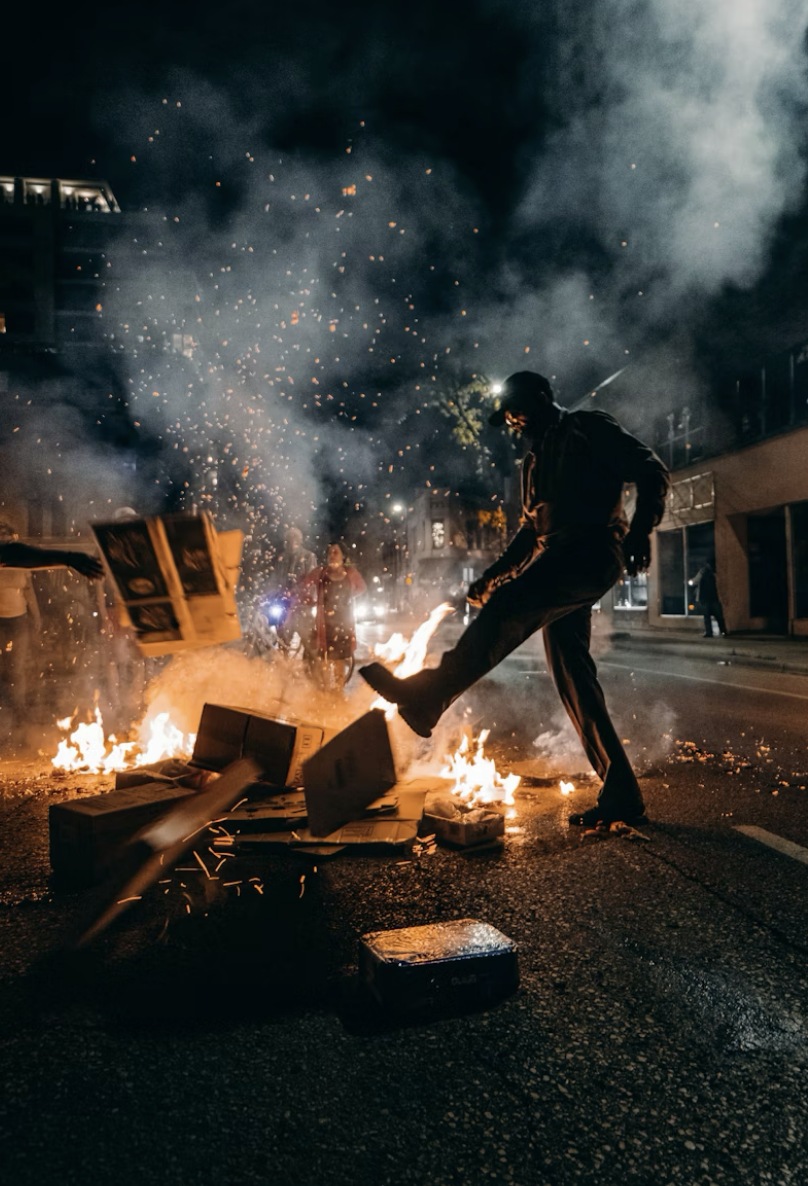
In January, Canadian Prime Minister Mark Carney addressed the World Economic Forum in Davos with a blunt assessment. The rules-based international order, he said, had experienced “a rupture, not a transition.” Alliances and institutions no longer automatically confer prosperity or security. Middle powers must either coordinate or accept subordination. “If we are not at the table,” Carney stated, “we are on the menu.” The speech received a rare standing ovation.
Weeks later, that assessment found confirmation in Munich.
On Feb. 13, more than 1,000 participants from 120 countries convened at the 62nd Munich Security Conference. The conference’s annual report, titled “Under Destruction,” warned that the world has entered a period of “wrecking-ball politics.” This was the first gathering since President Donald Trump threatened to take control of Greenland by force.
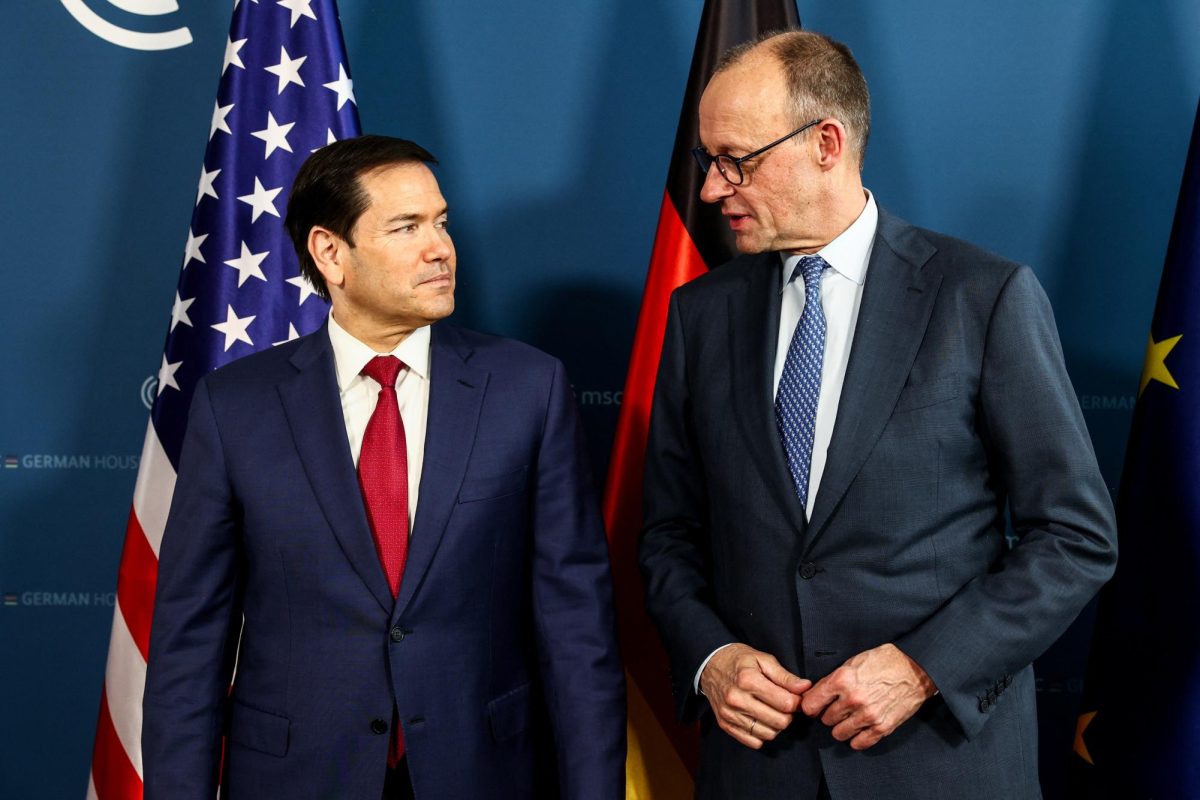
German Chancellor Friedrich Merz opened the conference by going further than the report itself. The rights-based international order was not simply under strain, he argued. “But I’m afraid we have to put it in even harsher terms: This order, as flawed as it has been even in its heyday, no longer exists.”
That statement, from the leader of Europe’s largest economy, is significant. For decades, the continent operated on a model of cheap energy from Russia, cheap goods from China, and cheap security from the United States. Each of those pillars has now eroded.
The American position has shifted rapidly. At last year’s Munich conference, Vice President JD Vance accused European leaders of undermining free speech and mismanaging migration, a speech that drew silence from the audience and sharp criticism afterward. This year, Secretary of State Marco Rubio led the largest U.S. delegation in the conference’s history, accompanied by more than 50 members of Congress. Rubio’s tone was more conciliatory. He described the United States as “a child of Europe” and affirmed that the two continents’ futures remain linked. But the substance did not differ: the old arrangement is over, and every party must reconsider its role.
No issue illustrates the new reality more clearly than Greenland. Trump’s assertion of American interest in the semi-autonomous, self-governing territory of Denmark — a fellow NATO ally — plunged the transatlantic alliance into what observers called its deepest crisis in years. Denmark responded by stepping up its military presence on Greenland and inviting allies including France, the United Kingdom, and Sweden to join exercises in the region. On Feb. 11, NATO launched “Arctic Sentry,” a new mission to coordinate allied activities in the High North under a single command for the first time. Germany committed four Eurofighter jets; Sweden deployed Gripen fighter aircraft to patrol the area around Iceland and Greenland; the United Kingdom announced plans to double its troops in Norway to 2,000 over three years. The immediacy of the reaction is revealing. Arctic security had been on NATO’s agenda for years, yet it took a territorial claim from an ally to produce coordinated action in the region.
The most tangible pressure concerns defense spending. NATO allies committed at The Hague last year to spending 5% of GDP on defense by 2035, with 3.5% directed toward core military capabilities. Washington now insists that Europe cannot wait a decade. Elbridge Colby, the Pentagon’s under secretary of defense for policy, told NATO defense ministers that the post-Cold War alliance model is “no longer fit for purpose” and proposed a “NATO 3.0” in which European nations bear primary responsibility for their own conventional defense. The United States would maintain its nuclear umbrella but no longer serve as the default guarantor of European security. Believing otherwise, Colby stated, is “an aspiration divorced from resources.”
The history behind this demand matters. NATO established the 2% of GDP defense spending target at the 2014 Wales Summit, after Russia’s annexation of Crimea. At the time, only three allies — the United States, the United Kingdom, and Greece — met the threshold. European allies collectively spent just 1.43% of GDP on defense that year. The figure did not reach 2% on average until 2024, a full decade later, and only after Russia’s full-scale invasion of Ukraine forced the issue. During the Cold War, most NATO members spent around 3% of GDP on defense; after the Soviet Union collapsed, European governments redirected those savings into domestic priorities, collecting what analysts call a “peace dividend” totaling an estimated 1.8 trillion euros. One analysis estimates that European NATO members collectively underfunded their own defense by roughly $828 billion since 2014 relative to the 2% benchmark. The result is a structural gap: decades of underinvestment sustained generous domestic budgets but left the continent without the military capacity to stand on its own.
The consequences of America’s recalibration are already visible in Ukraine. The United States provided roughly $67 billion in military assistance between 2022 and early 2025, amounting to about half of all weapons delivered to Kyiv. After Trump returned to the White House, that support collapsed. Washington froze military aid entirely in early March 2025, and although some deliveries later resumed, the 2026 federal budget allocates only $400 million for Ukraine security assistance — a fraction of the nearly $14 billion approved in the April 2024 supplemental alone. Colby, who reportedly originated the July 2025 decision to pause deliveries of Patriot air defense missiles and precision munitions to Ukraine, has been open about his strategic priorities: he views China as America’s principal threat and argues that U.S. resources should shift toward the Indo-Pacific accordingly. European allies have increased their collective contributions by 67% to partially fill the gap, but the overall level of military aid to Ukraine in 2025 still fell below 2022 levels.
That recalibration extends to the negotiating table. On Feb. 17–18 — the same week as the Munich conference — the third round of U.S.-brokered trilateral talks between American, Ukrainian, and Russian delegations convened in Geneva, led on the American side by Special Envoy Steve Witkoff and Jared Kushner. The first day lasted over five hours; the second ended after roughly two. Zelensky said military negotiators made progress on ceasefire monitoring mechanisms, but that “sensitive political matters, issues of possible compromises, and the necessary meeting of leaders have not yet been sufficiently worked through.” Russia’s chief negotiator, Vladimir Medinsky, called the sessions “tough but businesslike.” European officials from Germany, the United Kingdom, and France were in Geneva to meet with the Ukrainian and American delegations on the sidelines — but were not at the trilateral table itself. Trump’s envoy Keith Kellogg had said days earlier that European countries would not be directly involved in U.S. talks with Russia and Ukraine, though Rubio later qualified that stance, saying both Ukraine and Europe would be part of any “real negotiations.”
Earlier this week the implications of this transatlantic strain were scrutinized on campus, the John C. Kornblum Distinguished Lecture Series— named for the late ambassador who orchestrated Reagan’s 1987 Brandenburg Gate address, served as the first U.S. ambassador to a reunified Germany, and joined Vanderbilt as distinguished ambassador in residence before his death in December 2023— hosted Metin Hakverdi, Germany’s Coordinator of Transatlantic Cooperation and a member of the Bundestag. In his introduction, Professor Allan Schwartz described Kornblum as a figure defined by “clarity without cynicism, firmness without hostility, and pragmatism without illusions” — qualities, he suggested, that the current moment desperately requires.
Hakverdi drew directly on the Munich conference. He acknowledged that Vice President Vance’s speech last year “sent shockwaves across Europe” and that Secretary Rubio’s more diplomatic tone this year did not mark a fundamental shift in substance. Yet he left Munich, he said, with “cautious optimism” — not because of American reassurances, but because “Germany has changed. Europe has changed. We are better prepared, more realistic, and more united in facing the challenges.” Germany, he noted, has amended its constitution to enable unlimited investment in hard security, is building the largest conventional force in Europe, and has committed to NATO’s 5% spending target.
On Russia, Hakverdi did not hedge his remarks: the war in Ukraine represents “a direct assault on the European security order,” and supporting Kyiv serves not as charity for either side of the Atlantic but as a matter of shared self-interest. He drew the link between theaters explicitly — without Chinese support, Russia could not sustain its war, and if Russia prevails, Beijing may grow emboldened regarding Taiwan. “Treating these issues in isolation,” he warned, “is a luxury we cannot afford.”
The middle-powers question loomed over his address. Hakverdi echoed Carney’s Davos warning, noting that the Canadian prime minister’s call for coordination over subordination “deeply resonates with the population of our allies, including the German one,” and that the sentiment now extends “way beyond the usual anti-American circles.” Yet he cautioned against converting that assessment into a self-fulfilling prophecy. Europe, he argued, is not a charity case: the European Union’s economy rivals that of the United States, it remains America’s largest trading partner and largest source of foreign direct investment, and its alignment with Washington aggregates power against shared competitors. “A stronger Europe is not an alternative to the transatlantic alliance,” Hakverdi stated. “It is a precondition.”
Perhaps most striking, he insisted that the alliance’s durability depends not only on defense budgets and diplomatic summits but on what he called the “human ties” — student exchanges, research partnerships, cross-border families, and the experience of service members stationed abroad. “Alliances ultimately rest on trust,” he said, and in democracies, citizens’ opinions determine the political course. Invoking Kornblum one final time, Hakverdi concluded that the transatlantic relationship “was never based solely on shared threats. It was also broadly shared values.” The task now demands avoiding two temptations: “complacency, assuming the alliance will endure no matter what,” and “overreaction, assuming every disagreement signals the end.” What both sides need instead, he argued, is “interest-driven pragmatism” — defending Ukraine, strengthening NATO while building European capacity, engaging China with calibrated expectations, and managing trade tensions internally rather than allowing them to fracture the West.
“Under Destruction” was the title of Munich’s report, but it is not a verdict. It is a diagnosis of a system in flux. The transatlantic alliance is no longer sustained by inertia; it is being renegotiated in real time — through budgets, battlefield decisions, Arctic deployments and campus debates alike. It will endure only if both sides choose to invest in it materially, strategically, and politically. In that sense, the debate has moved beyond whether the order is under pressure to how its next iteration will be constructed.