Zohran Kwame Mamdani is the first Muslim mayor of New York.
Zohran Kwame Mamdani is the first African-born mayor of New York.
Zohran Kwame Mamdani is the first South-Asian mayor of New York.
And some people will always resent him for it.
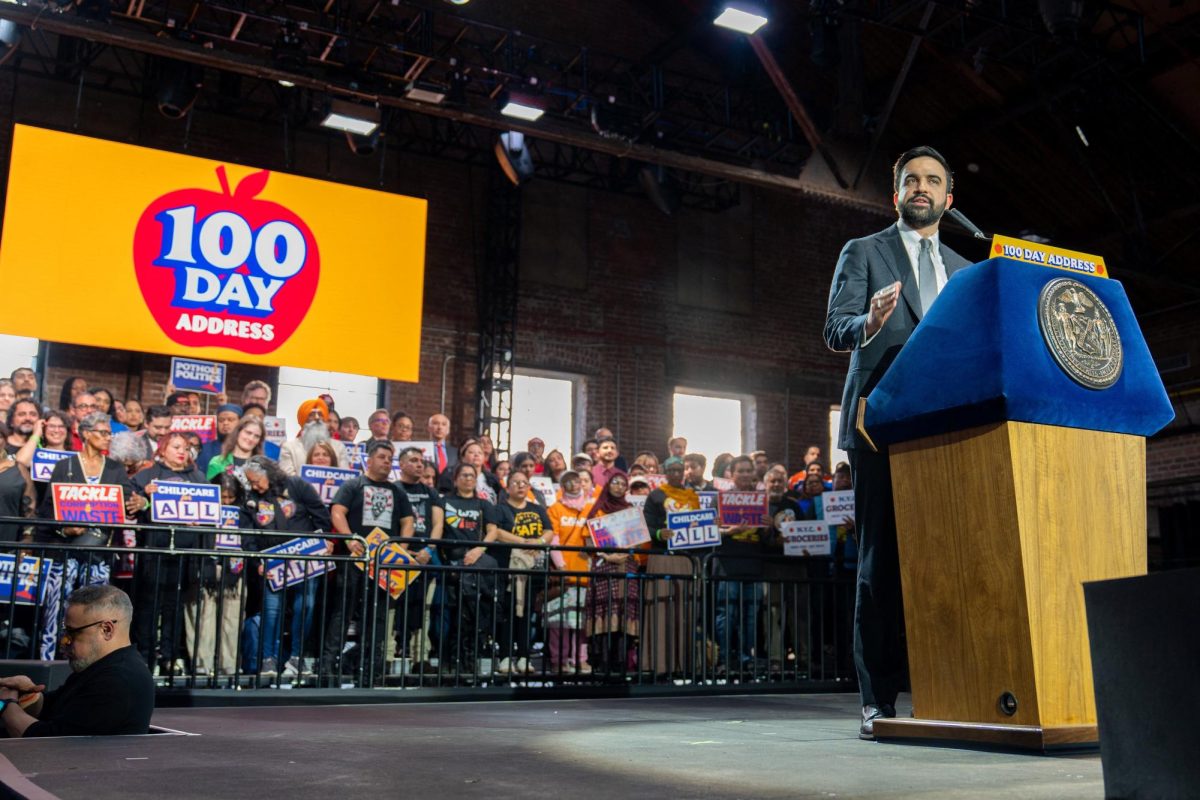
On Tuesday, November 4th, after being elected as the 111th mayor in America’s largest city, Zohran Mamdani turned his eyes to the President of the United States with a bold declaration in his victory speech: “Donald Trump, since I know you’re watching, I have four words for you: turn the volume up!” His words rang loudly across the room as thousands of his supporters erupted in cheers. In a joyous night for Mamdani supporters, the 34-year-old assemblyman won the election, receiving more votes (at least 1.03 million) than all the other candidates combined, including Independent and former Governor Andrew Cuomo and Republican Curtis Sliwa.
However, amidst the celebration and promises for a better tomorrow, what stood out was Mamdani’s song choice as he left the stage. Dhoom Machale from the 2004 hit Bollywood film Dhoom, played as Mamdani left his supporters, another sign of his South Asian heritage that he proudly displayed throughout his campaign, and a symbol of what the Mamdani era of New York may look like.
Dhoom Machale roughly translates to “make some noise,” something Mamdani has done extremely effectively throughout his mayoral run. Mamdani’s campaign was rooted in grassroots canvassing efforts, with over 100,000 volunteers knocking on more than 3 million doors. He has spurred young people to go out and vote within a Democratic party that seemed hopeless in the wake of Kamala Harris’s defeat in 2024. Zohran’s authenticity is one of the keys behind this surge in young voters, and his authenticity starts with his culture.
Zohran has refused to shy away from his Muslim and South Asian heritage throughout the campaign trail. He has attended more than 50 mosques on the campaign trail, distributed sweets on Diwali ahead of the election, and has been chastised by right-wing media for eating rice with his hands as traditionally done in South Asia. However, Mamdani’s identity has not been the source of simple identity politics; the mayor-elect has had to grapple with Islamophobic rhetoric from his adversaries throughout this election and the stigma that comes from being a post 9/11 Muslim living in New York.
During an interview with radio host Sid Rosenberg, Mamdani’s primary opponent, Andrew Cuomo, seemingly agreed with Rosenberg that Mamdani would be “cheering” another 9/11. Eric Adams characterized his endorsement of Andrew Cuomo as being motivated by seeking to fight Islamic extremism and people who were “burning churches.” In response, Mamdani issued a gut-wrenching speech about being Muslim in New York entitled, “My Message to Muslim New Yorkers — and Everyone Who Calls This City Home.” The video begins with Mamdani recalling how a Muslim uncle pulled him aside before his assemblyman election, telling him it is okay to not let people know he is Muslim. In his message to Muslim New Yorkers, Mamdani proclaims that “To be Muslim in New York is to expect indignity. But indignity does not make us distinct; there are many New Yorkers who face it. It is the tolerance of that indignity that does.”
However, despite this impassioned cry against Islamaphobia, Mamdani still faced criticism from his opponents; for what, you may ask? Mischaracterizing his father’s cousin as an aunt in his story. Never mind the fact that in South Asian communities, it is common for elders to be referred to as aunts or uncles regardless of familial relation; these criticisms are a microcosm of what it is like to be a South Asian American living in America. Stigmatization is normalized, and indignity is tolerated. Rather than address the concern that a Muslim woman was too scared to embrace her religion, as enshrined to her by the First Amendment of the United States Constitution, Mamdani’s critics would rather nitpick semantics and track down family lineages than address the reality that Muslim’s in New York face unjust stigmatization.
There are valid questions and criticisms that can be made about Zohran Mamdani; it remains to be seen if he can enact some of the promises he made on the campaign trail, and there are lingering questions about his relative inexperience. However, in the closing act of the New York mayoral election, Mamdani’s opponents decide to attack his identity and religion in hopes of spreading fear and division among the populace. In an era where the prevalence of experiencing a hate act based on race, ethnicity, or nationality rose for South Asian adults to 54 percent in 2024, where videos on social media normalize South Asian hate, and where the Vice President of our country calls for his wife to change her religion in front of thousands of supporters, Mamdani has faced the same struggles that South Asians, and especially Muslims, in our country face on a day to day basis.
Days before the mayoral election, Hakeem Jeffries went on national TV and implied that, despite his endorsement, he does not believe that Mamdani is the face of the Democratic Party, stating “No, I think the future of the Democratic Party is going to fall, as far as we’re concerned, relative to the House Democratic Caucus and members who are doing a great work all across the country as it relates to our need to both take back control of the House.” It remains to be seen whether Mamdani will be able to live up to the promises he made on his campaign, but one thing is for certain: Zohran Mamdani is the future of South Asian politics.
While South Asian politicians have been increasing across the aisle, whether Kamala Harris, Nikki Haley, or Vivek Ramaswamy, many of these candidates have been criticized for failing to embrace their South Asian heritage. What these criticisms fail to recognize is that many of these attempts by these politicians to conceal were direct responses to xenophobic remarks, such as Ann Coulter saying she would not vote for Vivek Ramaswamy due to his Indian heritage or the President questioning Nikki Haley’s eligibility to run for office. However, Mamdani not only faced these criticisms but doubled down on his identity as a Muslim South Asian, and through connecting with New Yorkers, he is now standing on the edge of history. There is one message that we can take away from Zohran’s campaign: Dhoom Machale.
Mamdani’s message of Dhoom Machale not only serves as another symbol of his South Asian heritage but also a call to action for Americans throughout the country:
It is time for New York City to Dhoom Machale.
It is time for the Democratic Party to Dhoom Machale.
And it is time for South Asians across this country to stand up, stand proud, and Dhoom Machale.