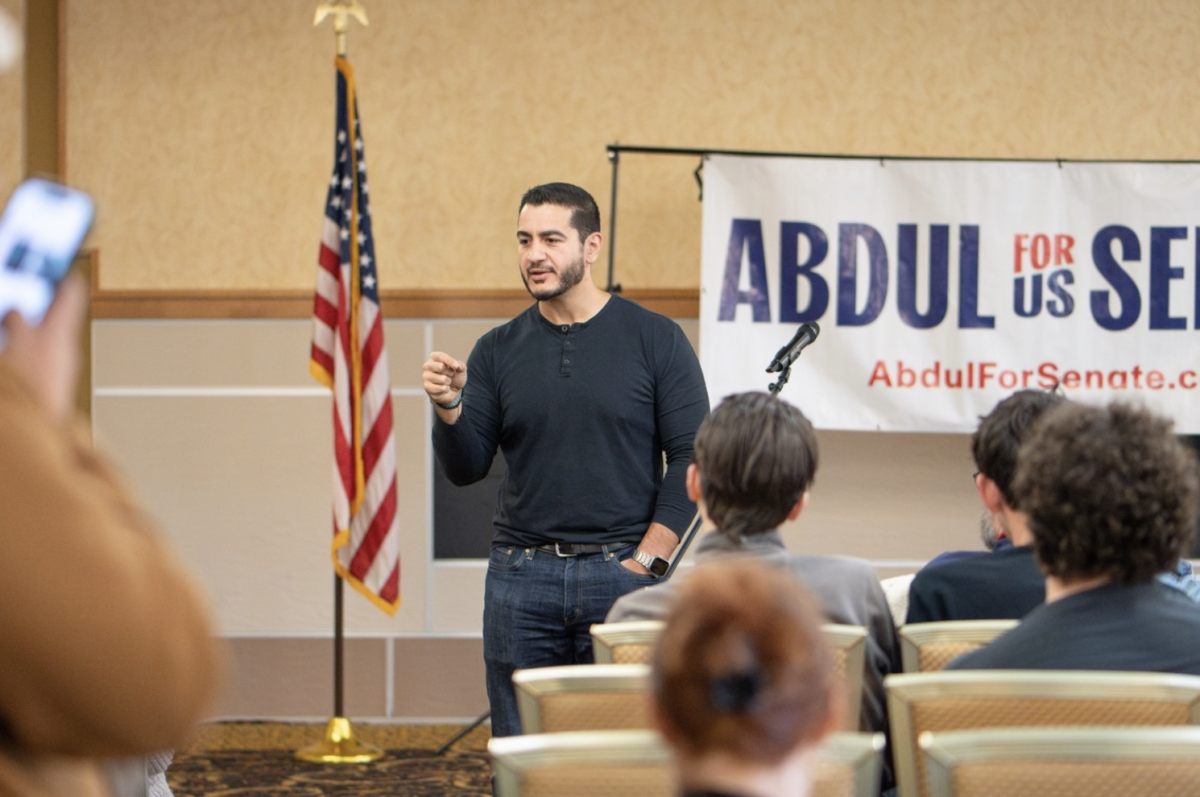
Late one evening in small-town Michigan, an 83-year-old independent senator stood at a wooden podium inside a union hall. They asked questions about wages, health care, and corporate power. There were no campaign signs, no partisan slogans, and no promises to vote. Instead, what filled the room was a simple but radical act: listening.
At that moment, Bernie Sanders wasn’t running for anything. He wasn’t seeking donors, ads, or delegates. He was doing something far less flashy: talking to Americans about their lives. He was earning trust, rebuilding connection, and most importantly, showing up.
Inspired by More Perfect Union’s video “I Took Bernie Into Deep Trump Country,” this article argues that Sanders’s post-campaign journey across the country represents a broader project of civic renewal. It’s more than a politician’s touting of policy; it’s an investment in people, place, and dialogue. It’s a model for how we might reduce polarization not by winning votes, but by earning understanding.
“Join Us on the Fighting Oligarchy Tour”
That’s how the video opens: with Sanders’s gravelly voice calling on Americans to “join us on the Fighting Oligarchy Tour.” It’s a line that could have come from one of his 2016 or 2020 rallies, but this time, there’s no campaign infrastructure, no army of volunteers, and no primary map.
Instead, there’s a bus, a camera crew, and a series of union halls, town auditoriums, and small media outlets willing to listen. In the film, Sanders visits workers in Michigan and Wisconsin who have seen their towns hollowed out by deindustrialization and corporate consolidation. Many attendees supported Donald Trump. Sanders doesn’t argue; he listens.
Politics Without a Campaign
Most politicians go quiet between election cycles. Sanders differs. Instead of ending his campaign on Election Day, he takes on a new mission: dialogue. He talks about corporate greed, labor rights, and healthcare, not from a Senate podium, but across folding tables in union halls.
This approach matters because polarization thrives in abstraction. It’s easy to resent “the left” or “the right” online, where politics becomes performance. It’s harder when someone stands before you, asking about your rent, your job, or your child’s medical bills.
The Fighting Oligarchy Tour isn’t about elections. It’s about reminding Americans that civic participation isn’t limited to the ballot box. It’s about showing up where people actually live, and proving that political identity doesn’t have to mean political isolation.
A Blueprint for Civic Reconnection
What Sanders and More Perfect Union are doing taps into a broader movement of depolarization. It rejects the idea that political disagreement must mean moral division. Groups like Braver Angels and the Civic Health Project have been experimenting with similar approaches, hosting local dialogues that prioritize empathy over ideology.
But Sanders brings something different. He’s not a nonpartisan moderator; he’s a national figure choosing to engage rather than retreat. For a former presidential candidate to walk into small-town union halls is a statement of humility and an acknowledgment that democracy depends on listening as much as legislating.
Why It Matters for Gen Z
For many Gen Z voters, especially on campuses like Vanderbilt, traditional politics feels broken. Social media rewards outrage, not understanding. Political discourse feels performative, not personal. Sanders’s “Fighting Oligarchy Tour” offers an alternative vision: politics as dialogue. It doesn’t ask for blind loyalty to a party or candidate. It asks for participation. It suggests that democracy isn’t a spectator sport; it’s a relationship that must be rebuilt one conversation at a time. Maybe that’s the lesson we should take from Bernie’s second act. Not the radicalism of his policies, but the radicalism of his patience.
Showing Up and Staying Engaged
In a world where politics often feels polarizing, Sanders’s quiet tour offers a different path. It isn’t about defeating opponents or chasing headlines. It’s about defeating cynicism. It’s about reminding people that democracy happens not in soundbites but in conversations.
For students, that lesson is simple: politics begins when we show up. It begins in classrooms, community meetings, and coffee shops, when we choose to listen. If Sanders’s tour proves anything, it’s that democracy’s future won’t be secured by louder megaphones, but by more chairs around more tables.