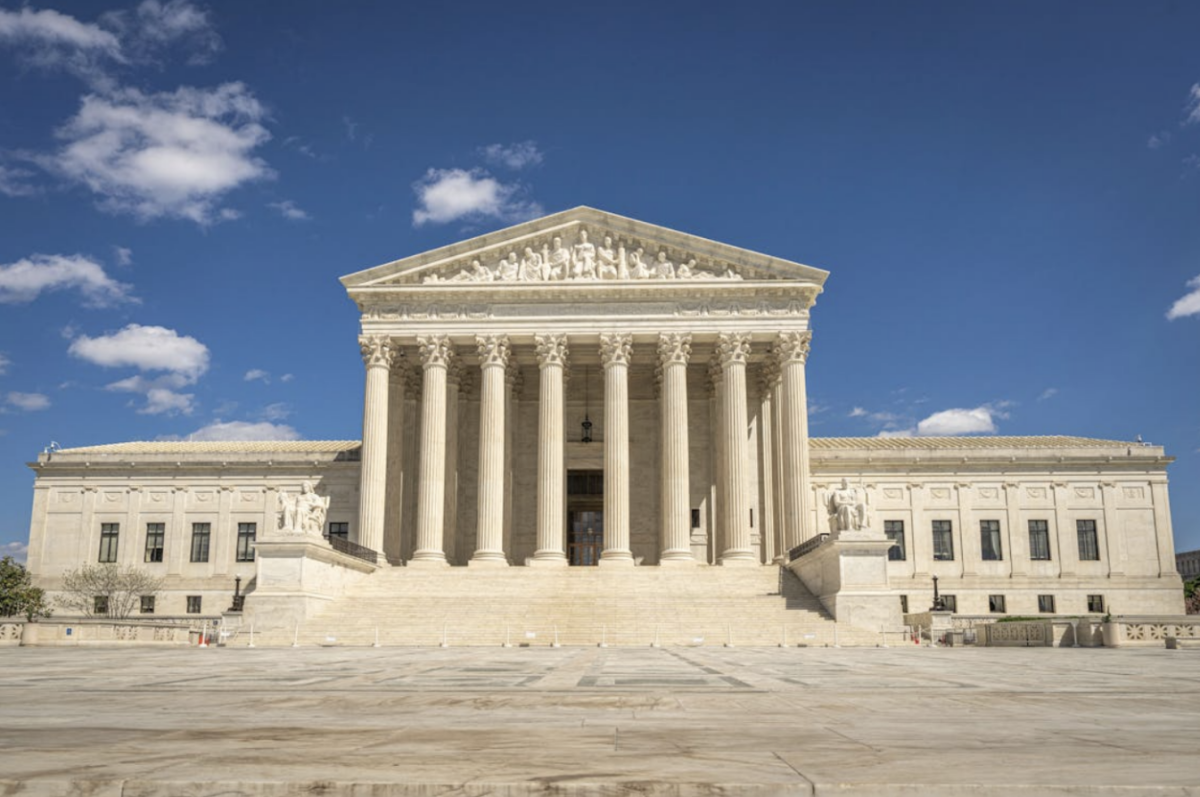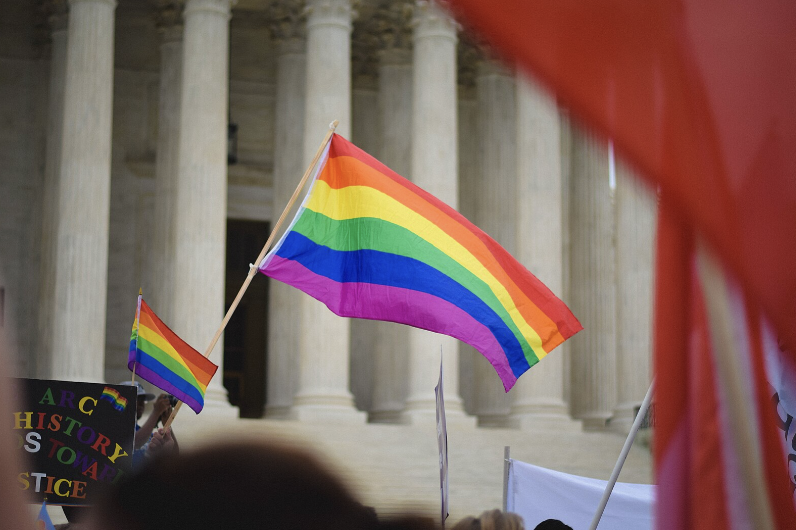
When the Supreme Court rejected Kim Davis’s petition to reconsider Obergefell v. Hodges on Nov. 10, fears were dispelled that national protections for gay marriage would be overturned. However, while the nationwide protection of gay marriage under the equal protection and due process clauses of the 14th Amendment remains intact, the current Supreme Court has authored several decisions restricting the rights of LGBTQ+ Americans, especially in the past few months. It is crucial that Americans do not let this perceived win for LGBTQ+ rights distract us from the real harm that the high court is inflicting upon LGBTQ+ individuals.
In rejecting the challenge to Obergefell, the court provided no comment or information about each justice’s decision. However, David Moore and David Ermold, the Kentucky gay couple suing former Rowan County clerk Kim Davis for refusing to issue them a marriage license on the grounds of religious protections afforded by the First Amendment, were asked by the Supreme Court to respond to Davis’s petition. Since this request to respond to a petitioner must come from a justice, we know that at least one justice voted to further consideration of the case. But since the case was not taken up on the court’s docket, the minimum number of justices required to hear a case, four, must not have been reached. While the precedent set in Obergefell remains in effect for now, as was previously the case for Roe v. Wade, no constitutional protections are preventing Obergefell from being reconsidered in the future. Further, the court’s declining of Davis’s petition sets no precedent of its own. The continued vulnerability of LGBTQ+ rights highlights the importance of future Supreme Court appointments, especially in the wake of the recent restrictive decisions handed down by the court.
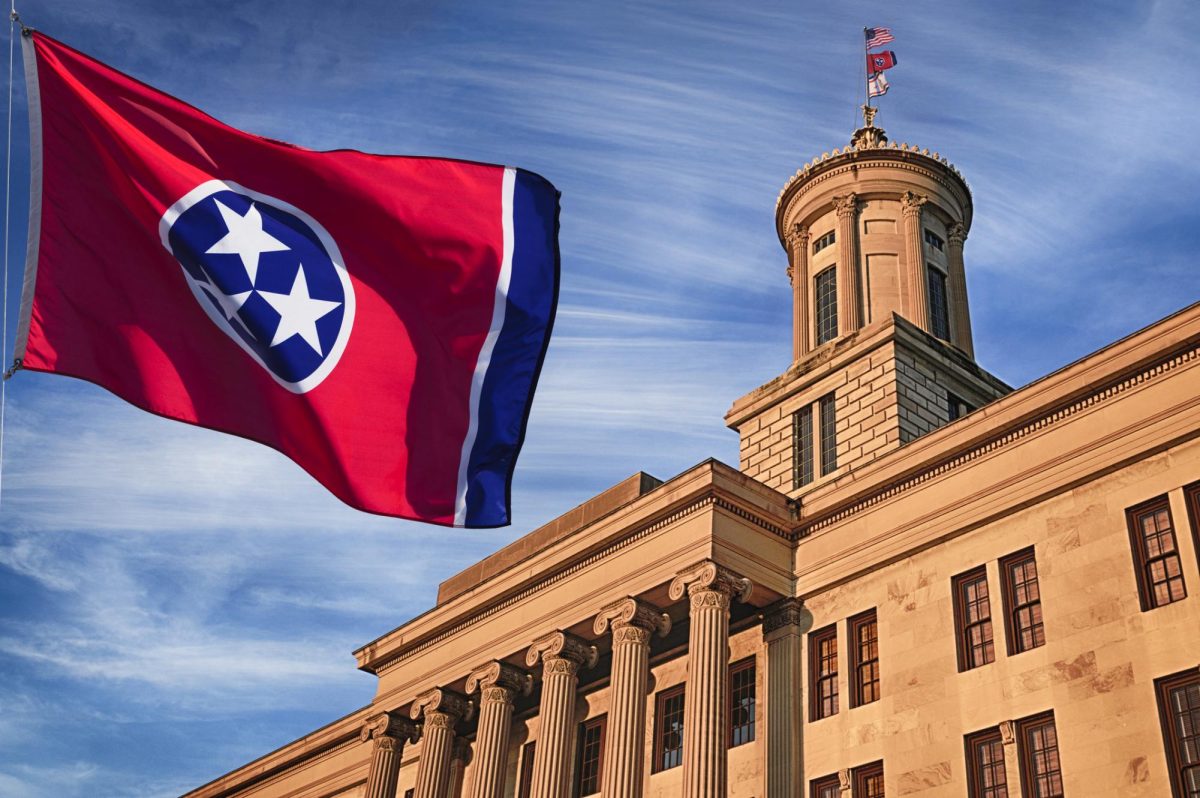
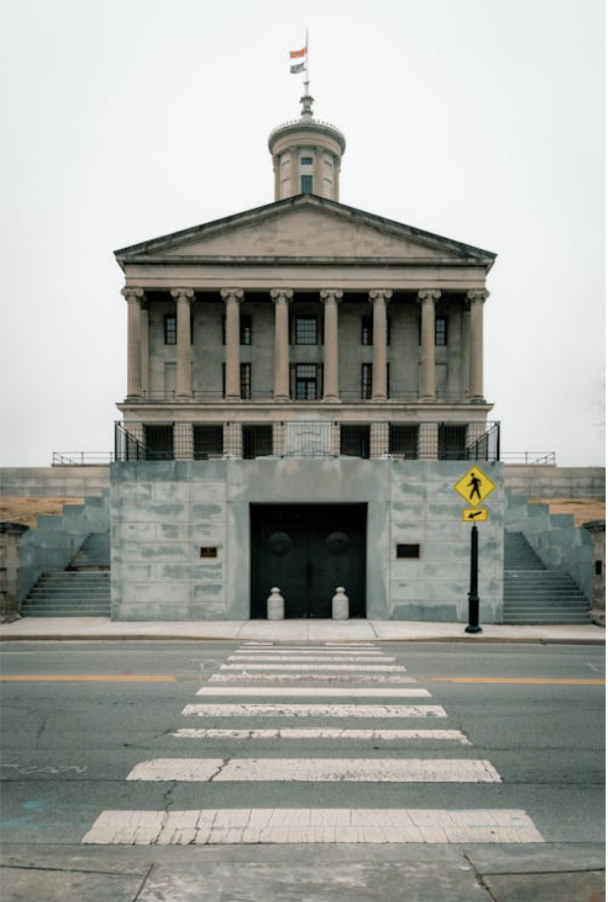
In U.S. v. Skrmetti, a case based out of Tennessee, the court departed from the rulings of lower courts in deciding that state laws banning gender-affirming care for transgender minors do not violate the equal protection clause and are therefore constitutionally sound. Notably, the large majority of these bans prevent doctors from prescribing hormone therapy and prevent the prescribing of temporary and typically reversible solutions like puberty blockers. The majority and concurring opinions, through denying the presence of any discrimination other than on the basis of age and differing medical treatment, effectively denied that transgender Americans are uniquely entitled to equal protection under the law. By denying the reality that transgender Americans are a group uniquely subject to discrimination who should be entitled to protection as a minority group from targeted legislation, the Supreme Court deprived transgender individuals and their parents of the right to make essential private health decisions, even when a physician deems them appropriate and necessary.
For her opinion on the Skrmetti ruling, Justice Amy Coney Barrett questionably concluded that transgender people do not constitute a “discrete group” with “obvious, immutable, or distinguishing characteristics,” and therefore do not constitute a specifically protected class under the equal protection clause. Additionally, Justices Barrett, Thomas, and Alito asserted that there is limited evidence of historic legal discrimination against trans individuals, using this supposed conclusion to justify excluding transgender individuals from protections afforded by the 14th Amendment. These statements are not only ignorant, but also contrary to historical fact. In her dissenting opinion, Justice Sotomayor rightfully cites cross-dressing bans, instances of police brutality, and anti-sodomy laws as examples of anti-transgender legal discrimination, also rebutting Barrett’s argument by affirming that transgender people, as a group, are “no more large, diverse, and amorphous” than most racial or ethnic groups, many of which contain individuals with a large variety of experiences, origins, and conceptions of identity and are therefore no more of a “discrete group” than transgender people are. Powerfully, Sotomayor declares, “By retreating from meaningful judicial review exactly where it matters most, the Court abandons transgender children and their families to political whims. In sadness, I dissent.”
In their Plessy v. Ferguson-esque ruling on transgender rights, the Supreme Court has illogically concluded that transgender people are not entitled to equal protection of the law when legislation specifically targets them. By preventing transgender Americans from accessing life-saving care, the Supreme Court is failing to uphold the spirit of equal protection of the law and is blocking constitutional civil rights protections from working as intended.
Not only will the Supreme Court’s permitting of gender-affirming care bans cause preventable deaths by removing lifesaving care, but it will also exacerbate a pervasive feeling of animosity faced by LGBTQ+ individuals. According to the Human Rights Campaign, 79.1% of LGBTQ+ adults reported that gender affirming care bans make them feel less safe, and 43% of these adults reported that the bans affected the physical and/or mental health of themselves or a loved one.
It should go without saying that the transgender rights movement and gay rights movement are inherently intertwined and have been since long before the days of Marsha P. Johnson and Sylvia Rivera. Regardless, even though transgender Americans are particularly vulnerable, these bans impact all LGBTQ+ Americans. Homophobia and transphobia are two sides of the same coin, and just as the transgender pioneers of the gay rights movement fought for the rights of all LGBTQ+ people, cisgender gay, lesbian, and bisexual Americans, and anyone who opposes bigotry, should do the same on behalf of transgender LGBTQ+ Americans.
Unfortunately, that is not the only regressive ruling the Supreme Court has made on LGBTQ+ issues this year. In Mahmoud v. Taylor, the Supreme Court ruled that Montgomery County Public Schools in Maryland could not include storybooks discussing themes of “sexual orientation” and “gender identity” in their curriculum without providing parents the opportunity to opt their children out of participation on religious grounds. This decision implies that parents can opt their elementary schoolers, middle schoolers, or high schoolers out of reading any assigned book so long as they argue that it violates their religious principles. As Justice Sotomayor argued, simply being exposed to ideas that conflict with one’s religious beliefs does not constitute a violation of Free Exercise, just as hearing others express an opinion one morally disagrees with is not a violation of one’s liberty.
This decision creates a nightmare for public schools, which have to tailor and re-adjust a curriculum that can effectively be vetoed by every parent. But even more critically, it also allows parents to shelter their children from opposing perspectives and from exposure to content that could otherwise challenge harmful bigotry and dogma. Representation in various forms of media is essential for people of any minority group, yet because of the Supreme Court’s ruling, parents who hold bigoted views can now block any engagement with content featuring queer representation or content that merely rejects homophobia or transphobia. For LGBTQ+ and heterosexual students alike, this could mean that those being raised in homophobic or transphobic environments will receive little to no pushback against harmful ideas that they grow up around.
Although the battle to preserve Obergefell may have been won, this victory does not change the fact that the Supreme Court is engaged in a larger crusade to restrict the rights of LGBTQ+ Americans. With two devastating anti-LGBTQ+ decisions being handed down just in the past five months, it is imperative that Americans pay attention to the harm the Supreme Court is doing and consider this long-term damage when voting in 2028. Moreover, even though the odds of success are slim, voters should advocate for the consideration of a constitutional amendment protecting the rights of LGBTQ+ Americans. Even in the absence of immediate political solutions, informing oneself of the harsh reality facing LGBTQ+ people, especially transgender Americans, is the first step to combating oppression.