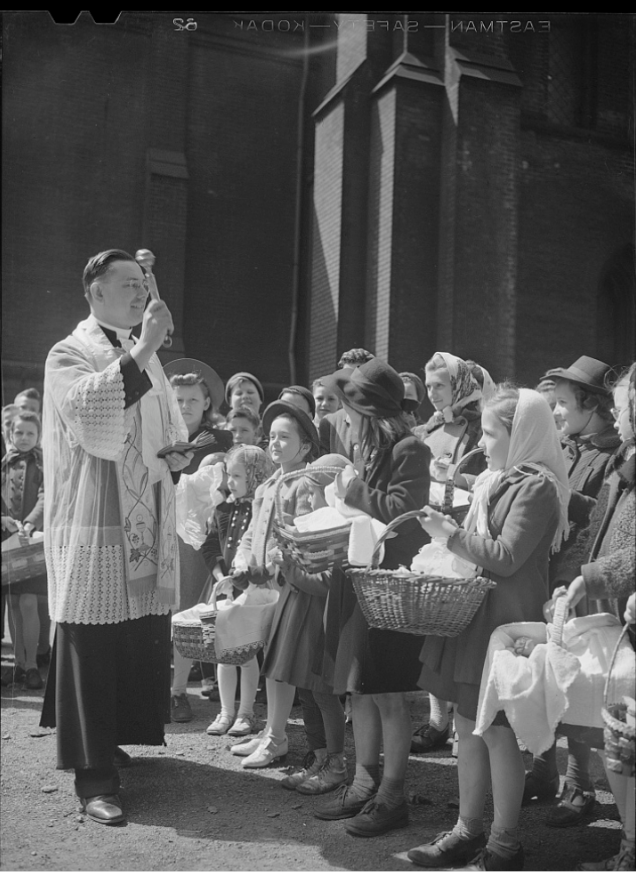
I’m never quite content during Christmas and Eastertime. It’s not that I don’t get to see family and friends, nor is it that I fear the end of each holiday season and dread the return to the humdrum of life. Rather, the source of my discontent comes from my fellow countrymen. Instead of honoring the birth, death, and resurrection of Jesus Christ, they adore materialism and some random bunny, if they even bother with Easter at all. Insofar as they do recognize the deep historical and spiritual significance of these holidays, it seldom is top of mind when they celebrate.
Admittedly, this grim assessment of the state of American Christianity is completely anecdotal. In fact, data on Americans’ perceptions of Christmas imply a much more optimistic outlook than that presented here. But I strongly suspect that, similar to how 20% of Americans are Catholic but only 28% of that 20% attend mass weekly (a requirement of the faith), the sort of active, meaningful, and practiced Christianity that would seem to logically follow from their belief in the Christ story does not exist in many of them.
This depresses me primarily, of course, as a religious matter. But this phenomenon is also depressing culturally, in that we have more or less abandoned the faith of our fathers en masse, a tragedy not only because of its truth and the salvific gift it offers all but also because the faith tied us to them and them to us and us to each other. In short, religion serves as a shared understanding of the meaning of life for a group of people in space and through time. It tells you who you are, where you come from, what you need to be working toward, and the purpose of it all. It fully accounts for our reality. Complementarily, questions about how we ought to live together—those pertaining to culture and politics—ultimately rest on understanding who “we” are, and who “we” are ultimately rests on who each of us is. Religion, thus, can be said to be inextricable from society, for society requires rules (either formal or normative), and rules require some conception of what our function and purpose as humans are.
Christianity clearly fulfills the outline presented above. It claims that we are all children of God, are made in His image, and ought to work continually through our lives accept and love Him, all of this because our ultimate function is unity with Him. But so does the faith dominant in our culture now, the same one that perverted Christmas and Easter into the hyper-commercialized form they have taken on in the present day. It claims that we are whoever we define ourselves to be, evolved arbitrarily, and need to work to fulfill whatever destiny we define for ourselves, which tends to mean status, money, pleasure, or some combination thereof.
The purpose of all of this, in rather circular fashion, is to maximize autonomy. Hence the focus on democracy and equality, since it is through these instruments of formal and informal societal governance that each and every one of our desires can be expressed. The same can be said about freedom and liberty, which like Christmas and Easter have too been perverted from meaning a freeing from those forces that held us away from God to meaning a freeing from those forces holding us away from doing what we want, either by moving to be left alone (negative liberty) or compelling others to provide what is needed to achieve this end (positive liberty).
This characterization of what might be called liberalism as a faith unto itself may seem curious, especially given the inherent tension it has with traditional religion. But how is it not? Like traditional religion, it uses articles of faith—that is, axioms that cannot in the end be proven, although they may be logically approachable—to account for the ultimate questions of life. This is quite ironic given many “nonreligious” people, who truly are adherents of liberalism, often perceive Christianity’s reliance on divinely provided first principles (i.e.: that the prime mover of the universe is a personal, loving, and triune God) as evidence of its falsity, when the groundwork of their worldview likewise is rooted in first principles, just without the aid of the divine.
But I digress. So far it has been established that liberalism is the faith of our day, displacing the once dominant Christian faith, now relegated to the catacombs of mainstream culture. However, this does not seem to implicate my social concern about faith’s function in public life. Why, after all, can liberalism itself not serve this critical function? Am I not, in stating its dominance in American society today, admitting that this is the case?
These are fair critiques at face value, though they fail once it is considered that liberalism as a faith system promotes social divergence rather than convergence, as Christianity and other traditional religions do. For example, in encouraging people to “live your truth” or that “diversity is our strength,” liberalism, yes, uses those ideas as common rallying points, but adhering to those ideas necessarily results in a fracturing of society. Everyone living their own truths and reveling in their many differences. The result, as implied before, is everyone doing what they can to make themselves feel good, which typically expresses itself in a pursuit of some base desire, especially money, fame, influence, and sex.
On a more tangible level, this results in a nearly countless number of insular subcultures—or, more aptly, microcultures or enclaves of other cultures feeding off the ailing remains of a once great culture—as we see in the many immigrant communities that have been encouraged to come and, naturally, tend to have an affinity more to their homeland than America. More generally, we see this in modern Americans embracing their eccentricities and placing less value on “fitting in,” as seen in nearly all aspects of our society, even down to the way people dress and present themselves. Before, if you dyed your hair fuchsia, pierced up your face, and left the house in a scandalous outfit, everyone would look at you scornfully while a sea of hushed whispers followed you everywhere you went. Today, the modern equivalent—being recorded and publicly shamed in a viral clip—would also occur…to the one who would dare cast an unapproving look.
The reason why I made a point to call liberalism merely a faith, and hesitated to call it a religion, rests in this phenomenon. Religions make positive, constructive claims that enjoin all and serve as a point of unity. You should follow a certain moral code. You oughtn’t eat a certain set of foods. You need to participate in a certain set of sacraments to commune with God. But liberalism taken to its logical conclusion is composed almost completely of negative, destructive claims. There are no rules except that you cannot impede on another’s ability to feel unbound. All ideas are tolerated except the intolerant ones. What are these “intolerant” ideas? The ones that enjoin all and serve as a point of unity. The ones don’t say “this is good for me” but instead say “this is good.” The ones that allow a society to converge, to unify, to cohere. In this way, liberalism is a sort of antireligion.
Now we can begin to connect some dots. We know from the demonstration earlier that society requires religion. We have just deduced that what is standing in situ of our society’s religion serves the opposite role of that which made religion useful culturally and politically to begin with. On the flip side, we know that Christianity, until rather recently, served this role. With all the dots connected, the conclusion is clear: for the sake of preserving American society, we ought to make it a cultural and political priority to promote and restore Christianity in our country.
I understand such a prospect likely seems unsettling to many at face value, so let us break down what this means in practice to show how this proposal isn’t nearly as radical as it seems.
First, promoting Christianity in this way does not equal explicit evangelization and calls for individual conversion (although I cannot stress enough that these things are very good and ought to also be pursued). The result I hope to see is an America in which many more people, yes, are practicing Christians, but also an America in which non-Christians still understand, respect, and abide within a broadly Christian culture. Practically, this means that, for instance, even atheists should say the Pledge of Allegiance’s “One nation under God” line with their full chests, and Jews and Muslims should accept the fact that holidays like Christmas and Easter are mainstays of American culture.
Following this, the government should accommodate and provide a platform, like parades, for Christians to celebrate these and other holidays. Our educational system should be such that every American understands the true meaning of Christmas and Easter, as well as the basics of Christianity, the basis of Western society. I should emphasize here again that the purpose of all this is not evangelization, even though I am not so naïve as to think that it won’t have that incidental effect. The point is social cohesion with each other and those who came before. A Hindu kid in America can very much remain Hindu while knowing about Christianity and the norms that proceed from it, just as a Christian can know of Hinduism without being any less Christian. The difference is now that a kid being raised in Hinduism (and atheism, liberalism, Islam, Judaism, etc.) can relate to his society’s religion even while retaining his own if he so chooses. This idea of Christianity serving as the social religion, while not necessarily being one’s own, aligns with some interpretations of the notion of civic religion, a term I will adopt for the remainder of this article.
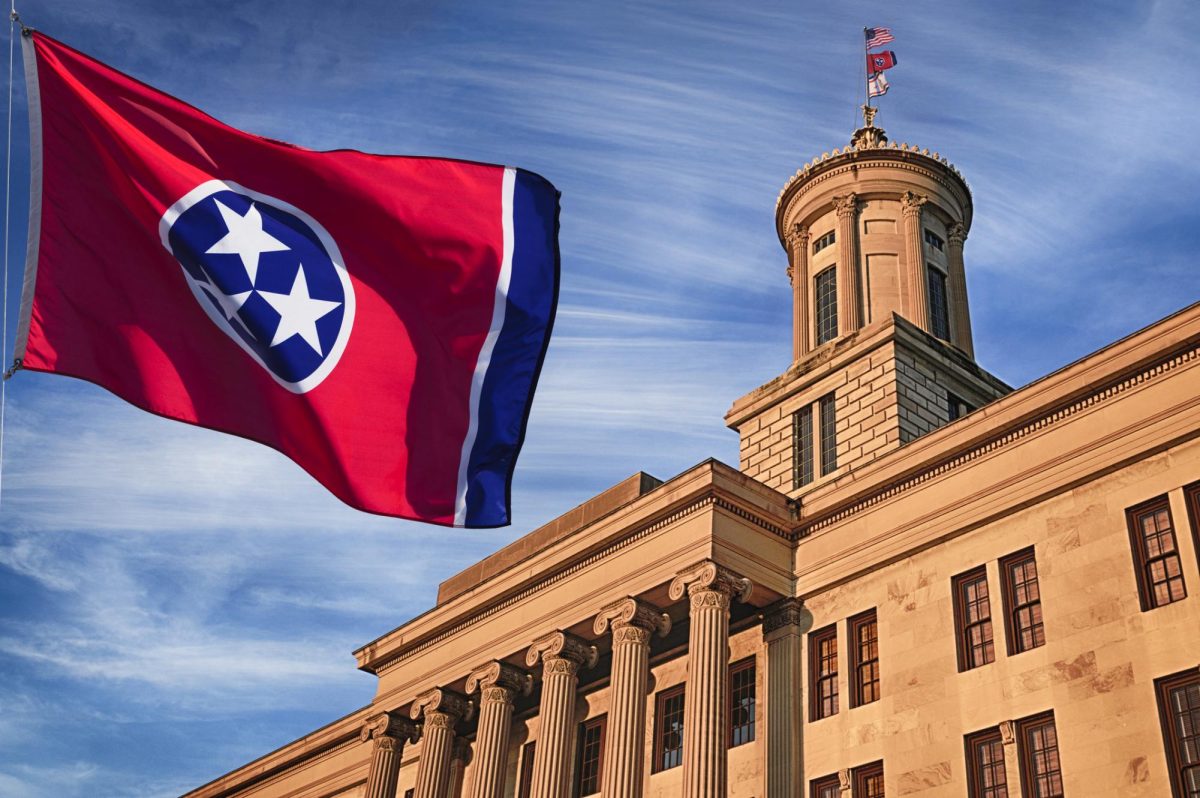
The flip side of promoting Christianity in our society brings the second point: we cannot go out of our way to accommodate other religions, including the antireligion of liberalism. This is a distinct concept from toleration, which is what we ought to do. In the latter, we happily allow communities of other faiths to practice as they need to (within reason) while not going out of our way to make said practice easier, as would be the case with accommodation, which often necessarily comes at the expense of our civic religion—that is, what our civic religion was and should be once again. Thus, the recent controversy in Sumner County, Tennessee over whether to change the name of Christmas Break to “Winter” Break to be “inclusive of other faiths” should not even have been a conversation.
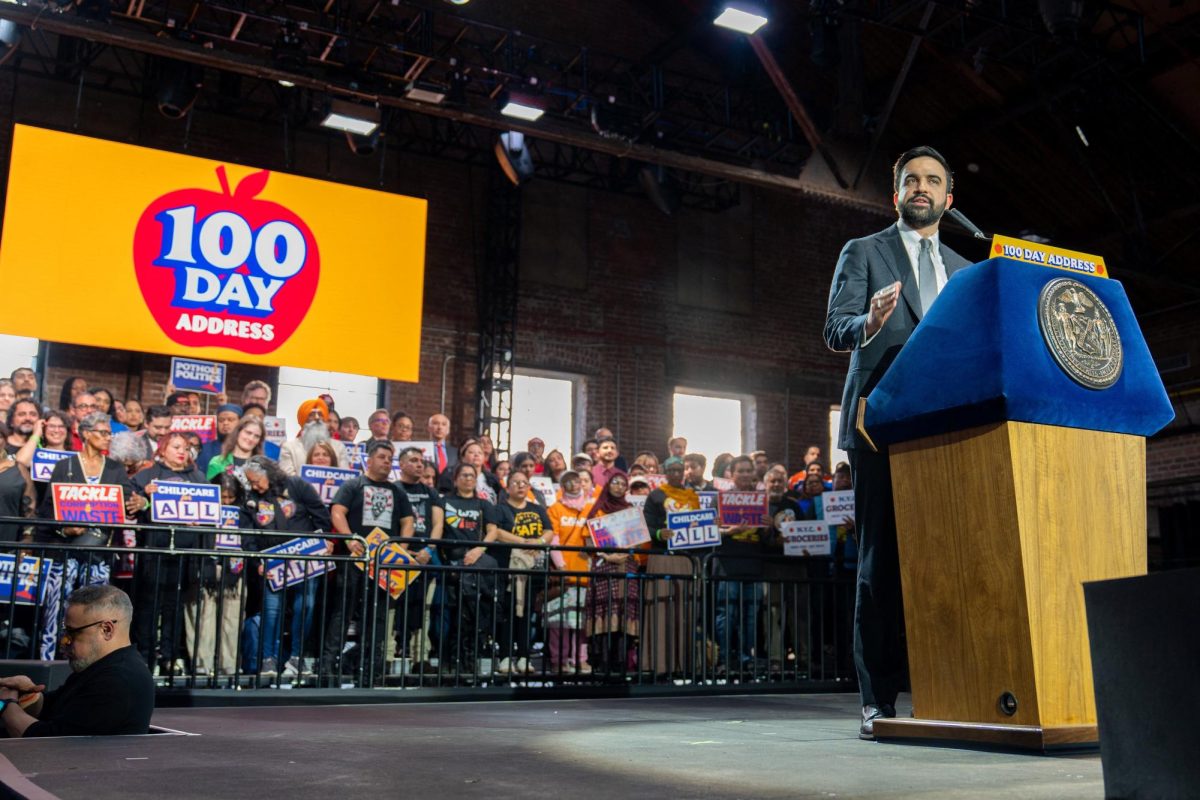
More egregiously, leaders in New York should not have allowed Muslim prayers to blare over loudspeakers while adherents knelt in the middle of an active street, as a recent video depicts. Besides the fact that I wouldn’t even allow vespers in the middle of an active street, allowing this sort of behavior has the dual effect of providing little pressure for immigrant/minority groups to assimilate into the civic religion and further encouraging these groups to self-insulate—both anti-social behaviors. This isn’t to say that, in prudence, small variances or even concessions cannot be made, though it is to say that preservation of the civic religion should be the paramount goal at all times. Might this make these groups feel like minorities? Yes, but that certainly is not the intent, and, in any case, it is the cultural reality. After all, I, as a Christian, would expect to feel like a religious minority if I were to go to, say, Israel, and, apart from my desire to see them also be Christian, I would have no grounds to take issue with this fact.
Third, some might wonder why the civic religion should not be other religions, like Islam or Judaism. The answer is simple: to do so would sever the connection to our society’s forefathers. To make America’s civic religion be defined by anything except Christianity is, in a very real way, to make America lose a large part of its identity, which helps to explain why the America of today, centered around the antireligion of liberalism, is so culturally removed from the America of even 60 years ago. It seems that the only justification for another religion coming along and indeed severing that connection would be some widespread conviction that an alternative is truer than the traditional faith. We already know, regardless of anyone’s convictions, that liberalism can’t serve the function needed of religion by society, but explaining why other religions are not more true than Christianity places us solidly in theological territory this essay was not intended to traverse and is not, at least I don’t think, the primary angle of attack opponents to the view promoted here will take.
Lastly, to quickly address First Amendment concerns, I would first say that the political reality of and substantive good presented by recognizing and promoting Christianity in American society trumps any late-forming judicial norms enforcing what is tantamount to a freedom from religion, which, as we know from the above, is actually just an enforcement of the liberal faith. If a proper constitutional defense must be proffered, however, I simply would point to the fact that the framers themselves clearly conceived of the Establishment Clause as relating to church institutions, not broad religious belief, and, as a second step, that the promotion of our civic religion would clearly pass the history and tradition constitutional test given our nation’s history of school prayer and instruction on the Bible, not to mention the fundamental role Christianity served historically for our entire way of life.
In the end, this message—to promote and restore Christian America—is a simple one, but I know it will be an uphill battle to see it be instantiated in any meaningful way. After all, it is unlikely, even with the systemic defense of this message that I set forth in this essay, that I convinced you of my argument. Thus, it seems that Easters and Christmases will continue, at least for the foreseeable future, to be ones tinged with discontent. But hope is a theological virtue, so I await with optimism for the day this will no longer be, when the faith of our fathers will once again unite our land.