The Trump administration has a message for Americans: obedience to ICE agents is mandatory, disagreement is sedition, and any opposition will be met with destructive force.
Nowhere is this message clearer than in Minneapolis, where the local community has resisted ICE’s presence from the moment it arrived. Within the span of three weeks in January 2026, federal agents killed two US citizens—Renée Good and Alex Pretti—during enforcement operations in Minneapolis. These fatalities are two instances of major abuses committed by ICE against the people of Minnesota during Operation Metro Surge. Other incidents include the usage of tear gas against non-violent protesters, the detainment of a 5-year-old preschooler, and the arrests of more than 170 U.S. citizens.
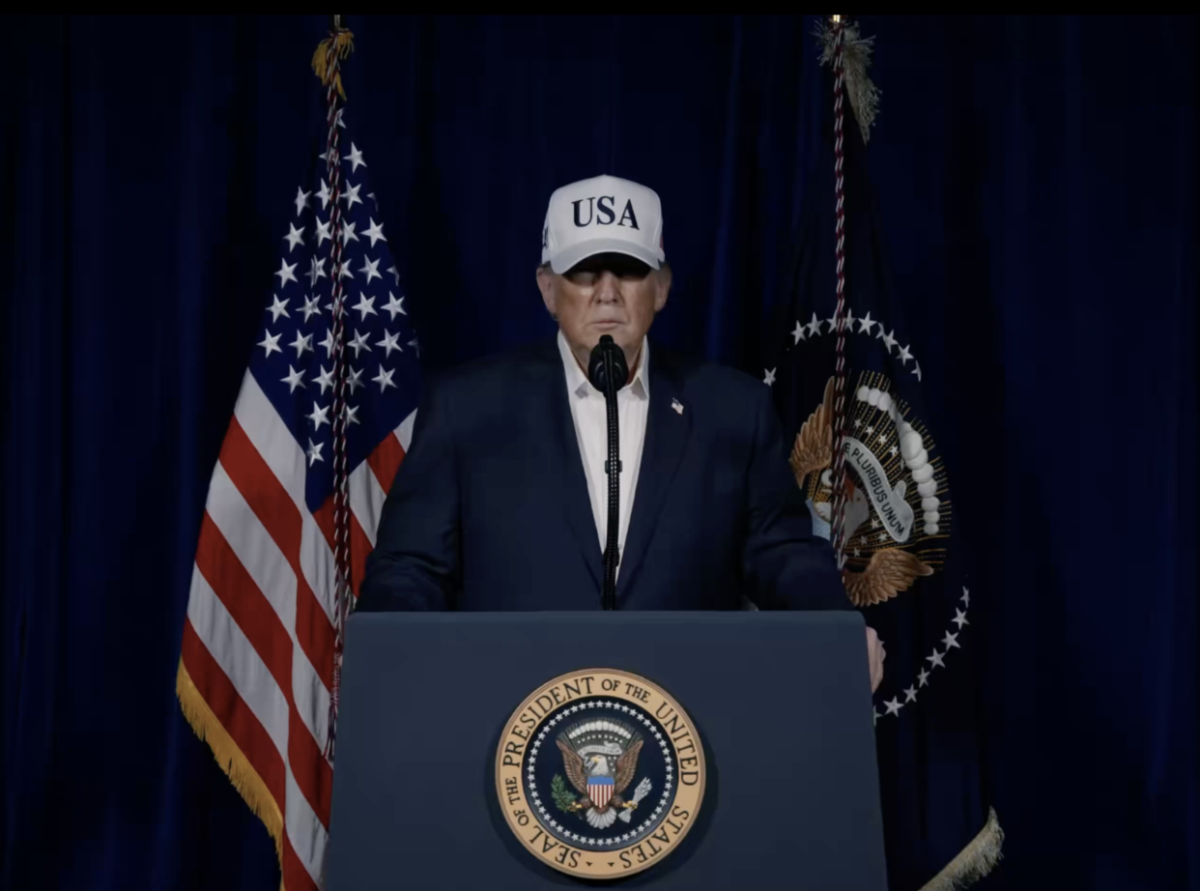
ICE’s actions and lack of accountability stem directly from President Trump’s signing into law the “Big Beautiful Bill,” which increased ICE funding by roughly $75 billion and significantly expanded its jurisdiction. In response to the situation in Minnesota, Trump reaffirmed his support of ICE, even threatening to invoke the Insurrection Act to quell the citizen outrage. Many leading GOP officials echo Trump’s sentiments, with JD Vance blaming “far-left agitators” for the violence and calling for the compliance of state officials.
Federal officials have explicitly framed ICE’s use of force as a just consequence of local noncompliance. However, this position reveals the administration’s fundamental disconnect: the people of Minnesota were not interfering with democracy—they were protecting it.
The resistance in Minnesota illustrates two truths about activism’s role in democracy. It is a form of participation, and it acts as a check on power when institutions fail. The various forms of engagement—protests, strikes, legal challenges, and even 60 CEOs demanding de-escalation—demonstrate that participating in democracy is far more than exercising voting rights. These actions are those of citizens who believe in their fundamental constitutional rights: assembly, speech, and petition. While the Trump administration labels protesters “insurrectionists,” Minnesotans demonstrate what genuine democratic participation looks like.
Yet activism in Minneapolis has proven essential for another reason: it works as a democratic safeguard. Traditional checks of power—such as our judiciary, elected officials, and Constitution—proved absent in preventing ICE’s killing of two US citizens and mistreatment of countless others. But continual pushback forced concrete change. Protests among citizens and local officials have either directly or indirectly led to the removal of top ICE agent Gregory Bovino from Minnesota, a court-ordered action against acting ICE director Todd Lyons, and Trump’s January 27 statement that the government will “deescalate a little bit” in Minnesota and consider removing agents. Minnesota proved that when institutional integrity is compromised, activism becomes the primary means through which citizens can enforce accountability.
Trump attacked this success despite his administration’s actions prompting the resistance in the first place. From the perspective of the White House, the problem in Minnesota is not ICE’s conduct but rather the citizens who dared to challenge it. The Trump administration characterized the resistance in Minnesota as lawless insurrection driven by the “far left,” obstructing law enforcement. From their perspective, ICE agents were simply doing their job enforcing the rule of law, and any resulting violence was the fault of those who failed to obey.
However, blaming protestors for the violence that law enforcement inflicted upon them is fundamentally authoritarian. The administration’s position effectively nullifies First Amendment rights: if exercising constitutional rights to assembly and petition can be labeled “obstruction” that justifies the use of lethal force, then those rights only exist if they suit the government’s agenda. This conditional stance on civil rights is a defining characteristic of authoritarian rule. Coercive logic like this has no place in our democracy. Trump’s quickness to threaten military force against protesting civilians proves that this current administration prioritizes obedience to executive power over the protection of individual rights. When friction is deemed insurrection, activism is not “far-left agitation” but a necessary defense against undemocratic abuses of power.
Minneapolis proved that our democratic decline is not inevitable. When our government institutions failed to prevent the killing and abuse of US citizens, when unalienable rights were flagrantly infringed upon, the people of Minnesota forced accountability through the only means left to them. Their civil disobedience was not a disruption of democracy. It was an unwavering defense of it. The question now is whether the rest of America will follow Minnesota’s lead—whether it will choose to be governed by consent or by force.