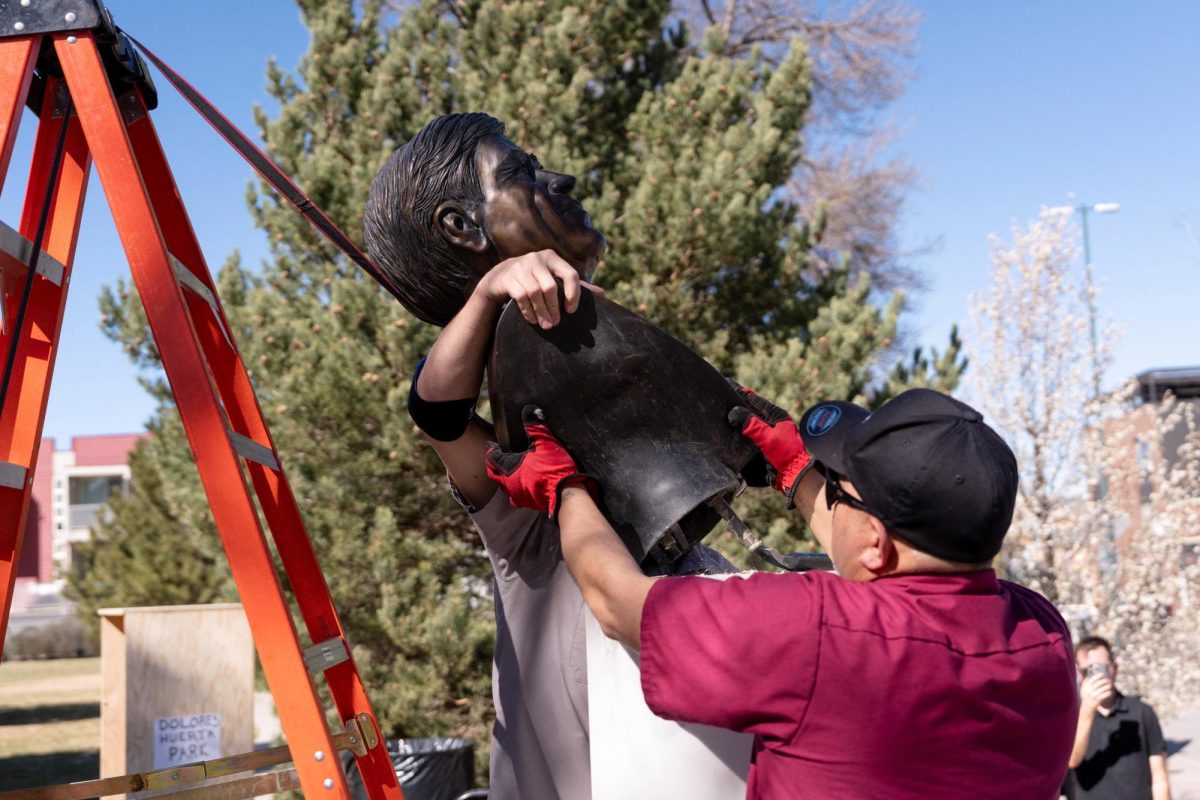
On March 18, following the release of a multi-year investigation by the New York Times into sexual misconduct allegations against civil rights leader Cesar Chavez, fellow Latina activist Dolores Huerta published a statement attesting to the veracity of the findings. In it, she opens with: “I am nearly 96 years old, and for the last 60 years have kept a secret because I believed that exposing the truth would hurt the farmworker movement I have spent my entire life fighting for.” This sentiment tells us something not just about what Chavez did, but about the architecture of the movement he led: one in which the protection of an institution and its figurehead superseded all else.
The Times investigation details accounts from survivors who allege Chavez groomed and sexually abused minors, some as young as twelve. The reckoning is real and necessary. But it should prompt something beyond outrage. It should prompt recognition: this has happened before, in movements explicitly dedicated to justice, and the mechanism is always the same. Movements don’t exist outside the societies that produce them. They’re constituted by people already shaped by existing hierarchies, and those hierarchies don’t dissolve at the door of a union hall.
Take the women’s suffrage movement for example. After the Civil War, when Congress moved to enfranchise Black men without extending the same right to women, the suffrage coalition fractured, and the fracture revealed something ugly. Elizabeth Cady Stanton openly deployed the rhetoric of white supremacy, furious at the prospect of illiterate former slaves governing educated white women. The National American Woman Suffrage Association eventually held conventions in southern cities where Black women were excluded, and courted Southern white women whose primary investment in suffrage was preserving racial dominance at the ballot box. Ida B. Wells-Barnett was made to march at the back of the 1913 Washington suffrage parade, separate from white women, so her presence wouldn’t alienate Southern supporters. She walked to the front anyway.
The parallel to the UFW is exact. In both cases, a movement constituted to challenge one axis of dehumanization reproduced another. In both cases, the people asked to be quiet, or to march at the back, were the most marginalized members of the coalition: those who could least afford dissent, and who therefore bore the greatest burden of protecting the movement’s legitimacy.
The civil rights movement contains both the pathology and an attempted corrective. The Southern Christian Leadership Conference was structured around the authority of Black Baptist ministers, and its organizational culture reflected that arrangement. Ella Baker, who had nearly single-handedly built out the SCLC’s Atlanta office, was never formally recognized as its executive director. The men above her assigned her the title “interim.” When her male replacement took the job, the word was dropped from his title. Septima Poinsette Clark, whose Citizenship Schools became the movement’s primary instrument for voter literacy, recalled that SCLC men “didn’t respect women too much.” In 1965, SNCC activists Casey Hayden and Mary King made the connection explicit in a memo: assumptions of male superiority, they argued, were as widespread and deep-rooted and as crippling to women as assumptions of white supremacy were to Black Americans, and both were operative, simultaneously, within the same movement.
Baker’s response was structural. She designed SNCC around what she called group-centered leadership, diffusing authority rather than concentrating it, cultivating local capacity rather than deferring to a charismatic figurehead. It worked, imperfectly and provisionally. When Stokely Carmichael took over and reoriented SNCC around a more masculine vision of Black Power, women who had been central to the organization were gradually marginalized. The lesson is that egalitarian organizing requires sustained, deliberate defense, and that movements structured around singular, unchecked authority tend to revert to the hierarchies they set out to dismantle.
In her statement, Huerta wrote that “the farmworker movement has always been bigger and far more important than any one individual.” It’s a generous claim, and in its way, an accurate one. It’s also the same logic that kept her silent for sixty years. The movement supersedes any one injustice, so my suffering is subordinate to the cause, so his authority warrants protection, even at my expense. This is how hierarchy perpetuates itself within liberation movements: through sincere conviction, not cynicism. The institutional culture of the UFW, like that of the NAWSA and the SCLC before it, conditioned its members to conflate loyalty to the movement with loyalty to its leadership. Protect the leader, protect the cause. That equation, wherever it takes hold, transforms a movement for justice into a structure for impunity.
We honor the farmworkers Chavez organized by interrogating what kinds of structures make it possible for someone like Huerta to speak, and what kinds render silence the only viable option. Huerta has now, at ninety-five, broken hers: “I have kept this secret long enough. My silence ends here.” A revolution that only liberates some people isn’t a revolution. It’s a renovation. And a movement that requires its survivors to remain silent in order to function has already disclosed whose liberation it was never genuinely about.